Books & Ideas is the English-language mirror website of La Vie des Idées, a free online journal which has gained a large readership and established itself in France as a major place for intellectual debate since 2007.
The intensive use of carbon energies has brought prosperity, particularly since 1945, along with relatively peaceful international relations. Decarbonation makes it necessary, according to Pierre Charbonnier, to invent a new form of geopolitics.
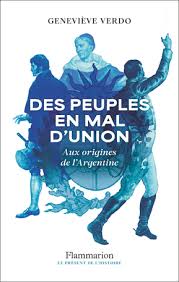
Could Argentina, instead of being the modern country we know, have developed into fourteen independent states engaged in never-ending competition? From the “disunited province” of Rio de la Plata to the affirmation of a single nation-state, a new book describes a quest for unity that lasted five decades. Reviewed: Geneviève Verdo, Des peuples en mal d’union. Aux origines de l’Argentine (Peoples without unity: The origins of Argentina) Paris Flammarion, 2025.
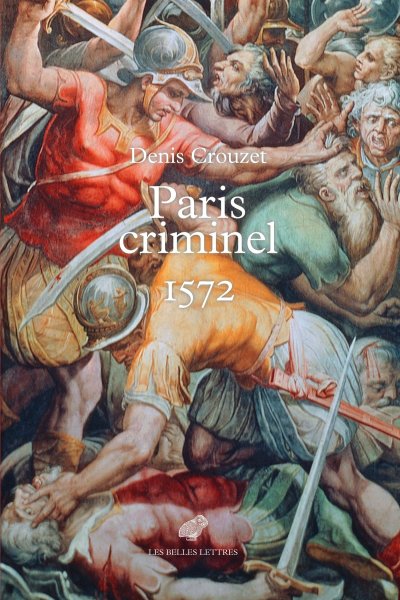
Thirty years after La Nuit de la Saint-Barthélemy (Saint Bartholomew’s Night), Denis Crouzet revisits the massacres of August 1572—a collective purge, a royal enigma, and a popular initiative, which his new book illuminates with bold erudition by reintroducing confessional violence, with all its historical depth, into the story.
About: Anne-Marie Cheny, Le cercle des byzantinistes. Comment bibliothécaires, savants et voyageurs inventèrent Byzance (XVIe-XIXe siècle), Les Belles Lettres
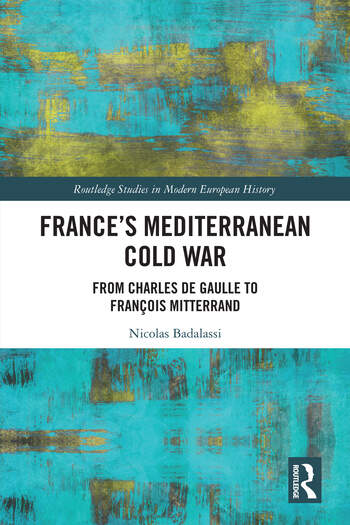
About: Nicolas Badalassi, La France, la guerre froide et la Méditerranée. Des accords d’Évian à la Perestroïka, Presses universitaires de Rennes
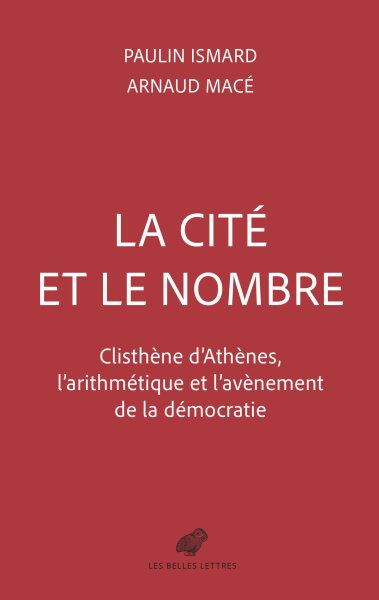
About: Paulin Ismard et Arnaud Macé, La Cité et le nombre. Clisthène d’Athènes, l’arithmétique et l’avènement de la démocratie, Les Belles Lettres
The female silhouette – understood as the body’s visible form and socially perceived appearance – has long been shaped by social norms. In the age of social media, these norms are intensifying, prompting, in response, the rise of so-called “body-positive” movements.
A rumour is circulating in some African countries: the French state is organising penis thefts to offset declining fertility. The rumour, spread by Russian propaganda, has become fake news.
The American sociologist Harrison White made a vital contribution to the development of social network analysis. Besides his work in this field, his theoretical synthesis and his understanding of social formations have influenced a variety of fields such as the sociology of art and economic sociology.
How can we define democracy today? What role does or should the people play in the democratic process ? Through its summer selection, Books&Ideas offers to rediscover a group of four interviews and reviews, published in 2015 and 2016, which have tackled these questions through the prism of history, philosophy and political sciences.
Recent publications on the Holocaust, as well as the opening of a new archival site for researchers, have enriched the history and historiography of what remains as the most traumatic event of the 20th century. From Saul Friedländer’s cohesive rendition of the genesis and enactment of the final solution (2007), to the opening of the Bad Arolsen archives in Germany in 2008, and the new study of the Warsaw Ghetto archives by Samuel D. Kassow (2007), this dossier presents a selection of five reviews and essays recently published on Books&Ideas, showing that the study of the Holocaust continues to stir up considerable interest in the international research community.
This dossier examines the recently reopened debate on regional integration in Asia. What are the obstacles to the construction of an Asian Union? How is the issue tackled in Japan, China or Australia?
“Do we have the right to make bets on the future of mankind?” Forty-one years after being the first ecologist candidate in a presidential campaign and publishing his manifesto book, René Dumont’s intuitions and warnings have lost little of their relevance.
Rediscovering an activist thinker who was at the origins of eco-feminism, but remains unknown. Her work inspired an extremely heterogeneous movement, but has her ambition to concretely transform the social, economic and political organisation of society been pursued?
A great historian of the English working class, a major intellectual figure in debates surrounding Marxism in the years 1960-1970, and an anti-nuclear activist who initiated an environmentalist critique of capitalism—such were the many faces of Edward Palmer Thompson, whose work deeply permeates the different social sciences to this day.
Tandis que l’administration Bush avait saisi la nécessité de « vendre » le conflit en Irak à l’opinion publique, l’administration Trump se passe de toute justification. Les animateurs de late night réactivent le lexique de la “guerre juste” pour rappeler aux républicains les erreurs du passé.
L’État-nation contemporain est en partie subordonné aux compagnies-État et à l’impérialisme financier. Selon Amina Hassani cette situation ne tient, au Nord, qu’à une forme de servitude volontaire, mais témoigne, au Sud, d’un héritage toujours prégnant de l’époque coloniale.
Au-delà de la dictature, bien réelle, la RDA n’a pas été une simple parenthèse, un accident de l’histoire. Incarné dans des discours, des organisations, des objets, des partenariats internationaux, le communisme a été autre chose qu’un prélude au post-communisme.
A propos de : Samuel Scheffler, Pourquoi se soucier des générations futures ?, Éliott Éditions
À propos de : Rahel Jaeggi, Progrès et régression, Seuil
À propos de : Leonardo Padura, Aller à La Havane, Métailié