


In post-May Paris, a mysterious Maoist activist, Fernando, brings about a dozen of people to form a revolutionary group. Studying this charismatic-led organization allows Julie Pagis to deepen our understanding of Weberian domination through sociological enlightenments.
Le livre rouge de Mao en vente sur un marché de Londre, McKay Savage from London
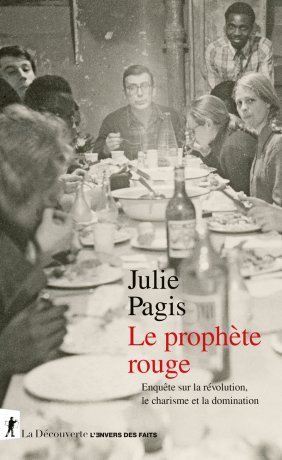
What became of the activists of May ’68? The question of the long-term biographical effects of radical political commitment is one of the central threads in the scholarly trajectory of political scientist Julie Pagis. Following a first book on the topic in 2014 [1], she revisits the question in Le prophète rouge: enquête sur la révolution, le charisme et la domination, published in 2024 by La Découverte. With this new study, J. Pagis contributes to the abundant scholarship devoted to the post-68 decade, a period which encompassed a wide array of political and social experiments emerging from the protest movements that swept across the globe from the 1960s through the late 1970s.
This new book is divided into two parts. The first part retraces the history and functioning of the “Fernando group,” a small circle of anonymous Maoist activists operating in the Paris region during the 1970s. Drawing on archives and testimonies from the principal participants, Pagis retraces the stages of a political experiment marked by the formation of an organization gathering people from diverse social origins. These militants first “established themselves” in factories to spread revolutionary ideals [2], then settled in a building in the Paris suburbs, where they adopted a communal way of life punctuated by violent and endless sessions of self-criticism, under the authority of an informal yet all-powerful leader: Fernando. These first six chapters therefore retrace the internal dynamics of the group, from its creation in 1971 to its collapse in the early 1980s.
In the book’s second part, Pagis seeks to uncover the source of Fernando’s irresistible yet mysterious aura, by following his trajectory through Spain, France, China, and Portugal—a central and often-overlooked country in the history of Western Maoism [3].
Let’s say it from the outset: this book is a major achievement. It is both fascinating in its subject matter and exciting in its writing, which keeps the reader interested thanks to a clever combination of scientific exposition, sociological reflexivity, and the suspenseful unfolding of the investigation. I will discuss two of the book’s most compelling contributions: it advances and renews our sociological understanding of charismatic domination, while serving a fresh look at post-1968 militant radicalism through an inquiry into a highly unusual political organization.
A Sociology of Charismatic Domination
The author’s central theoretical ambition is to examine the mechanisms of charismatic domination within a group. Building on, and revisiting, Max Weber’s classical analysis, J. Pagis sheds light on often-overlooked dimensions of domination. First, she refuses to reduce the “magic” of charisma to the qualities of the leader and, reversely, takes into account the active role of the followers and their “individual and collective interests in submitting to domination” (p. 22)—therefore recalling the classical theme of voluntary servitude. Second, by refusing to consider the leader as an empty signifier, generated solely by the projections of his followers, the author highlights the techniques the leader deploys to establish charismatic domination. In other words, J. Pagis renews the study of charismatic domination through a relational and process-centered investigation. The neologisms to encharism / to be encharismed, which she employs throughout the book, efficiently encapsulate this original methodology.
The originality of Pagis’ conceptualization lies in her capacity to examine a dimension often acknowledged yet rarely theorized in depth: the inherent instability of charisma. It is commonly observed that charisma-based political formations struggle to survive the leader’s disappearance, or even his prolonged absence. This is well illustrated in the case of the Fernando group: each of the leader’s prolonged stays abroad generated tensions, which the group withstood only at the cost of intensified self-criticism sessions, in which increasingly fanciful conspiracies were uncovered, and where collective cohesion was achieved through perpetual strain. On this matter, J. Pagis’ analysis deepens our understanding of the charismatic phenomenon: as historian Ian Kershaw (whom she cites extensively) demonstrated in the case of Hitler [4], charisma seems to be intrinsically entropic. In other words, charismatic domination seems to “hold” only through the near-permanent testing of followers’ loyalty to their leader—at the risk of accelerating the group’s self-destruction. This self-destructive dynamic is central to the functioning of the “Fernando group,” and appears inherent to charismatic domination in the making—not merely in its aftermath.
Another distinctive feature of this inquiry into charismatic processes lies in the singular narrative role the author plays¬¬. Practicing the virtues of reflexivity often promoted in contemporary social sciences, Le prophète rouge also borrows from the genre of first-person literary investigation. The author repeatedly draws explicit parallels between her own approach and that of Spanish writer Javier Cercas—who, in The Impostor, retraces the trajectory of a false Republican deportee who became the leader of an association gathering victims of fascism [5]. Cercas, in that book, inscribed his method in the footsteps of a French alter ego, Emmanuel Carrère, in The Adversary: J. Pagis thus completes a trans-Pyrenean loop. The personal dramatization of the inquiry, in which the author puts forward some of her own dilemmas and questions her own propensity to be encharismed by Fernando—is without a doubt linked to the two aborted film projects that the author originally planned on making (a documentary and a fictional movie), which seem to have left their mark on the writing of this book.
An Inquiry into an Unusual Political Object
Another of the book’s achievements lies in its ability to make compelling an investigation which, beyond or beneath its sociological scope, deals with the political trajectory of an extremely small, almost insignificant organization and of its completely unknown leader. One of the reasons for this success, in my opinion, lies in the very nature of the subject studied: the “Fernando group,” whose characteristics make it a singular, even bizarre, political enterprise in the context (perhaps wrongly) associated with 1970s activism. Let’s highlight and examine three of the specific features of this group: its counter-countercultural ethos, its active anonymity, and its non-proselytizing dynamic.
First, the Fernando group is almost entirely impervious to the atmosphere of cultural or “societal” liberation often associated with the spirit of May. On the contrary, the group’s functioning was marked by strong conservatism—not so much because gender roles were highly traditional (which is hardly original), but because it was composed of a series of conventional monogamous couples with children, somehow making it a “family-based” organization, who regarded feminism as a “petty-bourgeois” deviation to be anathematized. This was far removed from both “sexual liberation” and the monk-soldier logic that prevailed in other organizations (such as Lutte Ouvrière which encouraged its members not to have children). The only deviation from this traditionalism in private life management was a project of “proletarian nursery,” aimed at permanently separating children from their parents to abolish the “bourgeois right of private ownership of children” (p. 156 and following). This project’s failure therefore pointed to certain limits of the leader’s charismatic domination. The Fernando group thus displayed counter-countercultural traits, far removed from the “artistic criticism” of capitalism [6], instead seeking to embody what was perceived as a more conservative working-class morality. In doing so, the author highlights the diversity of 1970s revolutionary movements, as other works on Lambertist activism [7] or on Latin American armed organizations [8], often distant from any form of liberalism, have also shown.
The Fernando group also stood out for its cultivated anonymity. One thing, in particular, might almost disorient radical left aficionados, accustomed to the inflation of acronyms and the labeling of even the smallest activist subgroups. This group had no name. Its founding text, nicknamed the “pink document,” did not really have one either. Likewise, the former convent in Clichy, where the activists settled in 1975, was simply called “the Building.” The book thus recounts the history of a nameless group, composed of around fifteen adults at its peak, convinced they were undertaking an action of revolutionary significance. Immersed in its efforts to merge with the masses, the group seems to have refused any visibility whatsoever— a series of interesting characteristics that call into question the very notion of political “organization.” The book thus raises new questions: How widespread were such nameless revolutionary micro-groups in France in the wake of ’68? Could we map them out? What pushes a micro-group to name itself—or to refuse to do so? What role does the publicity of its actions play in these processes of labeling? One might hypothesize that what distinguished the anonymity of the Fernando group from other organizations of comparable size but well-identified names, such as Japan’s United Red Army [9], was the use of physical violence—something the Fernando group narrowly avoided—and its media consequences.
Baroque and anonymous, Fernando’s group is also surprising in its lack of proselytism once the founding core was established. From a certain point in the group’s history, virtually all of its energy and activity became directed inward. Very few efforts seem to have been made toward the group’s target audience, the workers in the factories where the activists worked, as J. Pagis meticulously demonstrates, working on hundreds of notebooks of the meetings that were held over a decade. In other words, the Fernando group appears as a singular case of militant organization, combining the opposed properties of factory-establishment (with a proselytizing aim) and of a prefigurative community (whose action is oriented toward its members themselves) [10]—except for the fact that this community is based in the city and is not made up of neo-ruralists. How were these strange activists perceived by their factory colleagues? What ties did the group maintain with the outside world? The answers to these questions are not central to the argument of the book, yet they contribute to its aura of mystery—and thus to our appetite as readers.
Curiously enough, it is this very appetite that the author interrogates in the epilogue, which reads almost like a Maoist-style self-criticism: why get so passionate about this story, and take its protagonists seriously, at the risk of reproducing the occlusion of violence previously exercised within the group? How can one connect micro-political analysis (and its “petty-bourgeois” derivative, a nerdy, unhealthy political curiosity) with a sociological approach? This is one of the challenges posed by this stimulating book.
Julie Pagis, Le prophète rouge, La Découverte, 2024, 352 p., 21€, ISBN 9782348078897
by , 25 November 2025
Share this article
Find us here :


To quote this article :
David Copello, « A Maoist Enigma in Post-May France », Books and Ideas , 25 November 2025. ISSN : 2105-3030. URL : https://booksandideas.net/A-Maoist-Enigma-in-Post-May-France
Nota Bene:
If you want to discuss this essay further, you can send a proposal to the editorial team (redaction at laviedesidees.fr). We will get back to you as soon as possible.
You might also like



Footnotes
[1] Julie Pagis, Mai 68 : un pavé dans leur histoire, Paris, Presses de Sciences Po, 2014.
[2] “Establishing” in factories was a common practice among Maoist activists in Europe, who would get hired in factories to raise revolutionary awareness and promote political struggle. On this subject, readers may consult Robert Linhart’s classic testimony (The assembly line, Amherst, University of Massachusets Press, 1981 [1978]), as well as the autobiographical account by his daughter Virginie Linhart (Le jour où mon père s’est tu, Paris, Seuil, 2008).
[4] Ian Kershaw, The Nazi Dictatorship: The Nazi Dictatorship. Problems and Perspectives of Interpretation, London, Edward Arnold, 1985.
[6] Boltanski Luc and Chiapello Eve, The New Spirit of Capitalism, London, Verso, 2005.
[7] Yon Karel, « Modes de sociabilité et entretien de l’habitus militant : militer en bandes à l’AJS-OCI », Politix, no 2, vol. 70, 2005, p. 137‑167. https://doi.org/10.3917/pox.070.0137
[8] Cosse Isabella, « “Infidelidades”: Moral, revolución y sexualidad en las organizaciones de la izquierda armada en la Argentina de los años 70 », Prácticas de Oficio. Investigación y reflexión en Ciencias Sociales, no 19, 2017. https://revistas.ungs.edu.ar/index.php/po/article/view/112
[9] See the trailer of the fictional movie Koji Wakamatsu dedicated to this group in 2007 (https://www.youtube.com/watch?v=M7Z5U9G8D-o), and its commentary by French screenplayer and director Arthur Harari (https://www.youtube.com/watch?v=koBmlNbF66s).
[10] Vitiello Audric, « Expérimenter l’alternative: Politique préfigurative, formation des subjectivités et transformation de la société », Raisons politiques, no 1, vol. 97, 2025, p. 39‑65, [https//doi.org/10.3917/rai.097.0039].
Our partners


Sections
Keep in touch
© laviedesidees.fr - Any replication forbidden without the explicit consent of the editors. - Mentions légales - webdesign : Abel Poucet