Books & Ideas is the English-language mirror website of La Vie des Idées, a free online journal which has gained a large readership and established itself in France as a major place for intellectual debate since 2007.
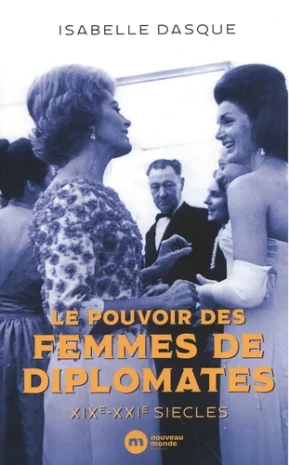
Despite being confined to diplomacy’s backstage, ambassadors’ wives were the invisible architects of France’s prestige abroad. From social receptions to soft power, Isabelle Dasque examines two centuries of feminine influence.
Jeanne Tsai and Batja Mesquita show how emotions are shaped by cultural logics that orient our relationships and judgments. Their conversation raises a broader question: what does it mean to understand others in culturally plural societies?
Active in the fight against poverty since the 1950s, the ATD Fourth World movement has successfully combined grassroots action, research and advocacy, exerting a lasting influence on social policies in France and internationally.
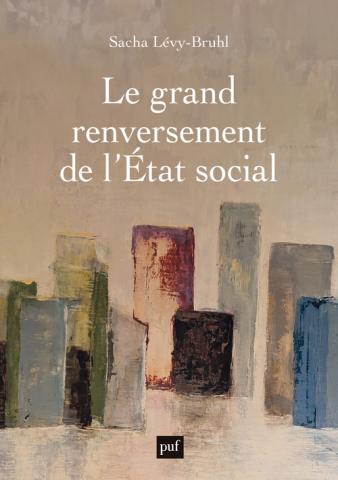
Amid the never-ending crisis of the welfare state and the waning of the principle of solidarity, Sacha Lévy-Bruhl proposes a new interpretation. Starting from the idea of collective responsibility, he pursues an important goal: rethinking social protection in the twenty-first century.
About: Fatma Çingi Kocadost, La promesse qu’on nous a faite, Éditions de l’EHESS
About: Silyane Larcher et Félix Germain (dir.), Marianne est aussi noire. Luttes occultées pour l’égalité, Seuil
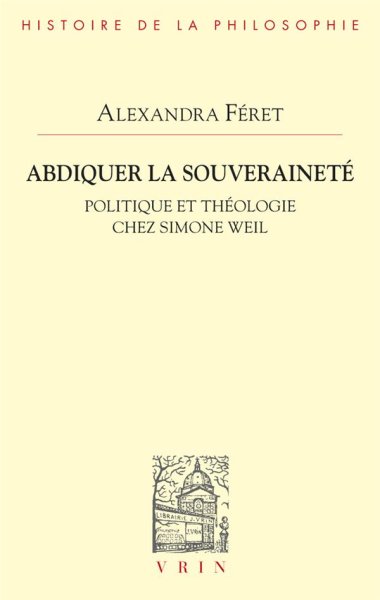
About: Alexandra Féret, Abdiquer la souveraineté. Politique et théologie chez Simone Weil, Vrin
The female silhouette – understood as the body’s visible form and socially perceived appearance – has long been shaped by social norms. In the age of social media, these norms are intensifying, prompting, in response, the rise of so-called “body-positive” movements.
A rumour is circulating in some African countries: the French state is organising penis thefts to offset declining fertility. The rumour, spread by Russian propaganda, has become fake news.
The American sociologist Harrison White made a vital contribution to the development of social network analysis. Besides his work in this field, his theoretical synthesis and his understanding of social formations have influenced a variety of fields such as the sociology of art and economic sociology.
Books & Ideas is slowing down for the summer. In the meantime, here is our weekly selection of reviews published over the past year.
Summer is here; Books&Ideas is off on holiday. We will be back with new publications starting August 30. In the meantime, here is a selection of essays, interviews and reviews published over the past year.
As protests against racism break out all over the world following the murder of George Floyd, Books & Ideas gathers a selection of texts examining the history of these multifaceted discriminations and of the struggles for racial justice.
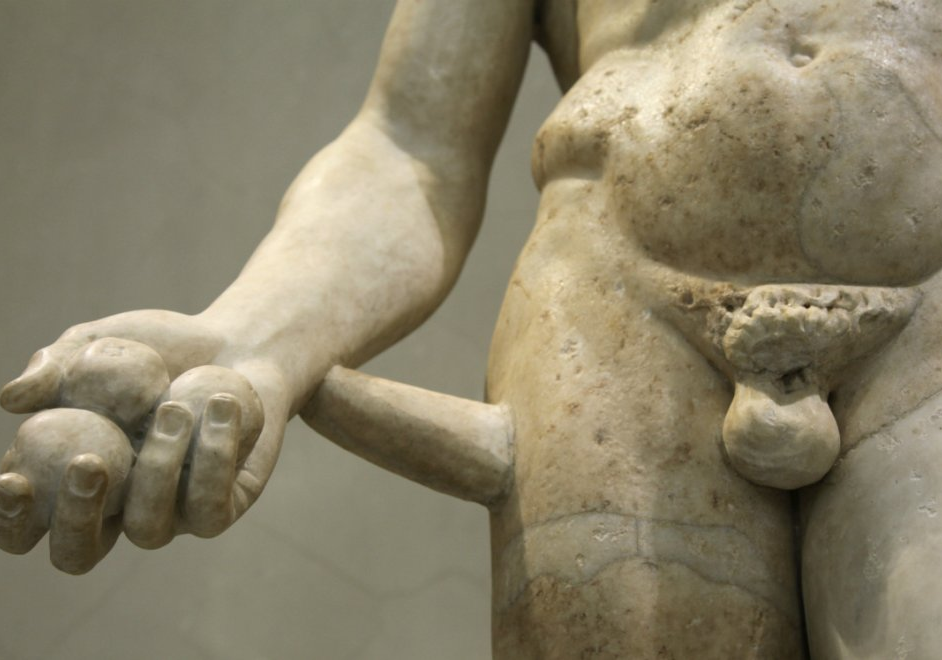
Thanks to his work on Greco-Roman antiquity, his intellectual curiosity, his pronounced taste for interdisciplinarity, his sense of humor, and the freedom that informs all his research, Paul Veyne is a twentieth-century historian whose work cannot be avoided. A loose cannon at the heart of the academic establishment, a deep thinker and a dilettante, Veyne invites us, through his work, to a festival of thought.
According to Nancy Fraser, the renewal of socialism requires a conflation of activism and political theory; indeed, emancipation can only exist on the basis of equal participation in all spheres of life, and can only be understood in terms of social struggles, which today appear in multiple forms.
André Gorz’s multiform thought is entirely centred on liberation: from work, which prevents individuals from thriving; from consumption, which grows ever higher; and from the social system, which reduces individuals to mere pawns in a “megamachine”.
Jeanne Tsai et Batja Mesquita montrent que les émotions sont façonnées par des logiques culturelles qui orientent nos relations et nos jugements. Elles interrogent ainsi ce que signifie comprendre autrui dans des sociétés culturellement plurielles.
L’occident a été le pourvoyeur principal des outils et des vecteurs d’épuisement, voire de destruction des écosystèmes et des ressources depuis la Révolution française.
L’antisémitisme n’a pas disparu d’Allemagne et d’Autriche. Une anthologie en dessine les contours et les travestissements.
À propos de : Serena Luzzi, Identità bugiarde. Vagabondi, repressione, resilienza nell’Ottocento asburgico, Roma, Viella
À propos de : Stéphen Rostain, Amazonie. Une histoire des civilisations de la forêt, Tallandier
À propos de : Fabien Lacouture, Federer, Les Pérégrines