

The female silhouette – understood as the body’s visible form and socially perceived appearance – has long been shaped by social norms. In the age of social media, these norms are intensifying, prompting, in response, the rise of so-called “body-positive” movements.
#skinnytok, Tik Tok
|
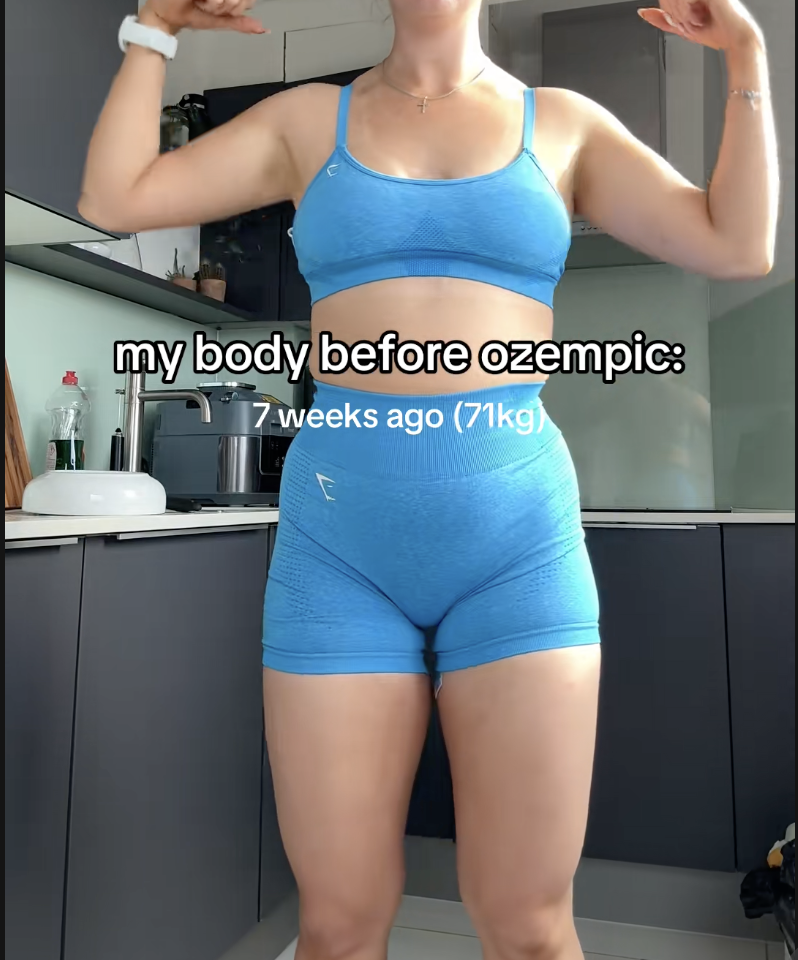
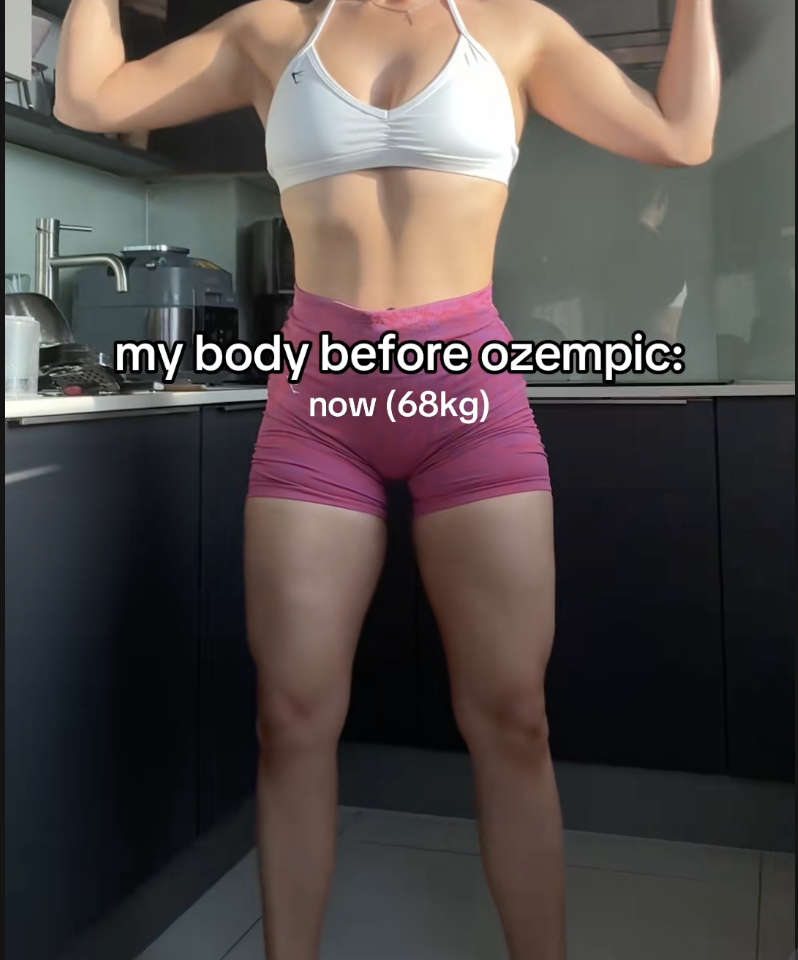
Chubby or skinny filters on TikTok, image-editing tools equipped with slimming filters [1], filters now built into smartphones: our bodily appearance keeps feeding the virtual world. Other recent examples include hashtags such as #SkinnyTok which was recently banned [2], or the widespread promotion of drugs such as the high-profile Ozempic, an anti-diabetic medication repurposed as an appetite suppressant, popularised in particular through “What I eat in a day” videos on social media. Our bodies are no longer monitored solely by those around us – family members, peers or colleagues – but also by internet users and by the algorithms of the digital platforms we enter.
This points to a profound transformation. Bodily experience – women’s bodily experience in particular – is now under the sway of digital “dispositifs” (in the Foucauldian sense of heterogeneous sociotechnical arrangements of power) that help to promote idealised representations of the female silhouette, along with dietary, aesthetic and sporting practices. This form of social control over bodies is profoundly gendered. For social and historical reasons, women’s bodies have most often been controlled, shaped and constrained so as to comply with social injunctions. This disciplining has led to the naturalisation of bodies fashioned by society, and to the naturalisation of women’s subordinate position within it. Socially and historically embedded [3], the relationship to the silhouette functions as a principle of classification which, by allocating social positions and legitimising social hierarchies [4], has contributed to making fatphobia a structural phenomenon in contemporary societies [5].
In a world in which the digital “colonises” our lives
In a world in which the digital increasingly “colonises” our lives [6], the governmentality of bodies – which Michel Foucault articulated through the concepts of biopower and biopolitics [7] – is reinforced by sociotechnical apparatuses such as platforms. These appear to act as powerful instruments of bodily discipline, all the more so because they operate at scale, even as the algorithms underpinning them often remain opaque. Platforms thus participate in a (new) form of biopower that disciplines bodies by organising and ranking visibility, privileging those bodies whose silhouette conforms to current dominant norms.
While these platforms disseminate and promote highly restrictive norms of physical appearance – directed primarily at women – they also give visibility to influencers, activists and collective organisations that denounce these norms and seek to abolish them. The emergence of movements such as fat activism or body positivity has thus made it possible to glimpse forms of reappropriation and contestation of dominant bodily norms.
Yet the emancipation promised by social media appears largely illusory. Far from encouraging the deconstruction of bodily ideals, recent developments in the digital sphere – in particular the proliferation of filters, algorithmic recommendation systems and artificial intelligence – have instead revived the cult of the slender female silhouette, reinscribing age-old injunctions that are more pervasive and more constant than ever.
The female silhouette: a central instrument of social control
“From ancient origins through to democratic modernity, women have (…) been nothing but bodies, assigned to sexuality and motherhood,” writes the philosopher Camille Froideveaux-Metterie [8]. Historically, the female body has been enjoined to conform to constraining social norms, reflecting women’s place within society [9]. Institutions such as the family and religion, and later, progressively, medicine and the state, have regulated women’s corporeality by limiting it, enclosing it and reshaping it so that it corresponds to women’s social identity — that of mother and wife in particular.
From early childhood, individuals are assigned a bodily identity that frames what they can and should do with their bodies. From compliments to clothing, and from sports to domestic tasks, every aspect of a child’s life reveals their gendered position. Girls, and later young women, are expected to be “beautiful” and “slim”, while boys are enjoined to become “strong” and “virile”.
The norm of thinness thus serves as an indicator of distinction between the sexes: while young men may deviate (to some extent) from the socially valorised ideal of slimness, no such leniency is tolerated for young women. The latter gradually internalise bodily norms to the point of perceiving them as natural [10]. Their bodily hexis thus expresses not only their gendered position but also their class or racial positioning, since thinness is not a universal norm. Beauty practices vary from one social group to another, and from one historical period to the next. Certain constants nevertheless remain, such as the opposition between what is considered “natural” (for instance, hygiene and basic grooming), associated with a form of moral purity and a hygienist medical discourse, and what is deemed “artificial” or superficial (such as make-up), associated with deceit, lust and therefore immorality [11].
A misogynistic thinness…
There is only a small step from the pressure to be thin to fatphobia [12]. The pressure to conform to thinness norms stigmatises any deviation – even a slight one – from the ideal and fuels everyday misogyny directed at adult female bodies. For example, cellulite, a natural biological feature, was long framed as immoral, before being medicalised at the beginning of the twentieth century [13]. Fatphobia, in turn, refers to the process of stigmatisation and discrimination targeting individuals socially designated as “too fat”. It rests on a set of stereotypes – an alleged lack of willpower, unattractiveness, or intellectual deficiency, among others – which also permeate representations of other devalued social groups, notably racialised people or those experiencing economic precarity. In the twenty-first century, fatphobia thus constitutes a major structural phenomenon: a system of domination whose roots lie simultaneously in hatred of femininity, in the disgust associated with dietary “fat”, and in the stigmatisation of those perceived as taking “more than their share” at the table [14].
Bodily norms in constant evolution
From ancient Greek and Roman times onwards, corpulence – like thinness – was devalued and perceived as a health problem. With the advent of Christianity, excess in eating also became a moral and spiritual issue, seen as revealing a lack of self-mastery [15]. The sin of gluttony is embedded within this framework. Bodily norms subsequently evolved over the centuries. During the Middle Ages, certain forms of plumpness were valued, associated with fertility in women and prosperity in men. In a context marked by recurrent famines, a well-fleshed body testified to the ability to eat sufficiently and, in doing so, to a position of social advantage [16].
Gradually, during the Renaissance, an ideal of mobility emerged, and corpulence began to arouse greater suspicion. In the eighteenth century, the development of bodily measurement and classification led to the definition of “obesity”. Corpulence lost its positive value. While stoutness remained tolerated during the nineteenth century, the pathologisation of bodily roundness progressively took hold, and obesity became the object of an increasing process of medicalisation throughout the nineteenth and twentieth centuries.
The modern norm of thinness
A new ideal of beauty emerged alongside the medicalisation of corpulence between 1880 and 1920 [17]: that of modern thinness, which gradually moved away from the notion of bodily “proper measure” inherited from Antiquity. New public health concerns also arose with the development of the welfare state at the end of the nineteenth century, profoundly transforming perceptions of bodies [18]. Behavioural prescriptions multiplied, dietary practices were rationalised, and bodies were enjoined to discipline themselves [19].
It was within this context that the principles of anthropometry developed during the nineteenth century [20], grounded in the emergence of statistical tools and quantitative norms that fixed bodily ideals and pathologised deviations from them [21].
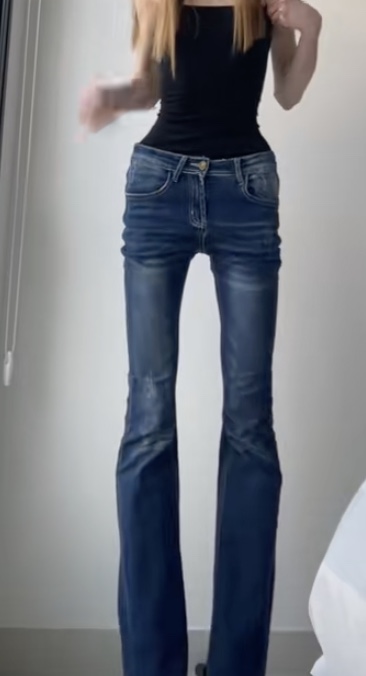
At the same time, a cultural paradigm centred on thinness took shape in Victorian England: young women from affluent backgrounds valued extreme slenderness as a means of appearing delicate, disciplined and feminine. The rejection of food went hand in hand with the rejection of sexuality, in the pursuit of an ethereal appearance and purity. Within a few decades, thinness acquired the status of a health-related and moral norm in Europe, while large body size gradually slipped into the category of a “problem”, thereby laying enduring foundations for contemporary fatphobia as a structural phenomenon.
Thus, as industrial capitalism and a Protestant ethic privileging accumulation and discipline over the pursuit of pleasure became dominant [22], social, religious and medical discourses helped to naturalise stigmatising and guilt-inducing representations of fat bodies. Eating was consequently endowed with a strong moral charge: it was no longer an ordinary act but a suspect pleasure, and all forms of excess – whether in terms of quantity consumed or a hedonistic relationship to food – were progressively conceived as “a deviation to be controlled and corrected” [23].
Fatphobia as a system of domination
These discourses not only produce a bodily norm; they also entrench regimes of victimisation and social disqualification, structured by class and racial relations, in which fat bodies are associated with indiscipline, laziness or irrationality and assigned to subordinate social positions. This social disqualification based on body size rests on a “cultural fiction of absolute bodily control” [24], which asserts that everyone could determine their body size as they see fit, regardless of their living conditions, education, financial resources, as well as their biological and psychological characteristics.
Paradoxically, even as it would be criticised by many feminist authors in the twentieth century, the norm of thinness was supported by the American feminist movement in the nineteenth century [25], as it made it possible to shed the petticoats and corsets that constrained the female silhouette and limited women’s ability to work, to move and to occupy public space. From an external item of clothing – revealing the social norms weighing on the female body – the corset was thus progressively incorporated into the body itself, compelling women to build muscle, control their weight and, ipso facto, to modify those parts of their bodies that society deemed “ugly”.
The emancipatory claim promoted by thinness at the end of the nineteenth century was quickly appropriated by the fashion industry, and later by fitness and wellness brands [26], before being extended into the imaginary of willowy bodies embodied by the models of “heroin chic”. This model found an emblematic figure in Kate Moss, associated with the injunction-turned-slogan – “nothing tastes as good as skinny feels” – now widely repeated in the media.
The fat acceptance movement… an “anti-fatphobia awakening”
While the norm of thinness became dominant on both sides of the Atlantic during the twentieth century and led to the development of a weight-loss industry whose financial scale reveals the daily injunction to control one’s weight, it has nevertheless been challenged by many authors and activists. A movement emerged in the late 1960s in the United States: drawing on lesbian and feminist networks and inspired by civil rights and gay rights struggles, it fought fatphobia and defended the right of fat people to exist on their own terms. This fat acceptance movement subsequently spread to Europe and broadened its repertoires of action, encompassing a wide range of claims: some activists were close to queer milieus, others to the medical world through various associations, while others again drew on the language of personal development.
From the early 2000s onwards, these activists used the emergence of the internet to create newsletters, discussion forums and lively activist websites, before moving on to invest social media platforms.
The female silhouette in the age of platforms
This anti-fatphobia movement saw some of its messages circulate beyond activist circles, notably with the emergence of the body positive movement, initiated by the foundation created in 1996 by Elisabeth Scott and Connie Sobczak following the death of the latter’s sister, who died as a result of eating disorders. However, the movement took time to gain traction on social media. Prior to its rise, pro-ana (short for pro-anorexia) content dominated the internet and the blogs of the 2000s, in the wake of Thinspiration – a lifestyle that valorised extreme thinness [27]. Despite the closure of several websites imposed by public authorities, the phenomenon persisted, and discourses promoting extreme thinness continued to circulate. In the mid-2000s, social media even saw the emergence of new trends that reinforced these representations, through challenges such as the thigh gap or the “#A4challenge”, which invited users to prove that their waist did not exceed the width of an A4 sheet.
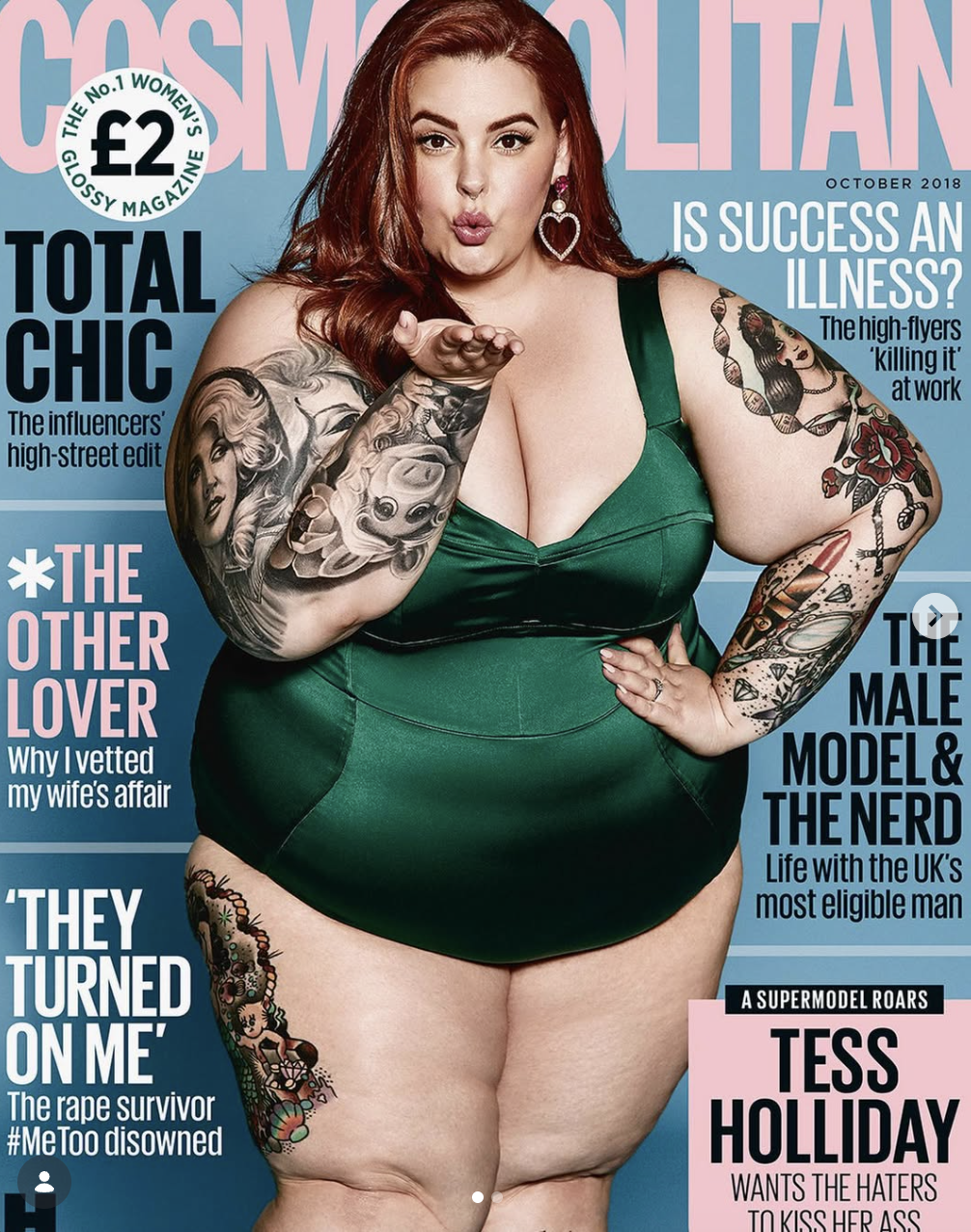
The years 2010 to 2013 nevertheless marked the emergence of body positivity, notably through the campaign “#effyourbeautystandards” [28], launched on Instagram by the plus-size model and feminist Tess Holliday. The campaign sought to challenge media discourses that excluded from the definition of “beauty” any woman wearing a size above a French size 40 [29]. Widely relayed, this initiative paved the way for other similar campaigns, helping to structure the contemporary body positive movement, which aims to make the voices of marginalised groups audible by challenging dominant beauty norms and promoting greater diversity and inclusivity [30].
Body positivity thus relied on platforms by mobilising hashtags such as #EveryBodyIsBeautiful, #BodyPositive and #EffYourBeautyStandards to foster collective action, the formation of online communities and awareness of issues related to self-acceptance. In doing so, platforms offered alternative territories that allowed people socially designated as “fat” to be represented, staged and to work towards recognition as subjects rather than objects [31].
Since then, body positivity has been criticised and accused of enjoining people to love their bodies [32], of generating new forms of oppression, and of excluding racialised women or obese bodies by creating a new “acceptable” ideal and new norms [33]. It has also been accused of becoming depoliticised and of turning into a consumable lifestyle, thereby aligning itself with neoliberal market logics and practices of pinkwashing – a way of positioning oneself as an ally of diversity, but only on the surface. Even longstanding figures within the movement, despite having articulated particularly committed discourses – such as Tess Holliday – have been accused of yielding to commercial logics and, de facto, of rallying to dominant bodily norms. Videos mocking the evolution of her positions have circulated, accusing her of “changing sides” [34], or even portraying her as a traitor in the eyes of part of her community, tensions that in fact belong to a much broader context.
Today, the movement does indeed appear to be losing momentum
Today, the anti-fatphobia movement does indeed appear to be losing momentum. The decline in the number of so-called “plus-size” models on fashion runways [35] bears witness to this, as does the digital ecosystem which, through its recommendation algorithms, contributes to reconfiguring regimes of visibility and, in doing so, to redefining the boundaries between what is visible and what is invisible. Following the construction of women and fat people as political subjects, a backlash now seems to be taking place: the female body tends once again to be treated as an object. This shift is facilitated by the rise of anti-woke and masculinist discourses, but also by the intensification of trolling and online harassment.
This turning point, which can be dated to around 2022–2023, coincides with the growing prominence of certain platforms and with technical and algorithmic developments that are reshaping regimes of visibility. The change implemented by Instagram in 2016, with the abandonment of an anti-chronological feed in favour of an order based on presumed affinities, marks a decisive shift: the visibility of content becomes conditional upon engagement metrics (likes, comments, time spent…). Another turning point lies in the rise of TikTok, which further intensifies this logic of attention capture. In the age of platforms, it is no longer human editors who select content, but algorithmic ranking systems that rank it and make certain content visible in order to optimise engagement [36].
By personalising news feeds and developing features that foster addictive and polarised uses, platforms tend to valorise content that is sensationalist, provocative and viral –and that generates increased viewing time [37]. According to this logic, “harmonious” content, such as that historically promoted by body positivity, appears less viral than polarising content such as thinness challenges or “what I eat in a day” formats.
Designed by TikTok’s video editor CapCut, the success of the “chubby” filter – which allowed users to appear heavier– clearly illustrates this trend. Under the guise of playful use, the filter rapidly came to function as a warning mechanism signalling the “risk of fatness”. Emerging as a trend at the beginning of 2025 on TikTok, this practice circulated widely before the filter was ultimately removed in March 2025, following strong denunciations of its fatphobic character.
According to this same logic of disciplining female bodies, the valorisation of thinness has been pushed to extremes on TikTok, notably through the “skinny” filter, designed to visually slim the silhouette, or through the keyword #SkinnyTok, which emerged at the beginning of 2025 (before being formally banned in June 2025). This keyword was used by women promoting dietary restriction, such as the influencer Mina Zalie (1.4 million followers in December 2025), who gained international attention with her slogan “Eat small to be small” [38]. A constellation of content promoting willowy silhouettes – facilitated by algorithmic logics of visibility – thus achieved heightened circulation on TikTok.
Following pressure exerted by France and the European Commission, the removal of the hashtag #SkinnyTok has, of course, neither eliminated fatphobia nor the cult of appearance. In France, for example, the keyword pertedepoids (“weight loss”) is reported to bring together 910,000 videos – twice as many as SkinnyTok [39]. It is as though the change in hashtag not only made it possible to circumvent the ban, but more profoundly encouraged the promotion of a movement that elevates slenderness as a value of perfection, self-mastery and control [40], in continuity with the values underpinning thinness since the nineteenth century.
Fatphobia did not originate with social media, but these platforms constitute particularly powerful transmission belts, all the more so since they are pervasive and insidious, amplifying certain discourses through accounts dedicated to lifestyles, cooking, fashion or wellness. Beyond their effects on perceptions of bodies [41], these platforms also contribute, through their algorithmic power, to the development of eating disorders [42]. Such power is not without recalling the panoptic model described by Foucault [43], in which surveillance is internalised through practices of self-observation and self-control mediated by technology.
With their capacity for propagation [44], these borderless platforms circulate content – whatever its nature – at great speed and contribute to fuelling what is often described as an era of “post-truth”, in which facts, evidence and objectified information tend to lose authority in favour of emotions, beliefs and narratives. It is within this context that many influencers or content creators, sometimes lacking any specific training, promote drugs such as Ozempic or other or GLP-1 drugs, presented as quick and effective solutions for weight loss. Such discourses weaken the principles of body positivity: why accept oneself when techno-medical solutions for transforming one’s silhouette appear accessible and effective? They also contribute to the medicalisation and pathologisation of fat bodies, obscuring the social, economic and political conditions that underlie the disorders and illnesses associated with them.
At a time when platforms increasingly govern our silhouettes, is resistance still possible?
Although socio-digital platforms constitute alternative territories of existence and visibility for people socially designated as fat –that is, spaces of social and symbolic recognition, of identity reconstruction or of community support –they nonetheless contribute to maintaining, and at times exacerbating, the cult of the slender female body. Women’s bodies are now under the sway of capitalist platforms and, more broadly, of a culture of “all-digital”, embodied in wearables, fitness applications or connected objects dedicated to bodily discipline.
Within this attention economy, the values associated with the early days of the internet – promises of horizontality, openness and pluralism [45] – are increasingly undermined and diverted [46]. While the era of social media may have fostered hopes for the advent of a more diverse, more horizontal and more inclusive space, the colonisation of the web by the GAFAMs (Google, Apple, Facebook, Amazon, & Microsoft) has dealt a severe blow to this emancipatory project [47].
Although activist struggles against fatphobia and, more broadly, against restrictive bodily norms can unfold on these platforms, such struggles should not stem solely from platforms that have no interest in consensus and whose profitability is grounded in disagreement, or even conflict. They must above all emanate from civil society (associations), the media and institutions (schools, media, medicine, law), which must interrogate algorithms, implement critical digital literacy, and politically regulate these platforms. On the side of civil society and activist movements, many challenges also remain to be addressed. The struggle for the recognition of bodily singularity could in particular be conceived as an ontological project of “coincidence with oneself”, a crucial political question [48].
by & , 17 February
Share this article
Find us here :


Further reading
We sincerely thank Ramya Chandrasekhar (CIS - CNRS) for her careful reading and corrections of this text.
To quote this article :
Hélène Bourdeloie & Solenne Carof, « Algorithms and the female silhouette », Books and Ideas , 17 February 2026. ISSN : 2105-3030. URL : https://booksandideas.net/Algorithms-and-the-female-silhouette
Nota Bene:
If you want to discuss this essay further, you can send a proposal to the editorial team (redaction at laviedesidees.fr). We will get back to you as soon as possible.
You might also like


Footnotes
[1] See, for example: https://openart.ai/features/skinny-filter
[2] Kim Willsher, “French Minister Reports #SkinnyTok to Regulator over Anorexia Concerns”, The Guardian, 22 April 2025, accessed 17 December 2025.
[3] Georges Vigarello, Histoire de la beauté, Paris, Seuil, 2004.
[4] Susan Bordo, Unbearable Weight: Feminism, Western Culture, and the Body, Berkeley, University of California Press, 1993.
[5] Solenne Carof, Grossophobie. Sociologie d’une discrimination invisible, Paris, Maison des Sciences de l’Homme, 2021.
[6] Nikos Smyrnaios, “L’effet GAFAM: stratégies et logiques de l’oligopole de l’internet”, Communication & Langages, 2016 (188), pp. 61–83.
[7] Michel Foucault, Histoire de la sexualité. Vol. 1: La volonté de savoir, Paris, Gallimard, 1976.
[8] Camille Froideveaux-Metterie, Un corps à soi, Paris, Seuil, 2021, p. 9.
[9] Colette Guillaumin, Sexe, race et pratique du pouvoir, Paris, Côté-femmes, 1992.
[10] Pierre Bourdieu, La distinction. Critique sociale du jugement, Paris, Éditions de Minuit, 1979.
[11] Bruno Remaury, Le beau sexe faible, Paris, Grasset, 2000.
[12] Hélène Bourdeloie and Laurence Larochelle, “Fatphobia: constructions, mediations and embodied experience”, Journal of Gender Studies, forthcoming.
[13] Rossella Ghigi, “Le corps féminin entre science et culpabilisation. Autour d’une histoire de la cellulite”, Travail, genre et sociétés, 12 (2), 2004, pp. 55–75
[14] Claude Fischler, L’homnivore, Paris, Odile Jacob, 1990.
[15] Susan E. Hill, Eating to Excess: The Meaning of Gluttony and the Fat Body in the Ancient World, London, Bloomsbury Publishing, 2011.
[16] Georges Vigarello, Les métamorphoses du gras. Histoire de l’obésité du Moyen Âge au XXᵉ siècle, Paris, Seuil, 2010.
[17] Laura Fraser, The Inner Corset: A Brief History of Fat in the United States, New York, Esther Publishing, 2009.
[18] Fraser, The Inner Corset.
[19] Laurence Dimitra Larochelle and Hélène Bourdeloie, “Grossophobie”, in Dictionnaire du genre en traduction, IRN World Gender: https://worldgender.cnrs.fr/notices/la-grossophobie/
[20] Solenne Carof, “La grossophobie, révélatrice des normes sociales”, in Grossophobie, Paris, Éditions de la Maison des sciences de l’homme, 2021, pp. 67–92; and Solenne Carof, Grossophobie. Sociologie d’une discrimination invisible, Paris, Maison des Sciences de l’Homme, 2021.
[21] Fraser, The Inner Corset.
[22] Eric J. Oliver, Fat Politics: The Real Story behind America’s Obesity Epidemic, Oxford, Oxford University Press, 2006.
[23] Annemarie Jutel, “Visions of Vice: History and Contemporary Fat Phobia”, Junctures, 1 (December), 2003, pp. 35–44.
[24] Joyce Huff, “Access to the Sky: Airplane Seats and Fat Bodies as Contested Spaces”, in Esther Rothblum and Sondra Solovay (eds), The Fat Studies Reader, New York, New York University Press, 2009, pp. 249–250.
[25] Katharina Vester, “Regime Change: Gender, Class, and the Invention of Dieting in Postbellum America”, Journal of Social History, vol. 44, no. 1, 2010, pp. 39–70.
[26] Sonia Devillers (ed.), “Les ‘TikTok minceur’ font grossir les préjugés”, Le dessous des images, ARTE, 2025.
[27] Antonio A. Casilli and Paola Tubaro, Le phénomène pro-ana: troubles alimentaires et réseaux sociaux, Paris, Presses des Mines, 2016.
[28] “Eff your beauty standards” is an expression popularised by Tess Holliday which, drawing on colloquial English and feminist and body-positive activist milieus, can be rendered as “to hell with your beauty standards”; “eff” is a softened form of fuck. The expression rejects dominant aesthetic norms and asserts the legitimacy of all bodies and appearances.
[29] Jessica Cwynar-Horta, “The Commodification of the Body Positive Movement on Instagram”, Stream: Interdisciplinary Journal of Communication, vol. 8, no. 2, 2016, pp. 36–56.
[30] Zoe Brown and Marika Tiggemann, “Attractive Celebrity and Peer Images on Instagram: Effect on Women’s Mood and Body Image”, Body Image, vol. 19, 2016, pp. 37–43.
[31] Laurence D. Larochelle and Hélène Bourdeloie, “Subvertir et se conformer : les paradoxes des Instagrameuses ‘body-positivistes’”, MEI, forthcoming.
[32] Stéphanie Pahud, Chairissons-nous: nos corps nous parlent, Lausanne/Paris, Favre, 2019.
[33] Apryl Williams, “Fat People of Color: Emergent Intersectional Discourse Online”, Social Sciences, 6 (1), 15, 2017.
[34] See: TheCynicalDude (dir.) (2024), Tess Holliday Is ON A DIET?! Bye Bye Body Positivity?, https://www.youtube.com/watch?v=O3yXz-QFpJU, accessed 16 December 2025; or Naj B Fit (dir.) (2024), Tess Holliday: La SUPERSTAR du Body Positive retourne sa veste, https://www.youtube.com/watch?v=Zg2yVPtFgKk, accessed 16 December 2025.
[35] Felicity Hayward, “This Is Exactly How Many Plus-Size Models Walked during Fashion Month”, Glamour UK, 13 October 2022, accessed 16 December 2025.
[36] Dominique Cardon, À quoi rêvent les algorithmes, Paris, Seuil, 2015; Antonio Casilli, En attendant les robots: enquête sur le travail du clic, Paris, Seuil, 2019.
[37] Hélène Bourdeloie, “Le genre sous algorithmes: pourquoi tant de sexisme sur TikTok et sur les plateformes?”, The Conversation, 9 October 2025; Safiya Umoja Noble, Algorithms of Oppression: How Search Engines Reinforce Racism, New York, NYU Press, 2018.
[38] See in particular: https://www.instagram.com/reels/DHsACFnRvXe/ ; https://www.tiktok.com/discover/minazalie-eat-small-be-small, last accessed 15 December 2025.
[39] Sonia Devillers (ed.), “Les ‘TikTok minceur’ font grossir les préjugés”, Le dessous des images, ARTE, 2025.
[40] Devillers, Le dessous des images.
[41] Ana Maria Jiménez-García, Natalia Arias, Elena Picazo Hontanaya, Ana Sanz and Olivia García-Velasco, “Impact of Body-Positive Social Media Content on Body Image Perception”, Journal of Eating Disorders, 13, 153.
[42] Scott Griffiths, Emily A. Harris, Grace Whitehead, Felicity Angelopoulos, Ben Stone, Wesley Grey and Simon Dennis, “Does TikTok Contribute to Eating Disorders? A Comparison of the TikTok Algorithms Belonging to Individuals with Eating Disorders versus Healthy Controls”, Body Image, vol. 51, 2024, article 101807.
[43] Michel Foucault, Surveiller et punir, Paris, Gallimard, 1975.
[44] Dominique Boullier, Propagations. Un nouveau paradigme pour les sciences sociales, Paris, Armand Colin, 2023.
[45] Clément Perarnaud, Julien Rossi, Francesca Musiani and Lucien Castex, L’avenir d’Internet: unité ou fragmentation?, Lormont, Le Bord de l’eau, 2024.
[46] Hélène Bourdeloie and Éric George, “Repenser morale et communication à l’ère numérique”, Communiquer [online], 39, 2024.
[47] Perarnaud et al., L’avenir d’Internet.
[48] Camille Froideveaux-Metterie, “La beauté féminine, un projet de coïncidence à soi”, Le Philosophoire, 38, 2012.
Our partners


Sections
Keep in touch
© laviedesidees.fr - Any replication forbidden without the explicit consent of the editors. - Mentions légales - webdesign : Abel Poucet