

A collective work traces the emotional and psychological journeys of Holocaust survivors in the immediate postwar period. It examines both the practices of caregivers and the strategies survivors employed to reintegrate into society.
In her memoirs on caring for the child survivors of Buchenwald after their arrival in France, Judith Hemmendinger provides a telling anecdote that took place on Yom Kippur in 1945, just months after the Liberation of the Nazi camps. The group of Buchenwald boys under the care of the Jewish organization Oeuvre de Secours aux Enfants (OSE) were primarily from large, religious families that were decimated during the Holocaust. In its aftermath, the older boys sought to guide the younger children back to a religious life. Yom Kippur, the most sacred date on the Jewish calendar, was thus extremely important, also because it led to a dilemma that each child would have to resolve on his own terms: would he, yes or no, participate in the Yom Kippur memorial (Yizkor) service and recite the prayers for the dead for their loved ones? The question led to a fiery debate among the boys: one group argued that the prayers could not be recited, since their parents and siblings might still be alive. The other group countered that they should indeed participate in the Yizkor service, reminding their fellow survivors of the smoke from that gas chambers in Auschwitz that some had witnessed firsthand. Half of the group stayed and recited the prayers for the dead. The other half left the room.
For Hemmendinger, herself a Jewish refugee from Germany who survived in hiding in France and whose own father was murdered in Auschwitz, the Yom Kippur debate represented a turning point for the youth under her care, having allowed for a rare discussion of their families. Furthermore, she notes, the fracture in the group proved decisive in the long-term: the group that chose to recite the Yizkor prayers went on to marry fellow survivors and chose to speak openly about their experiences in the camps with their own children. Those who left the room married women who had not experienced the Nazi camps, and continued to avoid their past, long into adulthood. [1]
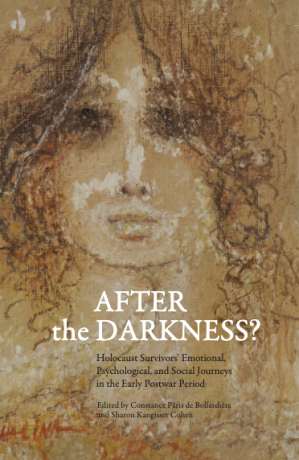
The important volume, edited by Constance Pâris de Bollardière and Sharon Kangisser Cohen, published in 2023 by Yad Vashem following a conference that took place in 2020, [2] shows that in the aftermath of the Holocaust many caregivers, like Hemmendinger, were looking for patterns of behavior among survivors that might shed light on their inner-lives. Caregivers, psychiatrists and social workers were acutely aware of the fact that they were facing an unprecedented catastrophe. As Hemmendinger herself wryly observed, “Obviously, every habitual educational method seemed guaranteed to fail.” [3] For the psychiatrist and psychoanalyst Hans Keilson, who survived the war in the Netherlands in hiding, separated from his wife and child, and later worked closely with young child survivors in Amsterdam, child-welfare professionals were “dealing with totally new experiences and symptomatology, but these extraordinary experiences forced them to take ill-informed measures whose ‘far reaching implications’ were impossible to foresee at the time.” [4]
The improvisation that ensued – well-intentioned, extremely creative and by nature, desperately inadequate – leaves a rich legacy for scholars and students of the social sciences who are interested in how the surviving victims of genocide, after being excluded from humanity, can be – to the extent possible – brought back into its fold. To its credit, the volume does not attempt to evaluate the efficacy of such care measures, but instead to situate them in their multiple national and therapeutic contexts. The book also suggests that survivors’ own “emotional journeys” played a role in the task of moving forward, even if their loss would remain, palpable and intact, throughout their lives. The volume includes nine contributions of varying depth and quality and is divided into three sections, including a first on caregivers and caregiving models, a second on survivors’ collective efforts, and a third on survivors’ individual actions. It will interest readers who seek a better understanding of Jews’ experiences in the aftermath of genocide, and more generally, contributes to the history of psychiatry and psychology and genocide studies.
In their skillful introduction, enriched by an extensive critical apparatus, editors Constance Pâris de Bollardière and Sharon Kangisser Cohen situate their contribution to the historiography. The period following the Holocaust, initially ignored, began to develop in the 1980s and 1990s when historians such as Yehuda Bauer, Bernard Wasserstein, Annette Wieviorka, David Weinberg, to name a few, began carving out national and group case studies on Jewish communities across Europe after the Holocaust. [5] A more recent generation of scholarship has allowed for a more textured social and cultural history of this period to emerge. [6] In parallel, research has focused on the survivors themselves, first in order to document their trauma, then to pose the question of their silences and more recently, to explore their role in the rise of Holocaust consciousness. [7] Demonstrating the need for further inquiry on the care of survivors, including psychiatric and psychological initiatives, but also self-help, the volume poses the question of “how”: how did survivors re-integrate into society in the aftermath of the Holocaust? How did those who sought to help them face this daunting task? How did the field of psychiatry and psychology conceive of their therapeutic role? How did the survivors themselves (defined capaciously here, not only as those who experienced Nazi camps but also those who lived in hiding in Occupied Europe or within the Soviet Union) organize, collectively and individually, to find the strength to move forward?
Probing these questions is no small feat because of the fractured nature of Jewish life, especially after the Holocaust, a situation that has contributed to an equally fragmented historiography (based primarily on national case studies, yet rarely rising above the Nation-state model to question the circulation of expertise and individuals). This is true not only from a linguistic or geographic point of view, as a result of wartime forced migrations and postwar policies on displaced persons, but also from an ideological one. The volume’s multiple contributions reinforce what we know about the diversity of the “she’erit ha’pletah” (the “surviving remnant” in Hebrew) as they are called sometimes in the historiography, a group traversed by conflicting views and conceptions on its place in the Jewish and surrounding world. Ideological fault lines, both religious or political, led to many survivor communities, be they diasporist or zionist in orientation, orthodox or fueled by secular political ideologies such as communism and socialism. Each of these ideologies required reevaluation and honing in the aftermath of the destruction of their families and communities, as Jews grappled with how to apprehend the recent violence they had experienced.
While doing so, they had to handle a humanitarian crisis that was unprecedented in the Jewish experience. One stark statistic helps grasp this: contemporaries estimated that only 175,000 Jewish children—11% of the prewar population of 1.6 million Jewish children under sixteen– remained alive in Europe after the Holocaust. Approximately 120,000 of these children, including many “full or half orphans” (as they were described in reports) were under the care of an organization that receiving funded from the American Joint Distribution Committee (JDC). [8] Adult survivors of Nazi camps, who were often transferred to displaced persons (DP) camps, also required care. The Jewish world, already a minority, became even smaller during the Holocaust; the moral responsibility of caring for survivors permeated far beyond the confines of the humanitarian organizations, both Jewish and internationally-mandated, that set out to help.
And yet, as contributions by José Brunner and Stella Maria Frei analyze, humanitarian organizations were driven by their own agendas and, at times, only patchy understandings of the Jewish experience during World War II. As one aid worker noted: “The Jews demanded to be segregated. They have been terribly difficult to help. They have been demanding, arrogant, have played upon their concentration camp experience to obtain ends… They are divided into factions among themselves.” [9] José Brunner’s article addresses the general context from a broad scope, mobilizing the concept of liminality to describe the postwar transition period, applied to both geographic and emotional landscapes, in which a generation of “old refugees” (those who fled Nazi Germany before the war) returned to Europe to care for “new refugees” (survivors in DP camps). Stella Maria Frei’s excellent contribution deepens our understanding of the efforts of the United Nations Relief and Rehabilitation Administration (UNRRA) by focusing on Bertha Lotte Lotheim, a Jewish German refugee social worker, as she navigated the tensions between the UNRRA guidelines – seeped in individual-centered Freudian theory – and pressure from Zionist groups within the DP camps, which fought to care for youth collectively. Placed in the middle, Lotheim attempted to train Zionist madrichim (counselors) in pedagogical principles, even trying to convince them on the benefits of drawing lessons for their charges. Needless to say, they didn’t see the point.
Were rehabilitation and self-help programs run by Jewish organizations more in-tune with the needs of survivors? Contributions by Beth Cohen, Michal Shaul and Avinoam Pat, as well as Malena Chinski and Constance Pâris de Bollardière, explore the attempts, within the Jewish world, to respond to the postwar crisis. While Beth Cohen provides a case study of three rehabilitation programs for survivor youth, two of which under ultra-orthodox auspices, her article raises an issue only rarely accessible to historians: the care of 60-80 young women who may have survived the Holocaust through sexual slavery in Nazi brothels. The question of “what to do” with that experience in the postwar period remains particularly acute in the othodox context, which forbids any form of sexual activity before marriage, and, as such, is not well-armed with how to deal with sexual abuse. As Cohen notes with frustration, her sources mention this group only once, leaving their postwar experiences- cast in a positive light in her other sources- a mystery. Michal Shaul’s chapter also focuses on the orthodox world, detailing its attempts to rebuild its infrastructure and on the decisions of some Jews to return to orthodox Judaism after the war. Avinoam Patt follows the Zionist youth groups to Cyprus, where many where detained after their immigration attempts to Mandatory Palestine. The “old refugee” Polish Jewish psychiatrist Dr. Paul Friedman, who lived in Paris from 1933-1936 and then in New York City thereafter, was sent by the JDC to survey the mental health of Jewish DPs, first in Western and Central Europe, then in Cyprus. Friedman echoed the JDC’s critique of European Jewish welfare when he observed the madrichim who “usually remained with the groups of children through hazards and dangers all the way from Poland (…). They were young, devoted, self-sacrificing, but for the most part untrained and inexperienced. They displayed a great possessiveness and admitted freely that they over-protected the children, saying that they never would tolerate influence from other quarters on the children they themselves had saved and for whom they had suffered.” [10] Alas, as Cohen and Patt’s contributions show, caring for child survivors was a high-stakes game: each ideological faction claimed ownership over their wards, each with the hope of bolstering their ranks. A situation denounced by Friedman and other members of the JDC staff in Europe who positioned themselves as neutral experts, yet who seem starkly unaware of their own biases. Future research should seek to understand Friedman’s relationship to French psychiatrists Eugene Minkowski –the two must have known one another in interwar Paris– and the lesser known Irène Opolon, who was working with the French Jewish children in OSE homes in the postwar period. [11]
One of the most remarkable chapters, due to the depth of its research and the emotion it uncovers, is that of Malena Chinski and Constance Pâris de Bollardière’s on the Guy-Patin Foyer in Paris for Refugee intellectuals, which shifts the focus of the volume squarely onto the question of self-help. By 1947, the Foyer had become home to a small group of Yiddish-speaking writers, journalists and poets. Having survived in Nazi camps, as well as in hiding in Poland and inside the Soviet Union, these individuals were indeed “survivors,” yet the identity they put forward was their status as intellectuals. Armed with an ardent desire to protect and resurrect the Yiddish language and culture, the Foyer turned into a vibrant cultural center until it lost its JDC funding in 1950. As Chinski and Pâris de Bollardière demonstrate, many of the writers moved on to Tel Aviv, Buenos Aires, and New York. Paris remained home to only a small group, yet lost its status as center of the postwar Yiddish-speaking world. The fire with which they fought in order to continue their creative work is striking.
Indeed, there is a clear emotional turn in the volume as the final contributions shift from a focus on organizations and caretakers to the individual voices of survivors. Katarzyna Person probes Polish postwar testimony and memorial books and reveals the molten anger that motivated survivors’ search for revenge and legal retribution, showing a gendered dimension to the voicing of revenge fantasies. She suggests that going back to one’s hometown was “often described not as a return home but rather a return to the scene of the crime.” [12] Aurélia Kalisky’s detailed portrait on the German Jewish psychologist Hans Keilson, one of the strongest chapters in the book, deftly analyzes how Keilson’s own experiences as a survivor and working with hidden (and usually orphaned) Jewish children in Amsterdam in the immediate aftermath of the war led to his landmark work, Sequential Traumatization in Children, published in German in 1979, in which he argues that “ the postwar period is the decisive period that characterizes the whole traumatizing event.” [13] Beyond pointing out Keilson’s singular contribution, Kalisky questions his position as a “concerned or affected person [den Betroffenen]” and notes that he dedicates his work to his parents, who were murdered in Auschwitz, “in place of Kaddish.” [14] Alas, the prayer for the dead and one’s capacity (or not) to pronounce it looms heavily over the postwar period for many of Europe’s surviving Jews.
The volume closes with a chapter by psychologist Hank Greenspan, who has continually beseeched historians to listen to survivors, all while recognizing that a great deal of their experience remains beyond the grasp of those who were not in the camps. The importance of this volume remains for those of us who are trying to understand the Holocaust, for there is much more to say on the topic of survivors —and those who helped them – in the aftermath.
Constance Pâris de Bollardière and Sharon Kangisser Cohen (eds.), After the Darkness? Holocaust Survivors’ Emotional, Psychological and Social Journeys in the Early Postwar Period, Jerusalem, Yad Vashem, 2023, 280 pp., $57, ISBN 9789653086852.
by , 21 April
Share this article
Find us here :


To quote this article :
Laura Hobson Faure, « Returning to Life », Books and Ideas , 21 April 2026. ISSN : 2105-3030. URL : https://booksandideas.net/Returning-to-Life
Nota Bene:
If you want to discuss this essay further, you can send a proposal to the editorial team (redaction at laviedesidees.fr). We will get back to you as soon as possible.
You might also like


Footnotes
[1] Judith Hemmendinger, Les Enfants de Buchenwald, Paris, L’Harmattan, 1984, p. 30.
[2] “Overcoming the darkness? Holocaust Survivors’ Emotional and Social Journeys in the Early Postwar Period”, Online conference, organized by Yad Vashem and the George and Irina Shaefer Center of the American University of Paris. It should be noted that I presented at this conference, but did not participate in the collective volume.
[3] “De toute évidence, toute méthode d’éducation habituelle nous paraissait vouée à l’échec”, Hemmendinger, Les Enfants du Buchewald, op. cit., p. 27.
[4] Aurélia Kalisky, infra., p. 235.
[5] Early works include Yehuda Bauer, Flight and Rescue: Bricha, New York, Random House, 1970 and Out of the Ashes: The Impact of American Jews on Post-Holocaust Jewry, Detroit, Oxford, Pergamon Press, 1989; David Weinberg, “The French Jewish Community after World War II,” in Israel Gutman and Avital Saf, She’erit Hapletah, 1944-1948; Rehabilitation and Political Struggle. Proceedings of the Sixth Yad Vashem International Historical Conference, Jerusalem, 1985, Jerusalem, Yad Vashem, 1990, p. 168-186; Annette Wieviorka, Déportation et Génocide, entre la mémoire et l’oubli, Paris, Plon, 1992, as well as the special issue she coordinated, “Après-guerre,” Archives juives, Revue d’histoire de la Shoah, 28/1, 1995; Bernard Wasserstein, Vanishing Diaspora: The Jews in Europe since 1945, Cambridge, Harvard University Press, 1996; Michael Brenner, After the Holocaust: Rebuilding Jewish Lives in Postwar Germany, Princeton, Princeton University Press, 1997.
[6] A new generation offered a more complex view of postwar Jewish life, challenging Bernard Wasserstein’s “vanishing diaspora” thesis. This includes Maud Mandel, In the Aftermath of Genocide: Armenians and Jews in Twentieth Century France, Durham and London, Duke University Press, 2003, Atina Grossmann, Jews, Germans and Allies: Close Encounters in Occupied Germany, Princeton University Press, 2007; Diane L. Wolf, Beyond Anne Frank. Hidden Children and Postwar Families in Holland, Berkeley, University of California Press, 2007; Avinoam Patt, Finding Home and Homeland: Jewish Youth and Zionism in the aftermath of the Holocaust, Detroit, Wayne University Press, 2009; Laura Hobson Faure, Un “Plan Marshall juif”: la présence juive américaine en France après la Shoah, Armand Colin, 2013; A “Jewish Marshall Plan”: The Jewish American Presence in Post-Holocaust France, Bloomington: Indiana University Press, 2022. On the French case, see Constance Pâris de Bollardière, ““La pérennité de notre people”: une aide socialiste juive américaine dans la diaspora yiddish, le Jewish Labor Committee en France (1944-48),” PhD Dissertation, EHESS, 2017; Laure Fourtage, “Et Après? Une histoire du secours et de l’aide à la réinsertion des rescapés juifs des camps Nazis (France, 1943-1948)”, PhD Dissertation, Université Panthéon-Sorbonne-Paris 1, 2019 ; Simon Perego, Pleurons-les. Les Juifs de Paris et la commémoration de la Shoah, 1944-1967, Paris, Champs Vallon, 2020; Zoe Grumberg, Militer en minorité ? Le « secteur juif » du Parti communiste français après la Libération, Rennes, PUR, 2025, among others.
[7] In addition to Perego, op. cit., two examples are François Azouvi’s important work, Le mythe du grand silence, Auschwitz, les Français, la mémoire, Paris, Fayard, 2012 or in sociologist Arlene Stein’s Reluctant witnesses: survivors, their children, and the rise of the Holocaust consciousness, Oxford, Oxford University Press, 2014.
[8] The estimate was formulated by the Union OSE aux enfants after the Holocaust, Deborah Dwork, Children with a Star, New Haven, Yale University Press, p. xxxiii and 274. The postwar statistic is from Rebecca Clifford, Survivors. Children’s Lives after the Holocaust, New Haven, Yale University Press, p. 100.
[9] Susan Pettiss, After the Shooting Stopped, p. 126, cited in Brunner, infra, p. 53.
[10] Friedman, Report on a Survey, 1947, cited in Patt, infra, p. 127. On the JDC’s attitudes on French Jewish welfare, see Laura Hobson Faure, A “Jewish Marshall Plan,” op. cit., p. 178-211.
[11] On Minkowski, see Laure Fourtage, Et Après?, op. cit., p. 435-458; On Opolon, see Susan Gross Solomon, “Patient Dossiers and Clinical Practice in 1950s French Child Psychiatry”, Revue d’histoire de l’enfance “irrégulière”, 18, 2016, p. 275-296.
[12] Person, infra, p. 218.
[13] Kalisky, infra, p. 237.
[14] Kalisky, infra, p. 240.
Our partners


Sections
Keep in touch
© laviedesidees.fr - Any replication forbidden without the explicit consent of the editors. - Mentions légales - webdesign : Abel Poucet