Books & Ideas is the English-language mirror website of La Vie des Idées, a free online journal which has gained a large readership and established itself in France as a major place for intellectual debate since 2007.
Long the subject of myth, Pius XII’s attitude towards the Holocaust and Jewish persecution can now be evaluated with the help of the archives. Nina Valbousquet makes a convincing case: the issue was not impartiality, but tepidness.
As multilateral cooperation is increasingly under attack, Katerina Linos challenges certain misperceptions about the role of international institutions, particularly the European Union, and emphasizes their capacity for action in times of multiple crises.
Since the two World Wars, the victim has been raised to the status of a sacred and predominant figure in historical memory. The victim has become the new figure of the hero, thus setting a new and controversial example.
Why do we believe that our societies are freer, more prosperous or more democratic thanks to the institution of private property rather than in spite of it?
About: Constance Rimlinger, Féministes des champs. Du retour à la terre à l’écologie queer, Presses universitaires de France
About: Christine Détrez, Crush. Fragments du nouveau discours amoureux, Flammarion
About : Julie Pagis, Le prophète rouge, La Découverte
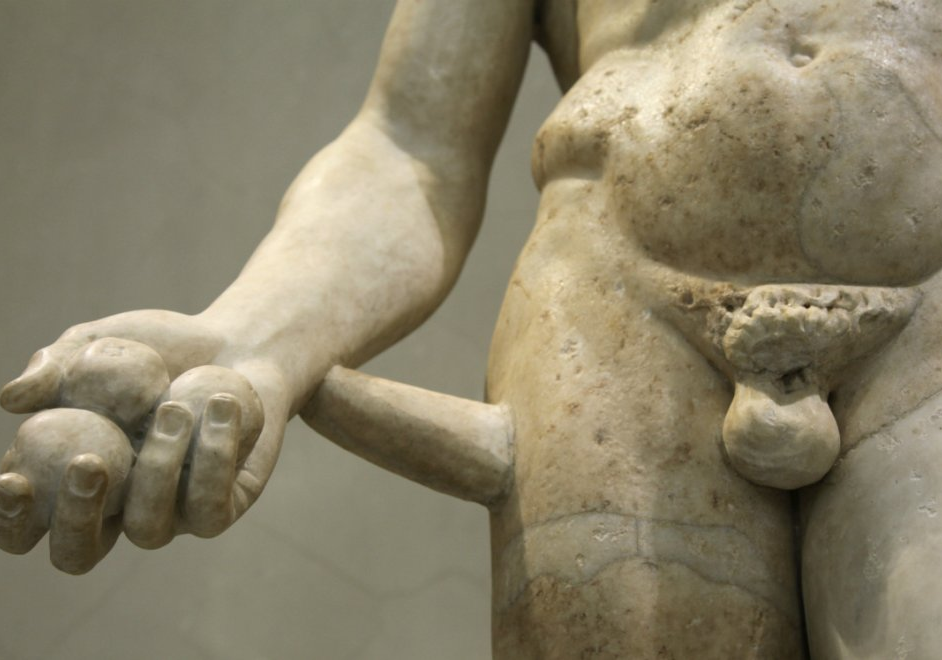
A rumour is circulating in some African countries: the French state is organising penis thefts to offset declining fertility. The rumour, spread by Russian propaganda, has become fake news.

The American sociologist Harrison White made a vital contribution to the development of social network analysis. Besides his work in this field, his theoretical synthesis and his understanding of social formations have influenced a variety of fields such as the sociology of art and economic sociology.
Ukraine’s water networks have been mobilized since the start of the war in 2014. Infrastructure workers are some of the last to leave settlements attacked by the Russian army. Water systems and people are resisting but are reaching the limits of their capacity to adapt to violence and disruptions.
How can we define democracy today? What role does or should the people play in the democratic process ? Through its summer selection, Books&Ideas offers to rediscover a group of four interviews and reviews, published in 2015 and 2016, which have tackled these questions through the prism of history, philosophy and political sciences.
Books & Ideas is slowing down for the summer and will be offering weekly selections of reviews and essays published over the last year. This week’s selection focuses on ways to shift our intellectual categories.
How to renew the currently dwindling support for democratic governance? To the minds of theorists and historians, whether advocating going back to classical political traditions like Republicanism or drawing lots, or experimenting new approaches, increased political participation may be the best path to follow.
Now a well-known Chinese lawyer of the democratic dissidence in China, Zhang Sizhi was once a young nationalist, a high-ranking official in the court of Beijing and a victim of anti-rightist repression. In his memoirs, he provides a detailed and fascinating description of the profession and China in the second half of the 20th century.
A highly respected figure in African studies, Jack Goody has become a distinctive voice in the torrent of academic critiques of western ethnocentrism. His work, spanning more than sixty years, has been based on a single ambition: comparison, for the sake of more accurately locating European history within Eurasian and world history.
Ronald Dworkin’s innovative and politically ambitious work has become essential reading in political and legal theory. Taking issue with classical political liberalism, he argues that liberty and equality are not mutually exclusive, and are indeed inseparable. And against traditional interpretations of law, he argues that law must be understood by comparing it to a collective novel, a mixture of creativity and interpretation.
L’adoption du mode de scrutin proportionnel apparaît aujourd’hui, selon deux politistes, comme une condition nécessaire pour redonner à la démocratie française la capacité de renouer avec des gouvernements représentatifs, stables et opérationnels.
Le harem a nourri l’imaginaire occidental jusqu’à aujourd’hui, véhiculant le cliché d’un monde despotique et misogyne. L’imposante documentation réunie par J. Dakhlia offre une vision plus nuancée.
Les minorités peinent souvent à faire reconnaître les savoirs qui leur sont propres, ou même les transmettre. Aux injustices sociales et raciales s’ajoutent ainsi des injustices épistémiques, contre lesquelles il faut également lutter.
À propos de : Fabien Clouette, Des vies océaniques. Quand des animaux et des humains se rencontrent, Seuil
À propos de : Par inadvertance. La « cuillère humaine » de Fernand Deligny, L’Arachnéen