Books & Ideas is the English-language mirror website of La Vie des Idées, a free online journal which has gained a large readership and established itself in France as a major place for intellectual debate since 2007.
Since the two World Wars, the victim has been raised to the status of a sacred and predominant figure in historical memory. The victim has become the new figure of the hero, thus setting a new and controversial example.
As multilateral cooperation is increasingly under attack, Katerina Linos challenges certain misperceptions about the role of international institutions, particularly the European Union, and emphasizes their capacity for action in times of multiple crises.
Why do we believe that our societies are freer, more prosperous or more democratic thanks to the institution of private property rather than in spite of it?
By shedding light on alternative ways of life that have hitherto been kept in the shadows, Constance Rimlinger shows that ecofeminist utopias are a reality that seeks emancipation from capitalism and patriarchy.
About: Christine Détrez, Crush. Fragments du nouveau discours amoureux, Flammarion
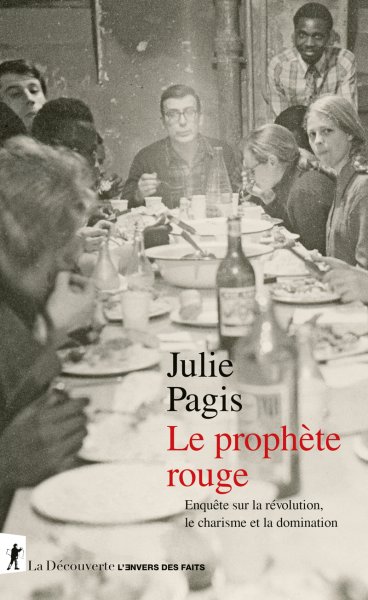
About : Julie Pagis, Le prophète rouge, La Découverte
About: Julie Madon, Faire durer les objets. Pratiques et ressources dans l’art de déconsommer, Les Presses de Sciences Po
A rumour is circulating in some African countries: the French state is organising penis thefts to offset declining fertility. The rumour, spread by Russian propaganda, has become fake news.
The American sociologist Harrison White made a vital contribution to the development of social network analysis. Besides his work in this field, his theoretical synthesis and his understanding of social formations have influenced a variety of fields such as the sociology of art and economic sociology.
Ukraine’s water networks have been mobilized since the start of the war in 2014. Infrastructure workers are some of the last to leave settlements attacked by the Russian army. Water systems and people are resisting but are reaching the limits of their capacity to adapt to violence and disruptions.
Books & Ideas is going on holiday for the summer, and will resume its publication schedule in September. In the meantime, we present you with a weekly roundup of our most recent essays and reviews. Economic inequalities have been at the forefront of intellectual debate this year with the publication of Thomas Piketty’s Capital in the Twenty-First Century. Our third selection of articles brings an international perspective on the issue, with a sociological and historical outlook.
Is there still room for hope at the White House?
This dossier examines the recently reopened debate on regional integration in Asia. What are the obstacles to the construction of an Asian Union? How is the issue tackled in Japan, China or Australia?
Thanks to his work on Greco-Roman antiquity, his intellectual curiosity, his pronounced taste for interdisciplinarity, his sense of humor, and the freedom that informs all his research, Paul Veyne is a twentieth-century historian whose work cannot be avoided. A loose cannon at the heart of the academic establishment, a deep thinker and a dilettante, Veyne invites us, through his work, to a festival of thought.
Kenzaburō Ōe, winner of the Nobel Prize in Literature, is a controversial figure in Japan. And rightly so, for there are a great many contradictions in both his fictional and theoretical work. He is a fierce opponent of nuclear weapons and nuclear energy, and yet continues to celebrate the heroism of the soldier who finds glory through sacrifice.
Among the recipients of the 2009 Nobel Memorial Prize in Economics was Elinor Ostrom, for her analysis of economic governance, especially in relation to the commons. While this choice took many in the profession by surprise, her life-long quest for an understanding of successful common property resource management holds important lessons for our future.
Dans un Chili en transition, le gouvernement de Gabriel Boric qui affiche son intention de lutter contre les inégalités sociales se heurte à une remontée de l’extrême droite. Simple réaction à une politique de gauche, ou retour du spectre de Pinochet ?
Les minorités peinent souvent à faire reconnaître les savoirs qui leur sont propres, ou même les transmettre. Aux injustices sociales et raciales s’ajoutent ainsi des injustices épistémiques, contre lesquelles il faut également lutter.
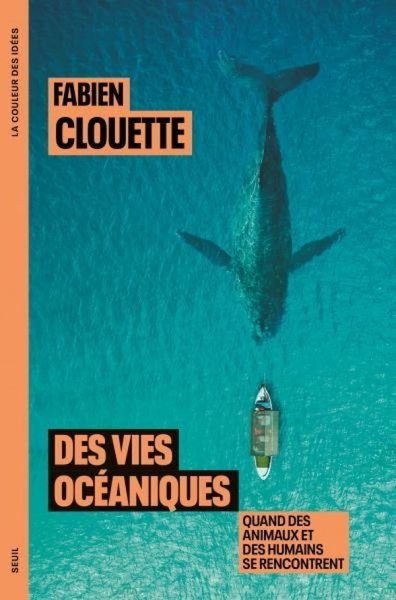
Les espaces marins étudiés par l’anthropologue Fabien Clouette montrent comment l’humain et l’animal cohabitent. Ce dernier est alors tantôt renvoyé à sa nature sauvage, tantôt à des caractéristiques anthropomorphisées.
À propos de : Par inadvertance. La « cuillère humaine » de Fernand Deligny, L’Arachnéen
À propos de : Patrick Geary, Comment la génétique réécrit l’histoire du Moyen Âge, CNRS éditions