Books & Ideas is the English-language mirror website of La Vie des Idées, a free online journal which has gained a large readership and established itself in France as a major place for intellectual debate since 2007.
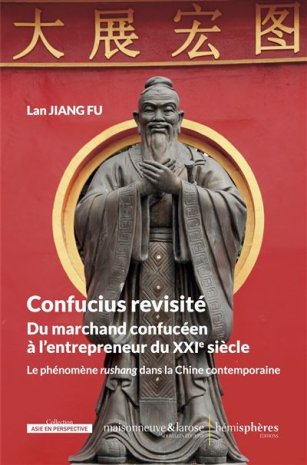
At a time when Chinese capitalism is in search of an ethic, entrepreneurs are reinventing the old Confucian merchant.
Jeanne Tsai and Batja Mesquita show how emotions are shaped by cultural logics that orient our relationships and judgments. Their conversation raises a broader question: what does it mean to understand others in culturally plural societies?
What effects have economic rationalization had on public services? Nadège Vezinat presents a nuanced picture of how institutional dynamics weaken the welfare state’s bureaucracy, agents, and the rights of beneficiaries.
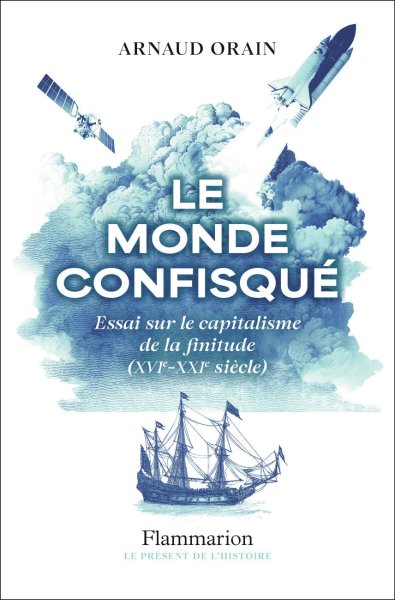
According to Arnaud Orain, capitalism, with the exception of a few historical periods when free markets prevailed, has primarily been characterized by mercantilism, or “capitalism of finitude,” which pits against one another the ambitions of nation-states that seek to escape competition by imposing their hegemony through force.
About: Anne Ibos-Augé, Les femmes et la musique au Moyen Âge, éditions du Cerf
About: Éric Dacheux et Daniel Goujon, Théorie délibérative des valeurs, Presses universitaires de Provence
About: Céline Marty, L’écologie libertaire d’André Gorz. Démocratiser le travail, libérer le temps, Presses universitaires de France
The female silhouette – understood as the body’s visible form and socially perceived appearance – has long been shaped by social norms. In the age of social media, these norms are intensifying, prompting, in response, the rise of so-called “body-positive” movements.
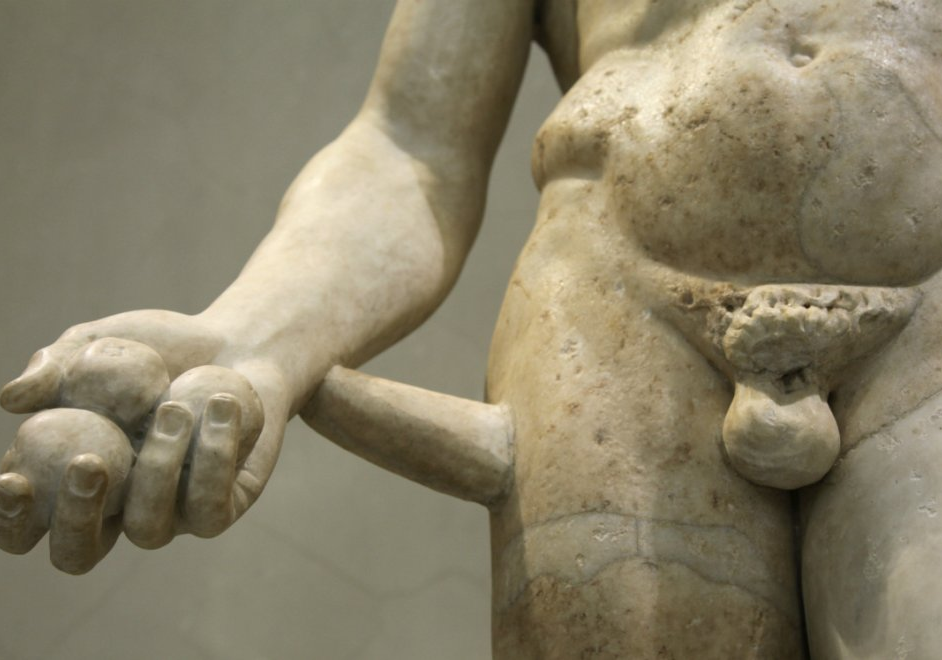
A rumour is circulating in some African countries: the French state is organising penis thefts to offset declining fertility. The rumour, spread by Russian propaganda, has become fake news.
The American sociologist Harrison White made a vital contribution to the development of social network analysis. Besides his work in this field, his theoretical synthesis and his understanding of social formations have influenced a variety of fields such as the sociology of art and economic sociology.
Books & Ideas is slowing down for the summer and will be offering weekly selections of reviews and essays published over the last year. This week’s selection questions our global consumerism, looks back in its history and analyses its legal framework.
As populism is rising on a global level, Books & Ideas offers a series on media politics in East Asian countries, to be published over the next two weeks. Though situations are extremely diverse, they can teach us a lot on the relationship between the state and journalists in authoritarian contexts. What role is left for the media to play in non-democracies?
How do images shape our worldview ? What do their study bring to our understanding of society ? Through interviews, essays and reviews this dossier shows how the close study of still or moving images has become central to the social sciences. From anthropology to history or literature, taking into account the overwhelming presence of visual representation yields unexpected and original information about human, social and political relationships.
André Gorz’s multiform thought is entirely centred on liberation: from work, which prevents individuals from thriving; from consumption, which grows ever higher; and from the social system, which reduces individuals to mere pawns in a “megamachine”.
For more than thirty years, Joan Scott has been informing and transforming both our history and the way we write history, while encouraging us to question categories and change our modes of thinking. From class struggle to sex differentiation, sexual emancipation and race, she proposes a critical analysis of Republican rhetoric to undermine naturalized forms of inequality.
Et pourquoi l’usage de l’IA générative serait-elle incompatible avec la création artistique ? Il y a pourtant longtemps que la notion d’auteur, seul maître à bord de son oeuvre, a fait l’objet de contestation.
Comment le passage d’une classe à l’autre, longtemps pensé comme une aventure individuelle, peut-il devenir un levier d’émancipation collective ? C. Jaquet reprend, à partir de Marx et de Spinoza, la question de l’abolition des classes.
Usons-nous des bons termes pour décrire le changement climatique ? On peut en douter, car la crise environnementale que nous traversons est tout autant géopolitique et économique.
À propos de : Zoé Grumberg, Militer en minorité ? Le « secteur juif » du Parti communiste français après la Libération, PUR
À propos de : Gabrielle Radica, La famille des classiques, ENS Éditions
À propos de : Gabrielle Angey, Yannick Fer et Juliette Galonnier (dir.), Saisir les religions en sociologue. Enjeux et méthodes, ENS éditions