Books & Ideas is the English-language mirror website of La Vie des Idées, a free online journal which has gained a large readership and established itself in France as a major place for intellectual debate since 2007.
Could Argentina, instead of being the modern country we know, have developed into fourteen independent states engaged in never-ending competition? From the “disunited province” of Rio de la Plata to the affirmation of a single nation-state, a new book describes a quest for unity that lasted five decades. Reviewed: Geneviève Verdo, Des peuples en mal d’union. Aux origines de l’Argentine (Peoples without unity: The origins of Argentina) Paris Flammarion, 2025.
Thirty years after La Nuit de la Saint-Barthélemy (Saint Bartholomew’s Night), Denis Crouzet revisits the massacres of August 1572—a collective purge, a royal enigma, and a popular initiative, which his new book illuminates with bold erudition by reintroducing confessional violence, with all its historical depth, into the story.
It was not until the second half of the nineteenth century that Byzantine studies acquired their official scientific and academic status, after a long process involving rigorous selection of the documents that have survived to the present day.
About: Nicolas Badalassi, La France, la guerre froide et la Méditerranée. Des accords d’Évian à la Perestroïka, Presses universitaires de Rennes
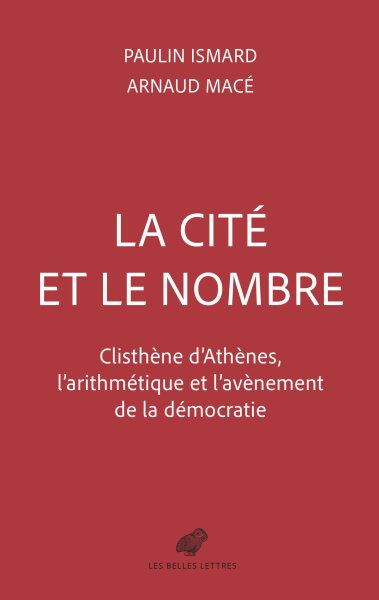
About: Paulin Ismard et Arnaud Macé, La Cité et le nombre. Clisthène d’Athènes, l’arithmétique et l’avènement de la démocratie, Les Belles Lettres
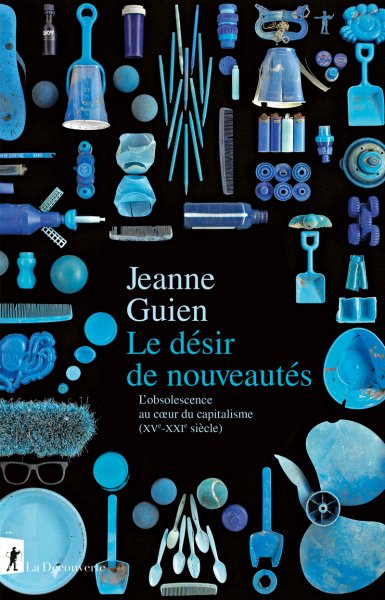
About Jeanne Guien, Le Désir de nouveautés. L’obsolescence au cœur du capitalisme (XVe-XXIe siècle), La Découverte
The female silhouette – understood as the body’s visible form and socially perceived appearance – has long been shaped by social norms. In the age of social media, these norms are intensifying, prompting, in response, the rise of so-called “body-positive” movements.
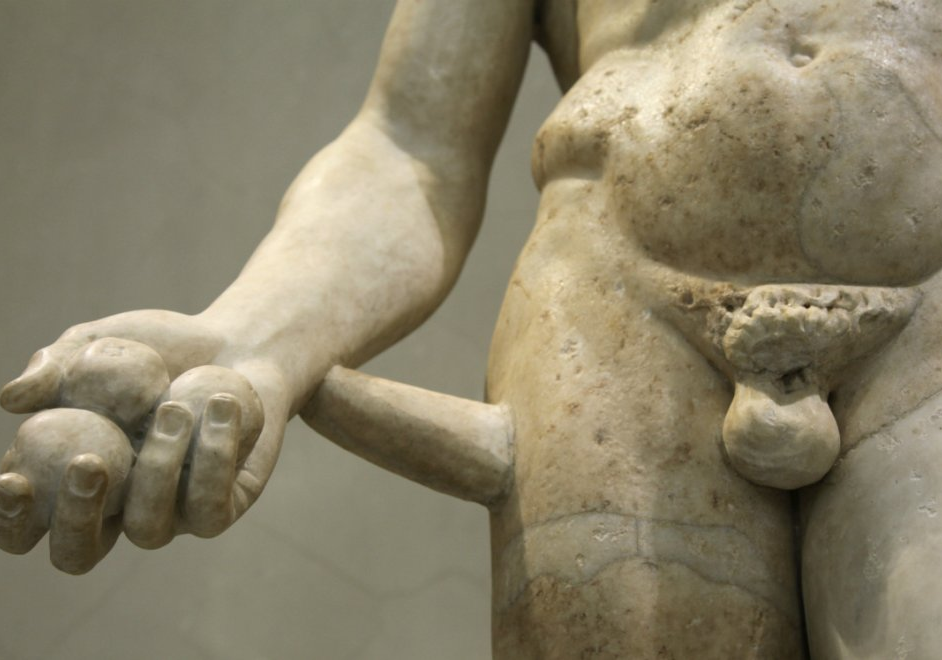
A rumour is circulating in some African countries: the French state is organising penis thefts to offset declining fertility. The rumour, spread by Russian propaganda, has become fake news.
The American sociologist Harrison White made a vital contribution to the development of social network analysis. Besides his work in this field, his theoretical synthesis and his understanding of social formations have influenced a variety of fields such as the sociology of art and economic sociology.
A selection of five essays and reviews recently published in Books&Ideas discusses the legacy and renewal of social class studies in France, Great-Britain and India.
Over the past few months, Books and Ideas has been running a series of interviews with leading contemporary scholars, who took the time to discuss their particular topics of research with us. For the Christmas season, we have put together a selection of seven discussions with intellectuals across the humanities and sciences: sociology, history, comparative literature, neuro-biology, anthropology and political science.
Books & Ideas is slowing down for the summer and will be back at the end of August. In the meantime, here is a selection of interviews, reviews and essays on popular music published over the past year.
In an innovative study that returns Albert Camus’ early works to their rightful place in the canon, Laurent Bove suggests we should view Camus as a philosopher of immanence and of acquiescence to the joy of the world. This reading is enlightening as far as Camus’ thoughts on history are concerned, but tends to gloss over the ruptures that run though his work, which is driven with multiple tensions.
How do scientific discoveries and progress come about? Against an idealist and triumphalist conception of the history of science, Simon Schaffer’s oeuvre examines science in the making, in close proximity to its practices and actors. Far from diminishing its prestige, this approach restores science to the central place it occupied in Old Regime societies.
According to Nancy Fraser, the renewal of socialism requires a conflation of activism and political theory; indeed, emancipation can only exist on the basis of equal participation in all spheres of life, and can only be understood in terms of social struggles, which today appear in multiple forms.
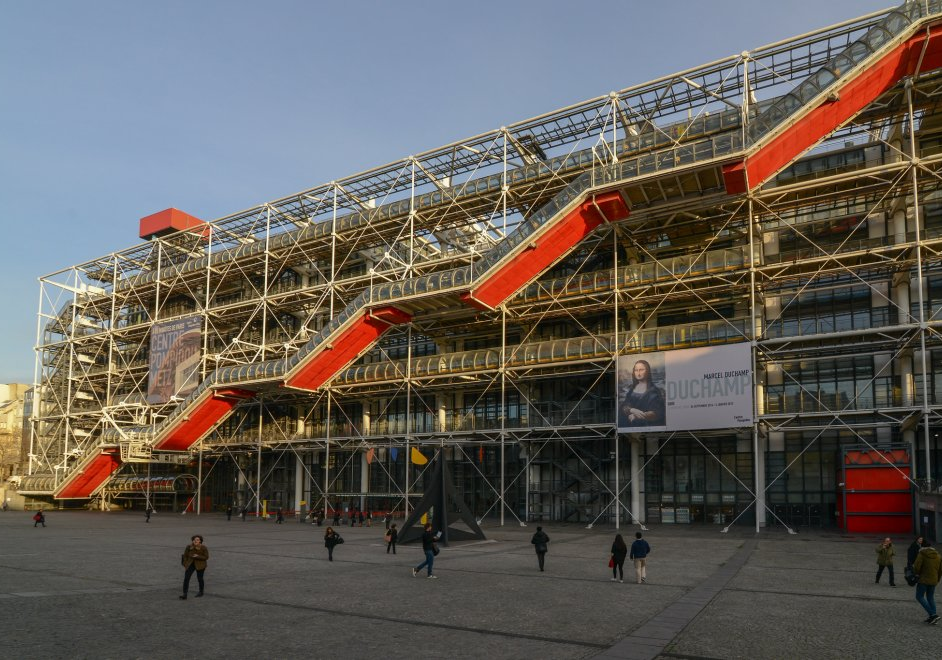
Le Centre Pompidou a été un modèle pour la politique culturelle française, mais aussi le témoin et victime de ses dérives, de ses impasses, de la réduction des budgets publics à la massification-marchandisation de la culture.
Exilée à Avignon, inféodée au roi de France, la papauté semble au début du XIVe siècle abandonner Rome. Dans une Italie désertée par l’autorité de l’Église, refusant les fausses prophéties, Dante s’imagine en nouveau Jérémie.
Le féminisme est souvent associé à la gauche. Mais à droite on peut aussi s’en réclamer, voire à l’extrême droite, comme le montre le cas argentin.
À propos de : Mickaël Löwy et Paul Guillibert, Marx Narodnik. Les populistes russes, le communisme et l’avenir de la révolution, L’Échappée
À propos de : Romain Grancher, Solène Rivoal (dir.), Dernière frontière. Une histoire environnementale du fond de la mer, Champ Vallon
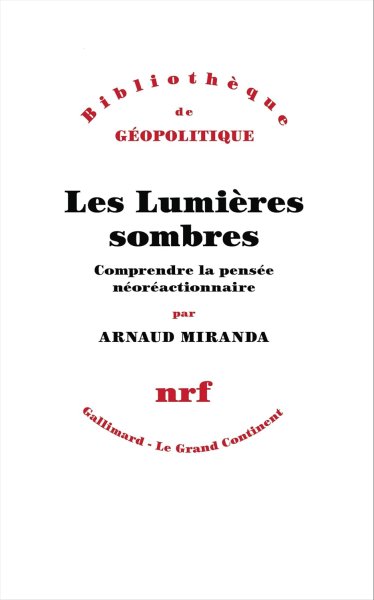
À propos de : Arnaud Miranda, Les Lumières sombres. Comprendre la pensée néoréactionnaire, Gallimard