Five leading scholars of Big Tech studies share their views on the hopes and dangers of the on-going Digital Revolution. Their answers reveal the pressing need for more political, social and economic theorizing of these dynamics.
Jeanne Tsai and Batja Mesquita show how emotions are shaped by cultural logics that orient our relationships and judgments. Their conversation raises a broader question: what does it mean to understand others in culturally plural societies?
Digital products are changing how we live. Growing up in a hyper-connected world, the new “Generation Z” has developed different behaviors, attitudes, and values.
The American sociologist Harrison White made a vital contribution to the development of social network analysis. Besides his work in this field, his theoretical synthesis and his understanding of social formations have influenced a variety of fields such as the sociology of art and economic sociology.
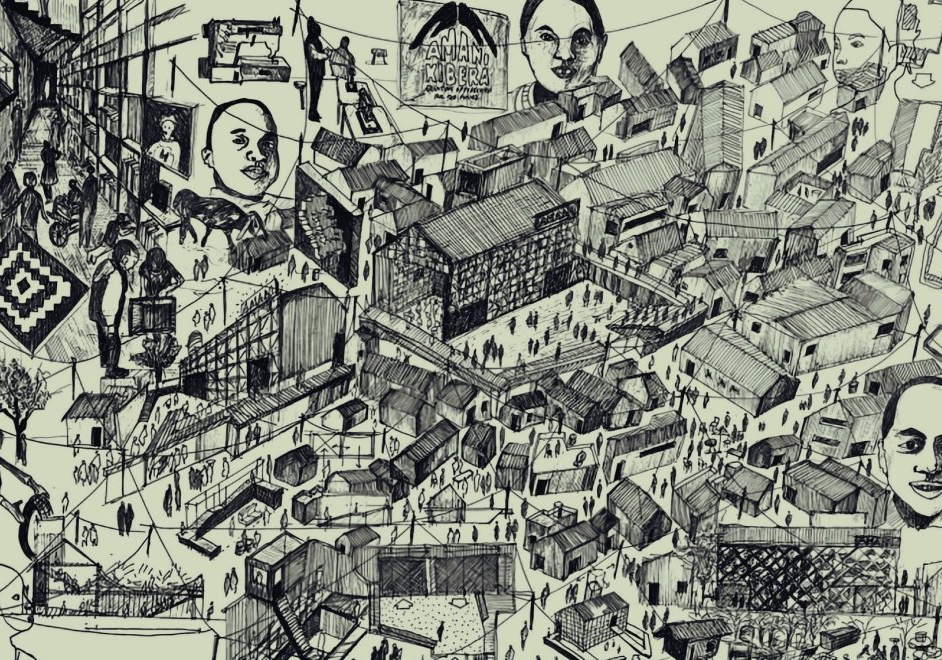
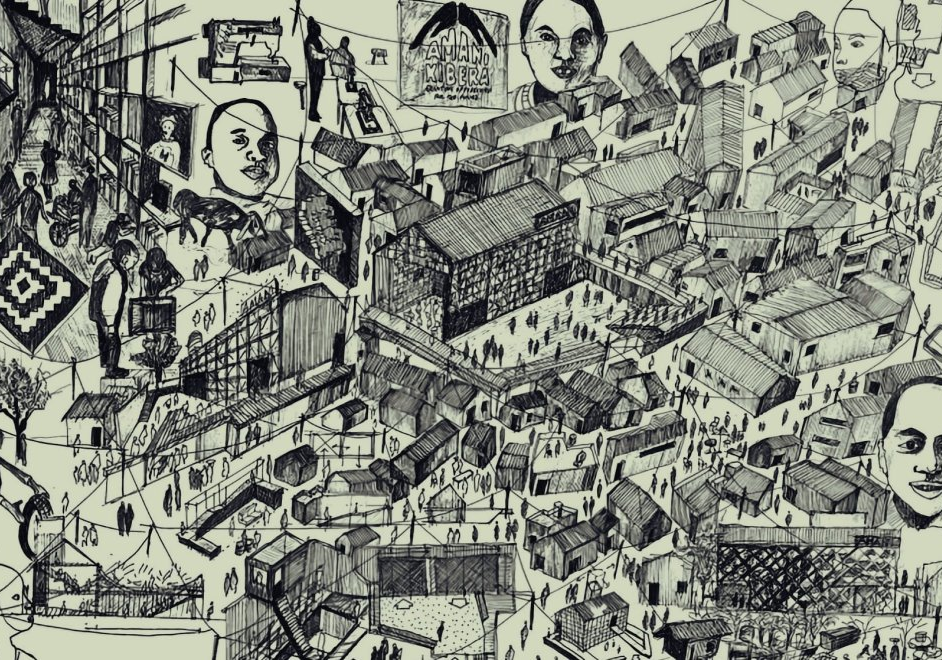
How can we move beyond abstract architecture, where buildings are constructed without their audiences? Peter Ferretto’s method is based on observation, engagement, and the osmosis between teaching, practice, research, and social impact.
Technological change has outstripped existing law, creating a governance vacuum. The pressing need towards a renewal of regulations will likely lead to closed autonomous systems and further increase the fragmentation of the world order.
The digital world is the product of mutual transactions between technologies and humans. It produces innovations and knowledge gains that empower citizens and their ability to contribute to a more egalitarian science.
As multilateral cooperation is increasingly under attack, Katerina Linos challenges certain misperceptions about the role of international institutions, particularly the European Union, and emphasizes their capacity for action in times of multiple crises.
The existence of a digital panopticon in the hands of a small number of democratically unaccountable companies is an affront to human dignity and self-determination. The new technologies’ risks and benefits must be harnessed by adequate social technologies.
The digital world is the result of the accumulation of centuries of scientific and organizational progress. Virtuality is further enabled by the materiality of computers, objects that are themselves the product of economic exchanges and labor.
Laurence Ralph’s ethnography explores the various systems of punishment that injure black and brown Americans’ bodies and that contribute to maintain social hierarchies that rely on the vestiges of slavery. These injuries call for healing and overcoming trauma, and also for reparative justice.
Despite the rise of far-right parties and the adaptation of dictatorships to international pressures, political scientists Helen Milner and Daniel Treisman are confident in the future of Democracy, the only political model suited to accommodate the fast-paced innovations that are driving capitalism.
Quotas in India contribute to the emancipation of lower castes while producing perverse effects that are difficult to control. Rohini Somanathan questions the right balance between targeted positive discrimination policies and public policies with a universal vocation.
Rachel St. John explores the diverse range of nation-building projects that vied for legitimacy and land across the continent during the XIXe century, illuminating the diversity of North American political history and the contingency of national growth and definition.
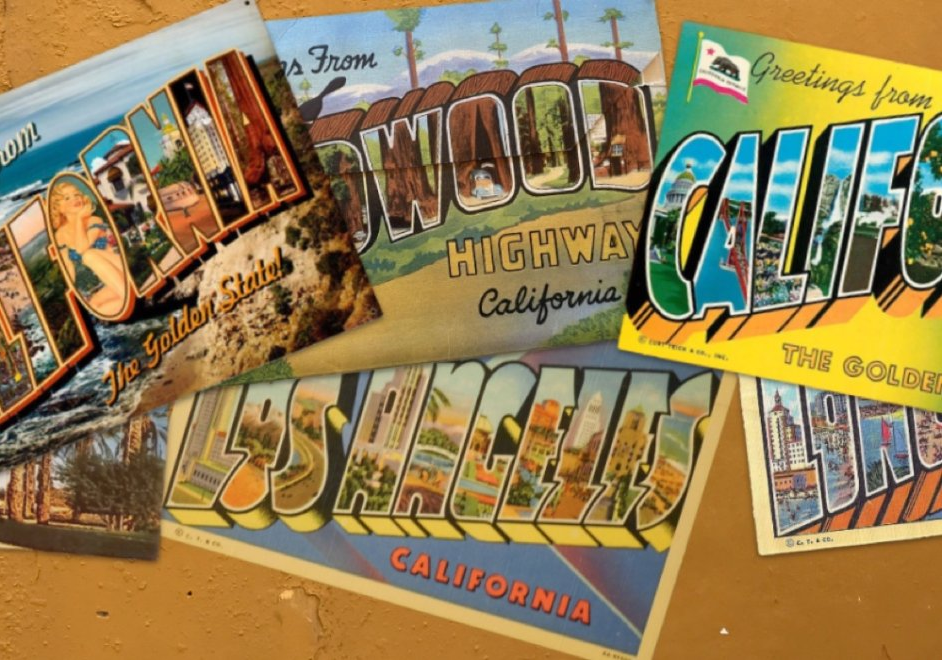
The “California dream” does not date back to the Gold Rush of the 19th century, but only to the 20th, and is more a matter of criticism than enthusiasm. Louis Warren invites us to put this myth into perspective, and to be wary of the tendency to see California as the laboratory of the United States.
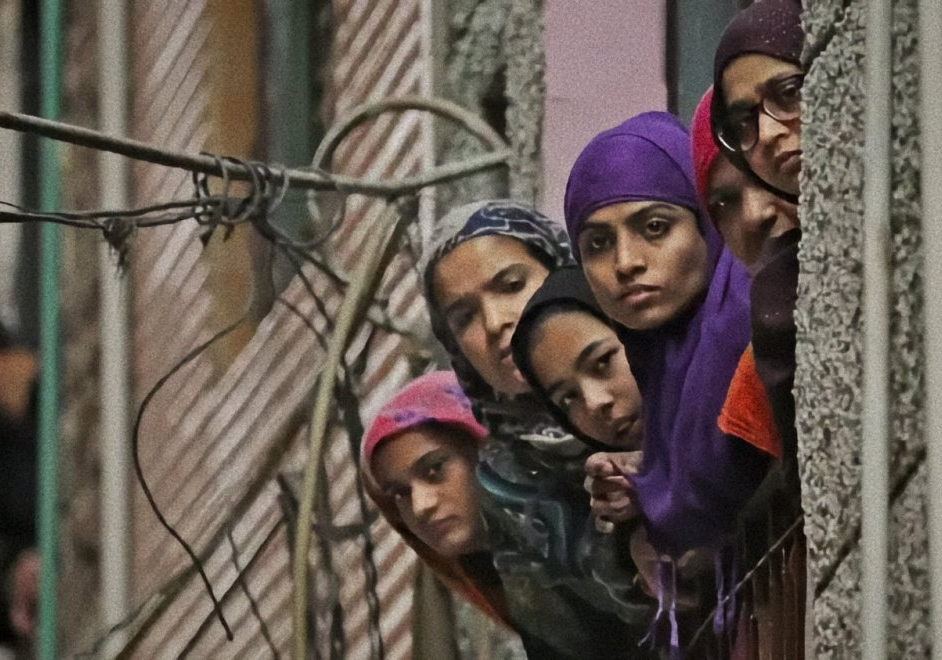
According to Thomas Blom Hansen, Indian cities have become spaces of exclusion, fear, and sharpened enmity. He describes how Muslims are victims of an entanglement of communal violence, state complicity, and systemic discrimination.
While we have entered the age of generative AI, it is worth having a look at how computers can help literature scholars and intellectual historians to explain the life of concepts, aesthetics and genres.
Hakeem Jefferson argues that the United States is experiencing a democratic backsliding. He calls for deep institutional reforms that aim at better reflecting the American public, such as expanding the number of judges in the Supreme Court or having a US Senate apportionment based on state population.
The question has long preoccupied historians studying international trade and capitalism: Why did European trading companies, above all the Dutch East India Company (VOC) and the English East India Company (EIC), dominate Eurasian trade from the 17th century onwards?
Rorty made conversation a philosophical genre in its own right, which led him to reject any distinctions he considered futile: between analytic and continental philosophy, between the Enlightenment and postmodernity, between philosophy and literature.
Cinq spécialistes des nouvelles technologies partagent leurs points de vue sur les espoirs et les dangers portés par la révolution numérique en cours. Leurs réponses révèlent le besoin urgent d’approfondir nos réflexions sur les conséquences politiques, sociales et économiques de cette transformation de nos sociétés.
Jeanne Tsai et Batja Mesquita montrent que les émotions sont façonnées par des logiques culturelles qui orientent nos relations et nos jugements. Elles interrogent ainsi ce que signifie comprendre autrui dans des sociétés culturellement plurielles.
Comment sortir de l’architecture abstraite, où les constructions sont faites sans leurs publics ? La méthode de Peter Ferretto repose sur l’observation, l’engagement et l’osmose entre enseignement, pratique, recherche et impact social.
L’évolution technologique a dépassé le droit existant, créant un vide de gouvernance. Le besoin urgent d’un renouvellement des réglementations conduira probablement à des systèmes autonomes et clos, et augmentera encore la fragmentation de l’ordre mondial.
Le monde numérique, selon Nilam Ram, est le produit de transactions mutuelles entre les technologies et les humains. Il crée de nouvelles formes de connaissances qui renforcent le pouvoir des citoyens et leur capacité à contribuer à une science plus égalitaire.
Alors que la coopération multilatérale est de plus en plus remise en cause, Katerina Linos déconstruit certaines idées reçues sur le rôle des institutions internationales — en particulier européennes — et montre leur capacité d’action dans un contexte de crises multiples.
Les produits numériques changent notre façon de vivre. Grandissant dans un monde hyperconnecté, la nouvelle « génération Z » a développé des comportements, des attitudes et des valeurs différents.
Le monde numérique est la résultante de l’accumulation de siècles de progrès scientifiques et organisationnels. La virtualité est par ailleurs rendue possible par la matérialité des ordinateurs, objets qui sont eux-mêmes le produit d’échanges économiques et du travail.
Les États-Unis connaissent un recul de la démocratie, affirme Hakeem Jefferson qui appelle à de profondes réformes institutionnelles comme l’augmentation du nombre de juges à la Cour suprême ou la répartition du Sénat américain en fonction de la population des États.
L’ethnographie de Laurence Ralph explore les différents systèmes de punition qui blessent les corps des Noirs et Bruns américains et qui contribuent à maintenir les vestiges de l’esclavage. Ces blessures appellent à la justice réparatrice.