


Jeanne Tsai and Batja Mesquita show how emotions are shaped by cultural logics that orient our relationships and judgments. Their conversation raises a broader question: what does it mean to understand others in culturally plural societies?
“Miami Vice”, Michael Mann (2006)
Interview Society Video Interviews
Do Our Emotions Have a Culture?
An interview with Jeanne Tsai & Batja Mesquita

|
This publication is part of our partnership with the Center for Advanced Study in the Behavioral Sciences. The full list of our joint publications is available here.

Jeanne L. Tsai is the Dunlevie Family Professor of Psychology at Stanford University, where she directs the Culture and Emotion Lab and co-founded the Asian American Research Center at Stanford. A leading scholar of cultural psychology and affective science, her research examines how culture shapes the emotions people value and experience, and how these differences influence health and well-being, social perception, decision-making, and communication. She is particularly known for developing the concept of “ideal affect,” which highlights cultural variation not simply in how people feel, but in how they want to feel. Her work has explored these processes especially through comparisons between North American and East Asian cultural contexts. In 2025-26, she was a Fellow at the Center for Advanced Study in the Behavioral Sciences (CASBS) at Stanford, where she worked on a book synthesizing several decades of research on cultural ideals of self and emotion and their broader societal implications.
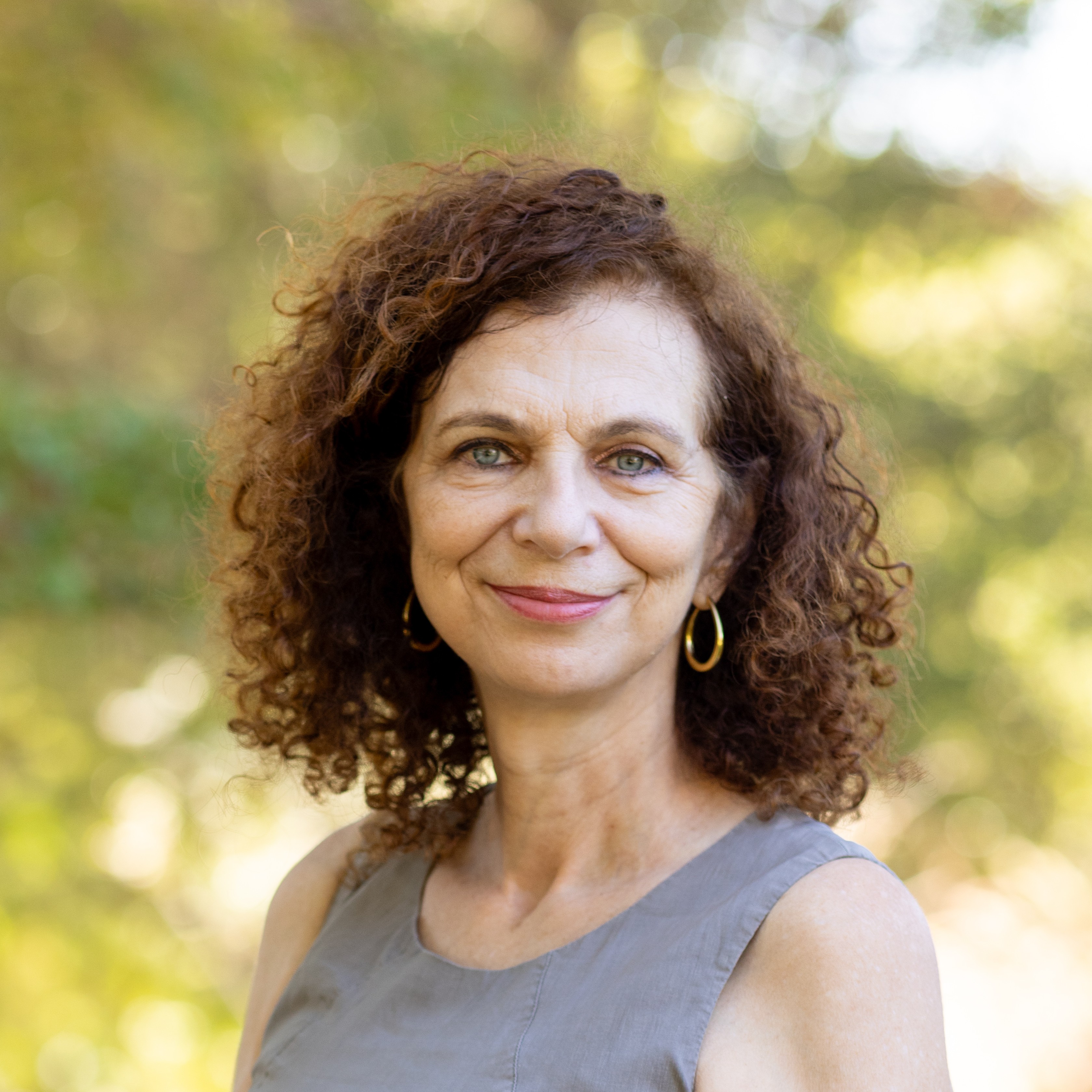
Batja Mesquita is Professor of Psychology and Director of the Center for Social and Cultural Psychology at KU Leuven. A pioneer in the cultural psychology of emotion, she studies emotions not simply as internal psychological states but as phenomena that are shaped through social relationships and cultural contexts and that, in turn, help constitute social life. Her research has examined cultural variation in emotional experience, emotional acculturation, interpersonal and group emotions, and, more recently, the role of emotions in belonging and integration in multicultural societies. She is the author of Between Us: How Cultures Create Emotions (W. W. Norton, 2022), which brings this relational and cultural approach to emotion to a wider audience. Mesquita was a Fellow at the Center for Advanced Study in the Behavioral Sciences (CASBS) at Stanford in 2016–17, when she began developing Between Us, and returned as a CASBS Fellow in 2025-26 to work on a new project on culture and emotional literacy.
Books and Ideas : How do our everyday social environment and interactional routines produce culturally patterned emotional repertoires?
Batja Mesquita : That’s a really interesting question, and to me, at least, that was completely invisible until I moved to the United States, because we’re so used to the interactions in our own culture ; I lived in the Netherlands. I grew up in the Netherlands, and I noticed that Americans praised each other constantly, and me also, and thanked me. And when that happened, I felt very uneasy. I felt uncomfortable. I didn’t really know how to respond to it, but I came to realize that that was really a difference in how we did emotions in the Netherlands and in America, and in America it’s a big goal to make each other feel good about ourselves constantly, so you want to say to people how special they are, and you’d like to hear how special you are. In the Netherlands, it’s a very different cultural logic.
The idea is that nobody is any more special than anybody else. We’re all equal, and so if you praise me, then I become embarrassed, because there’s no real script for that, and you can say that’s also in interpersonal interactions, that’s the case, but it’s also at the larger levels, there are just a lot of awards in America, so that means you’re special. There is big income disparity, which also means that some people are more special and more deserving than others, and those things do not exist to the same extent in Europe or in the Netherlands, and I think the effect is that we generally, in the Netherlands, I’ll come to talk about now that I have lived here for over 15 years, but in the Netherlands we just feel less of that happy pride.
Jeanne Tsai : In our field, when we think about how culture might shape our experiences, including our emotions, we often talk about something called the culture cycle, and this is really making the point that many of these cultural ideas, of course, exist in our individual minds and in what we report and what we describe and experience, but even more importantly, they’re part of the environment that we’re part of. So that means that these ideas are reflected in how we interact with other people, they’re reflected in the kinds of media that we’re exposed to, and they’re reflected in the kinds of institutions that we are part of.
So for example, in our work we find that culture influences the emotions that we ideally want to feel, and in the United States, in particular, we really value excitement, enthusiasm, passion, what we call these high arousal positive states, especially as compared to members of East Asian contexts, like Japan, Hong Kong, Taiwan, South Korea. And so these differences are reflected in what people report that they want to feel over the course of their lives, so, at the individual level, but they’re also reflected in how they interact with other people, so in the United States, we often ask people, you know, how are you ?, and the answer should be, « great, I’m great », or we say things, ask things like, « did you do anything exciting this weekend? », which basically says that those excitement moments are the most important ones, when somebody shares good news, you know, the right response in American context, is “that’s so exciting. I’m so excited for you”.
So, in these interactions, you can really see this excitement ideal in US contexts. When we’ve looked at media, we see that American storybooks and advertisements, for example, are more likely to have these big, broad, toothy, what we call these excited smiles, than similar products in many East Asian contexts, and even when you look at institutions, we find that people are more likely to hire people who show their cultural ideas. So, in US employment contexts, employers are more likely to hire people who show these big, broad, toothy smiles compared to many East Asian contexts. So, the point is that at all these different levels, culture is influencing our emotions, and you can see it not just in individuals, but also in the environments they’re in. And so, by participating in the environments, they’re learning how they should feel, but then they’re also kind of reproducing it by being a member of the cultur.
Batja Mesquita : And I would say maybe that the US is the odd one out here, because I would be closer to the excitement is more, more American than Northern European, at least.
Books and Ideas : How are cultural differences in emotions linked to the ways people want to connect with others?
Batja Mesquita : The first thing I want to talk about is research that we did with couples, and we had them come into the lab. In this case, it was Belgian couples and Japanese couples, and we asked them to talk about something that they disagreed about. So, they talked about their finances, or their in-laws, or the way they raised children, and what we find is really striking is that the Belgian couples tend to get angry during those conflict conversations. They stand up for themselves, they push back, but the Japanese, even though they’re talking about a conflict, actually express empathy, or they try to understand each other, and so they do that in the middle of a disagreement, and so you can say there are large differences in the kinds of emotions that those couples have in similar situations, and you can look at that in another way, and that connects back to your question, is that what those couples do when they have those emotions is creating a different kind of relationship, so the Belgian couples, without realizing it, of course, use anger to assert themselves and to protect their individual needs, and that is what anger does in that relationship. Japanese couples use empathy to stay connected and maintain their bonds. So, what you can say is that there is a very different emotional logic, but also that that creates a very different kind of relationship, a relationship in which different things are important.
Jeanne Tsai : The cultural differences and emotional ideals that I just described, the ones between us and East Asian contexts, are very related to the different ways in which people want to connect with others. In US contexts, the model of self is more independent. We define ourselves in terms of our traits and our attitudes and our preferences, and our goal is to influence other people, influence our environments, and influence other people in them, and to try to get them to do what we want them to do. This is really different from many East Asian contexts, where the emphasis is more on adjusting to others, because in many East Asian contexts, as Fatih said, there’s a more interdependent self, where we people are defined in terms of their relationships with others, and their goal is to fit in and to fulfill their duties and their obligations.
So, in US context, when you want to influence other people, that really involves action, and action involves increases in physiological arousal, so if you want to influence other people, then you want to feel this arousal, these high arousal positive states. And again, this is in contrast to many East Asian contexts, where if the emphasis is on adjusting to other people, then you actually have to decrease your arousal, sort of suspend action in order to attend to your environment and see what your environment requires of you, and so that’s why in many East Asian contexts there’s more of an emphasis on calm states. So again, these differences in emotional ideals are very much tied to how people want to relate to others.
Books and Ideas : What impact do cultural differences in emotions have on interpersonal relations across multicultural settings?
Batja Mesquita : Well, you could say that people everywhere have emotions that fit their relationships, so you know the example of the couples, when you’re angry, you have this, you make this relationship where people defend their own needs, and when you have empathy, you make this relationship where people avoid conflicts and try to understand and anticipate other people’s needs. So when you bring two or more cultures together, people could have emotions at cross purposes, they could have different ideas about what a relation should look like, and we’ve looked at that in a number of different ways. I’m going to describe what we’ve done in my lab, and Jeanne will describe some of the things that her lab has done.
We have actually, in a lot of cultures that have immigrants, we have followed the emotions of the immigrants, and we’ve looked at how similar are the immigrants’ emotional responses to the majority emotional responses in similar situations, ; it’s a little far from the actual practice, but we just have them report about situations, and what we find is that immigrants who have emotions that look more like the emotions in their context, or more like the emotions of the majority culture have also, and get over time more majority friends, and have more contact with majorities. So we don’t know exactly what the mechanisms are there. We don’t know exactly why that is the case, but what we do know is that when your emotions don’t quite match the emotions of the people around you, it’s harder to make relationships, and just in case you wonder if that is also true the other way round, if majority people have an easier time having relationship. Friendships with minority people of immigrant descent, then the answer seems to be yes. In general, those people who have friends, the majority people who have, with minority others, also have emotions that are more similar to those minorities, and we’ve done that in classes and schools, so that’s the first part of the answer. I would say is that really converging on emotions makes it easier to have relationships in that culture, or in that country,
Jeanne Tsai : Our work shows that these cultural differences in emotional ideals have an influence on whom people view as friendly and warm and trustworthy, as well as whom they’re willing to share resources with. So, when people meet somebody or see somebody whose emotional expression matches their ideal, they’re more likely to rate them as warmer and friendly and trustworthy. European Americans are more likely to view excited targets as warm, friendly, and trustworthy compared to East Asians. And then, they’re more likely to actually share resources with them. So, in one study, they were more likely to transfer money to the excited targets than to targets who showed more of a calm expression, and it didn’t matter if the target was male or female or white or Asian, so it was like they were using the emotional expression of the target as like a sign of their in-group, and this plays itself out in a lot of different professional and personal relationships; so for example, people are more likely in US context to hire candidates who show more excited expressions than calm expressions, even if they have similar qualifications and similar educational backgrounds, and even in personal relationships, you see that US Americans are more likely to say that their ideal relationship is one that has lots of passion and excitement : these high arousal states.
Often, people talk about language and they talk about food, and even we talk about diversity, people talk about race and sex, but they don’t really understand that there are these cultural differences, deep ones, in terms of how we think and how we feel and how we behave, and that this plays a role in how we relate with other people.
Books and Ideas : How can we use this knowledge to reduce cultural misunderstandings?
Jeanne Tsai : I think our emotions feel so natural to us that we don’t really realize how much they’re shaped by our cultures, and that means that we don’t realize when we’re meeting somebody for the first time, and we’re coming up with a quick judgment of them, that our judgment of them, warm and friendly or cold or hostile, is partly a reflection of them, but also partly a reflection of us and our emotional ideals, and that can lead to a lot of misunderstandings if we’re judging somebody who has different emotional ideals than us. If I really value a lot of excitement and I see somebody who values calm and they’re just showing calm, I might think they’re not as friendly, and I might not want to talk with them or get to know them better.
So, I think one of the things that we can do to reduce these misunderstandings is to recognize our emotional ideals and how they’re shaped by our cultures, and to recognize that other people come from cultures that have different emotional ideals, and to pause when we come up with this judgment about who they are, and consider the possibility that maybe our snap judgments of them, as warm and friendly or cold and hostile, are really a reflection of different emotional ideals, rather than something about them, and our likelihood of getting along with each other. So, I think it’s recognition of the ideals that matters.
Batja Mesquita : Yes, it’s recognition, it’s awareness of differences that matters. And there’s some new research that a former student of mine has done in with intercultural couples, where they find that yes, intercultural couples have, of course, different emotions, and in itself, those differences are not so good for the relationship. They provide obstacles, but that the couples that are aware that there are cultural differences actually do a lot better, and I would say have a possibility of growing into understanding each other better, and so the whole awareness that your emotions are not just natural but actually came with a culture and a history, seems to be helpful in couple relationships, and probably also in other kinds of relationships.
I thought I would come back to my example from the beginning of when I came to the United States, and I would say that yes, I recognize the different cultural logic, but then I think it also becomes, as I have lived so many years in the US, not exclusively, but also, it has also become possible for me to see situations through the American lens, so I’m not upset or embarrassed anymore when somebody gives me a compliment, and I can actually enjoy being a little happy, proud, so that you know, just understanding what the, what the cultural logic of the emotions are helps you also reproduce them over time.
Jeanne Tsai : And so, if you can entertain in some ways, like a cultural hypothesis, I think it can help reduce misunderstandings, because you’re just giving more opportunity to get to know the situation a little bit better, or to get to know the person a little bit better, to understand why they are maybe behaving in a certain way, so it rather than coming to this kind of snap judgment that we’ve been talking about. So I think another thing that we can do, and this is what I’ve been thinking a lot about during my time at Casbs, how can we use our work on culture and emotion to cultivate more sort of thriving multicultural societies, it’s what I said a little bit earlier. We really have to understand that these cultural differences go deep, and if we really take that seriously, then we’re sort of more humble about trying to understand other people’s behavior and being more open to different possible reasons why they might be doing what they’re doing.
Batja Mesquita : So here in my CASBS year, I’ve actually been thinking, what the fact that we have such different emotions, and that we value such different emotions, what that means for emotional intelligence, because what would it mean to be an emotionally intelligent person in one culture may not be exactly the same as what it would mean to be an emotional intelligent person in another culture, and also what it would mean to be emotionally intelligent across cultural boundaries, is a really important question that we need to think about and do research about more.
by , 18 September
Share this article
Find us here :


To quote this article :
Jules Naudet, « Do Our Emotions Have a Culture?. An interview with Jeanne Tsai & Batja Mesquita », Books and Ideas , 18 September 2026. ISSN : 2105-3030. URL : https://booksandideas.net/Do-Our-Emotions-Have-a-Culture
Nota Bene:
If you want to discuss this essay further, you can send a proposal to the editorial team (redaction at laviedesidees.fr). We will get back to you as soon as possible.
You might also like


Our partners


Sections
Keep in touch
© laviedesidees.fr - Any replication forbidden without the explicit consent of the editors. - Mentions légales - webdesign : Abel Poucet