Books & Ideas is the English-language mirror website of La Vie des Idées, a free online journal which has gained a large readership and established itself in France as a major place for intellectual debate since 2007.
Jeanne Tsai and Batja Mesquita show how emotions are shaped by cultural logics that orient our relationships and judgments. Their conversation raises a broader question: what does it mean to understand others in culturally plural societies?
Active in the fight against poverty since the 1950s, the ATD Fourth World movement has successfully combined grassroots action, research and advocacy, exerting a lasting influence on social policies in France and internationally.
Amid the never-ending crisis of the welfare state and the waning of the principle of solidarity, Sacha Lévy-Bruhl proposes a new interpretation. Starting from the idea of collective responsibility, he pursues an important goal: rethinking social protection in the twenty-first century.
About: Fatma Çingi Kocadost, La promesse qu’on nous a faite, Éditions de l’EHESS
About: Silyane Larcher et Félix Germain (dir.), Marianne est aussi noire. Luttes occultées pour l’égalité, Seuil
About: Alexandra Féret, Abdiquer la souveraineté. Politique et théologie chez Simone Weil, Vrin
The female silhouette – understood as the body’s visible form and socially perceived appearance – has long been shaped by social norms. In the age of social media, these norms are intensifying, prompting, in response, the rise of so-called “body-positive” movements.
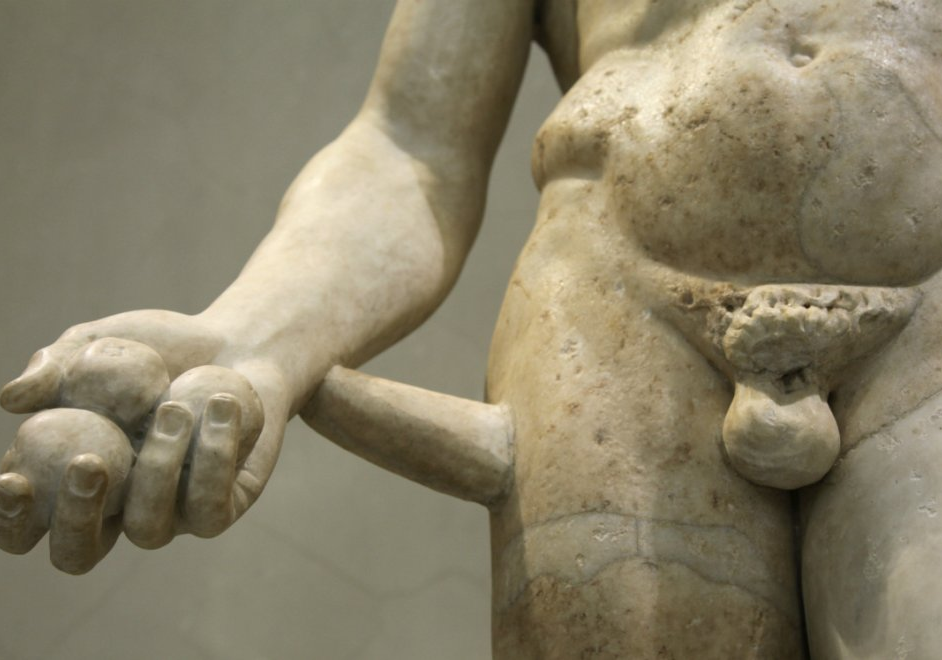
A rumour is circulating in some African countries: the French state is organising penis thefts to offset declining fertility. The rumour, spread by Russian propaganda, has become fake news.
The American sociologist Harrison White made a vital contribution to the development of social network analysis. Besides his work in this field, his theoretical synthesis and his understanding of social formations have influenced a variety of fields such as the sociology of art and economic sociology.
Summer is here. Books&Ideas is off on holiday. We will be back with new publications starting August 29th. In the meantime, here is a selection of essays, interviews and reviews published over the past year.
In order to better grasp protests and social movements in China, whose number has impressively swollen in recent years, Books&Ideas presents a dossier on the evolution of social mobilization and on the representation of social instability in this country.
Books & Ideas is slowing down for the summer and will be offering weekly selections of reviews and essays published over the last year. This week’s selection questions the social construction of racial identities, and the history of domination.
Ronald Dworkin’s innovative and politically ambitious work has become essential reading in political and legal theory. Taking issue with classical political liberalism, he argues that liberty and equality are not mutually exclusive, and are indeed inseparable. And against traditional interpretations of law, he argues that law must be understood by comparing it to a collective novel, a mixture of creativity and interpretation.
Richard Hoggart (1918-2014), a poor child who went onto become a university professor, was the epitome of a successful scholarship student. The trajectory of this “exemplary counter-example” sheds light on the mechanisms of social reproduction when they prove inoperative and the distance that can be traveled from one’s native milieu.
In an innovative study that returns Albert Camus’ early works to their rightful place in the canon, Laurent Bove suggests we should view Camus as a philosopher of immanence and of acquiescence to the joy of the world. This reading is enlightening as far as Camus’ thoughts on history are concerned, but tends to gloss over the ruptures that run though his work, which is driven with multiple tensions.
Jeanne Tsai et Batja Mesquita montrent que les émotions sont façonnées par des logiques culturelles qui orientent nos relations et nos jugements. Elles interrogent ainsi ce que signifie comprendre autrui dans des sociétés culturellement plurielles.
L’antisémitisme n’a pas disparu d’Allemagne et d’Autriche. Une anthologie en dessine les contours et les travestissements.
L’Empire austro-hongrois voulait imposer la sédentarité à ses sujets, mais la pauvreté qui régnait dans certaines régions a engendré de nombreuses migrations, qui échappaient souvent au contrôle policier.
À propos de : Stéphen Rostain, Amazonie. Une histoire des civilisations de la forêt, Tallandier
À propos de : Fabien Lacouture, Federer, Les Pérégrines
À propos de : Claire Pagès, Dormir. Essai de philosophie sociale, Vrin