


At the beginning of World War II, Americans were convinced that German geopolitical thinking was behind the stunning military successes of the Nazis. They sought to turn this thinking against their enemies, before using it as a weapon against the USSR during the Cold War.
Geographers in Battalions
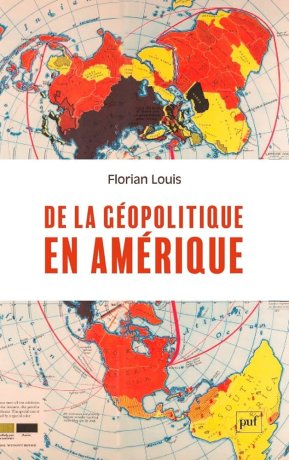
About: Florian Louis, De la géopolitique en Amérique, Puf
About: Florian Louis, De la géopolitique en Amérique, Puf

|
Florian Louis’s De la géopolitique en Amérique (Geopolitics in America), titled in explicit reference to Tocqueville, takes us through the intellectual and political history of the United States from the early 1920s to the late 1950s. The book is based on the author’s doctoral thesis defended in 2019: “La science de l’ennemi. La réception de la Geopolitik en France, au Royaume-Uni et aux États-Unis (années 1920-1950)” (The Science of the Enemy: The Reception of Geopolitik in France, the United Kingdom, and the United States (1920s-1950s)). Louis, one of France’s leading specialists in geopolitical history, presents the fruit of a major research effort conducted using numerous primary sources from the United States and England. The book traces, step by step and with a wealth of references and details, the reception of German geopolitics in America. The study of the correspondence of several authors greatly enriches the discussion: We see how intellectual connections were formed and how disputes and rivalries intensified over time.
Louis spends considerable time describing his method in the introduction. Inspired by Michel Espagne and Pierre Bourdieu, this method consists of studying the multiple, bidirectional “cultural transfers” that took place between Germany and the United States when geopolitics was establishing itself as a perpetually changing discipline. While the focus on the early and mid-twentieth century may seem perplexing at first, the book does revisit debates that are still with us today: What are the differences between political geography and geopolitics? Can the latter present itself as scientific? What is the role of geographical factors in state policy making? Can geographers lay claim to geopolitics, against the pretensions of political scientists, sociologists, and other specialists in international relations?
A New Historical Approach
Louis breaks the usual chronological narrative according to which, after a period of remarkable flourishing in the interwar years, geopolitics gradually disappeared during World War II, only to reemerge in the 1970s and 1980s under the influence of Henry Kissinger and Zbigniew Brzezinski in the United States and Yves Lacoste in France. Instead, Louis argues that the discipline first appeared in the early 1920s (as evidenced by the 1921 publication of Isaiah Bowman’s New World), was abandoned until 1939, and then experienced a “renaissance” during the war. While this alternative chronology is interesting, it ignores works predating the 1920s (Alfred Mahan, Frederick J. Turner) as well as Nicholas J. Spykman’s publications of the 1930s (the value of which was highlighted by Olivier Zajec in his biography of the American theorist). [1] Louis concedes that U.S. academics used the term “geopolitics” much less frequently after 1945. Yet, he also points out that the term never completely disappeared, quite the contrary: It was omnipresent even as it remained “elusive,” circulating between geography, political science, and the field of “International Relations.”
The study of the initial reception of German geopolitics in the United States is fascinating: The renowned Geographical Review, published by the American Geographical Society, reported in April 1925 on the publication in Germany of the journal Zeitschrift für Geopolitik, edited by Karl Haushofer, before Foreign Affairs and Social Forces took an interest in it in 1929. The new German science—which was said to have been founded earlier by Friedrich Ratzel and, above all, Rudolf Kjellen—was the focus of considerable attention at the time, particularly because of its systematic use of cartography. However, things changed with Hitler’s rise to power in 1933, and even more so with the United States’ entry into the war. Geopolitik generated intense controversy, as can be seen, for instance, in the critical writings of Richard Hartshorne, who was the first to express concern about possible nationalist excesses, or those of Isaiah Bowman, who contrasted geography and geopolitics. As Louis points out: “Geopolitics, a German invention, migrated to America, and the most ignorant misconceptions and fantasies, but also the greatest political immoralities, were widely disseminated under this fallacious label” (p. 195).
The “Haushofer Myth”
American geopoliticians quickly projected all their feelings of fear and hatred onto Haushofer. A fairly common fantasy, promoted both by specialist journals and by news magazines, portrayed him as Hitler’s éminence grise and as the mastermind behind the entire Nazi policy of conquest. Another depicted his Institute of Geopolitics in Munich as a sprawling octopus composed of more than a thousand researchers. “When they entered the war,” Louis writes, “Americans developed a fantastical vision of battalions of German geographers working in the shadows of the Nazi state” (p. 250). American geopoliticians were concerned about their own backwardness in the field, but also about the widespread lack of knowledge of political geography among U.S. leaders and among Americans as a whole.
With the rapid increase in popularity of geopolitics during the war, the academic debate around Haushofer’s legacy became increasingly heated. Academics such as Spykman and George Renner were harshly criticized for producing analyses marked by a cynical realism deemed very Germanic. The book America’s Strategy in World Politics (1941), in particular, sparked fierce debate and earned Spykman the infamous label of “American Haushofer.” Spykman can nevertheless be viewed as the inspiration behind the United States’s new power politics after Pearl Harbor, insofar as he advocated abandoning traditional isolationism in favor of a global “power politics” aimed at maintaining the balance of power (a concept he invented), which he saw as the only guarantee of peace.
The Geography of Peace, [2] published posthumously in 1944, rehabilitated Spykman in the eyes of his peers, thanks to the introduction of the heuristic concept of “rimland,” which complemented and nuanced Halford Mackinder’s analyses of the Heartland (Eurasia). Although an eminent British geographer and Conservative MP, Mackinder remained largely unknown to the general public in the United Kingdom. Late in life, however, he gained unexpected fame in the United States following the publication of Democratic Ideals and Reality in 1919 (and especially its reissue in 1942), the book that helped popularize the concept of rimland. Drawing on Mackinder, Spykman argued that in order to contain the expansionism of the great continental power (Germany and then the USSR), the United States strategy should focus on controlling the rimlands, namely the lands and seas that bordered the Heartland. In the wake of Spykman, a broad consensus gradually emerged that the United States was no longer characterized by geopolitical insularity—if only because it had developed air power and then atomic power—and that its foreign policy needed to be renewed. It therefore became necessary to understand and reinterpret Mackinder, who was promoted to the rank of true founder of geopolitics. The discipline was thus “de-Germanized” and turned it into an Anglo-American science.
Rediscovering Mackinder
Louis’ most important contribution is the idea that Americans tried to present the British Mackinder as the true founder of geopolitics early on during the war, at the very moment they rejected the German Haushofer. They claimed that Haushofer and the Nazis had imitated and distorted Mackinder upon turning him into an instrument of their ideological propaganda. That said, Haushofer himself mentioned the influence of the British geographer on his thinking when he was questioned to determine whether he should be tried at the Nuremberg Trials (1945-46). Mackinder, he said, had “helped to convince him that the conquest of Eastern Europe was the key to a German hegemony that no naval power would ever be able to counter” (p. 280).
In Chapter 8, appropriately titled “The American invention of the Mackinderian tradition,” Louis clarifies Mackinder’s theories, including the famous aphorism that has become synonymous with his name:
Who rules East Europe commands the Heartland;
Who rules the Heartland commands the World-Island;
Who rules the World-Island commands the world (p. 276).
In this renowned formula, the Heartland refers to the immense Eurasian bloc (divided into a northern and a southern part), while the “World-Island” designates the Eurasian-African bloc located at the center of world maps as opposed to the “satellite islands” of Great Britain, the United States, Japan, and Oceania. Mackinder warned Westerners that an ambitious Germany might be able to control the Heartland by taking advantage of Russia’s weakness in the aftermath of the Bolshevik Revolution. Thus, Louis shows how Mackinder was first adapted and appropriated—as both “enemy and mentor” (p. 278)—by German Geopolitikers (Haushofer foremost among them) before crossing the Atlantic.
Geopolitics in the Service of Power
The book highlights another paradox: During the war, many academics and politicians condemned geopolitics at the very moment that state institutions were trying to appropriate it. As geographer Kirk H. Stone wrote in 1979: “World War II was the best thing that happened to geography since the birth of Strabo” (quoted on pp. 224-225). Several specialists in geopolitics were invited to join the offices of the federal government: Edmund Walsh and Edward M. Earle worked for the Military Intelligence Service (MIS), Richard Hartshorne held a key position at the Office of Strategic Services (OSS), and Isaiah Bowman served as State Department adviser to President Roosevelt. This thirst for geographical knowledge about the rest of the world is explained by the fact that American leaders had been deprived of it by decades of isolationism.
That said, the discipline remained torn between two extremes during World War II. At one extreme were the geopoliticians who sought to distance themselves from the Germanic heritage so as to make geopolitics a science in the service of peace and international justice (in keeping with Spykman’s The Geography of Peace and Hans W. Weigert and Vilhjalmur Stefanson’s Compass of the World, both published in 1944). At the other extreme were those who continued to privilege the study of conflicts and power relations (see George T. Renner’s Global Geography, also published in 1944). However, geopolitics came to exert its full influence on the new American foreign policy only with the outbreak of the Cold War and the consequent adoption of the strategy of containing communism: It was in 1947 that Yale political scientist Arnold O. Wolfers first mentioned “the geopolitical character of the United States containment policy.”
Spykman’s work had a clear influence on the thinking of George Kennan, an American diplomat who served in Moscow at the end of World War II and the author of the famous “Long Telegram” (February 1946) that inspired the policy of containment. In his telegram, Kennan warned the White House of the USSR’s expansionist ambitions: He advocated an end to isolationism and pushed for a new “firm but patient” interventionism, an approach that was formalized in the “Truman Doctrine” presented to Congress by the President a year later (in April 1947). Unfortunately, Louis does not explore this connection in any depth because the sources establishing it beyond doubt are lacking. Kennan’s numerous writings would certainly deserve separate treatment. The same is true of the very rich period of the late 1950s and early 1960s—that is, the period when Hans Morgenthau and Kenneth Waltz’s works fueled the rise of the American realist school, John Herz formulated his “security dilemma,” Henry Kissinger defended his thesis on the Congress of Vienna and then wrote his first treatises on international politics, and Zbigniew Brzezinski published his first works on the USSR. In fact, these various developments could be the subject of another book, especially considering that Latin America was becoming a fertile field for geopolitics at the time (as Louis notes in passing), largely under the influence of the United States and its doctrine of “national security.”
All in all, Louis brilliantly captures both the complexity of geopolitical debates that have persisted to this day and the existence of multiple “currents” that are difficult to reconcile—as reflected in his use of the French géopolitique in the plural rather than in the singular. Spykman’s own trajectory gives a sense of this diversity: a geopolitics inherited from the German school that consisted of “a set of theories about the state and of a doctrine promoting territorial expansion”; a political geography limited to “describing the structures of individual states and the political subdivisions of continents and the world”; and, finally, an instrument for “planning a country’s security policy based on geographical factors” (p. 255). It was in this third sense that geopolitics triumphed in the United States during World War II and, most importantly, during the Cold War—a success due to the influence of Spykman, who himself drew on the crucial dual heritage of Haushofer and Mackinder. In short, geopolitics is not merely a descriptive science; it also constitutes the foundation of power strategies, and this will be its raison d’être for decades to come.
by , 18 September 2025
Share this article
Find us here :


To quote this article :
Cédric Tellenne, « Geographers in Battalions », Books and Ideas , 18 September 2025. ISSN : 2105-3030. URL : https://booksandideas.net/Geographers-in-Battalions
Nota Bene:
If you want to discuss this essay further, you can send a proposal to the editorial team (redaction at laviedesidees.fr). We will get back to you as soon as possible.
You might also like


Our partners


Sections
Keep in touch
© laviedesidees.fr - Any replication forbidden without the explicit consent of the editors. - Mentions légales - webdesign : Abel Poucet