Amid the never-ending crisis of the welfare state and the waning of the principle of solidarity, Sacha Lévy-Bruhl proposes a new interpretation. Starting from the idea of collective responsibility, he pursues an important goal: rethinking social protection in the twenty-first century.
Against the trend towards experts having exclusive control over technological development — justified on the grounds of the public’s alleged incompetence — Adeline Barbin argues that citizens should be given greater power so as to ensure that techniques are consistent with democratic values.
Is France heading to the right, as everyone seems to think? According to Vincent Tiberj, it all depends on how this rightward turn is defined. For now, the French prefer the left’s values.
Julia Cagé and Thomas Piketty’s economic history of political conflict in France is a defense of bipartition: The Left-Right divide, which is the foundation of our democracy, has enabled social progress. We must therefore work to restore it.
In his academic reading of Julia Cagé and Thomas Piketty’s book, Michel Offerlé provides a critical analysis of the selected indicators, followed by a comparison with works of electoral sociology and electoral history.
Ecological politics have struggled to ward off environmental disaster. To impose itself as a transformative force, Jean-Baptiste Comby shows that ecological politics must become the strategic tool and compass of a genuine class struggle.
This fascinating political sociology study looks at the lifestyles and subjective perceptions of average National Rally voters in the South of France. It sheds light on the racist motivations behind people’s support for the party.
French liberalism, which first emerged during the Restoration, focused not only on individual rights: it also shaped the history of the mass as a subjugated political entity.
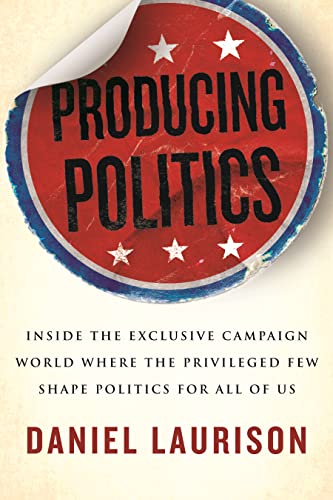
Opening the doors to the backstage of political campaigns, Daniel Laurison invites us to take a closer look at the work of politicos who have played critical roles in presidential elections in the United States.
For over a century, the left has owed its political identity and major political victories to a critical adherance to the Enlightenment. This is why, Stéphanie Roza argues, abandoning this legacy is dangerous.
The behavioral sciences have revolutionized our understanding of individual choices and actions. These approaches are leading to new public policies, which raises important ethical and political questions.
How do citizens view the power of the President of the Republic? An analysis of letters sent to the Élysée Palace reveals the relationship between French citizens and their head of state, as well as the role played by an invisible service: the presidential post office.
What if human lives actually do have a price tag? Ariel Colonomos analyses the social and political conditions of pricing practices for human lives, offering an innovative interpretation of the role of the state in modern European history.
Do the institutions and procedures of democracy deliver more social justice than authoritarian regimes or a hypothetical government of experts? They can, suggests one philosopher, by virtue of the impartiality they foster between citizens.
Democracy has become a key element of government legitimacy throughout the word. A new book’s comparative approach sheds light on the ambivalence of democratic norms, and the paradox of their strategic appropriation by authoritarian regimes like Russia and Turkey.
Bruno Perreau explores the concept of minority by analyzing what separates democracy from majority domination. Based on experiences of injustice, minority ethics is the foundation of more emancipatory political relations.
How can the ideal of deliberative democracy be put into practice? A collective work analyses the “deliberative turn” in theories of democracy and outlines pathways for how deliberation could be implemented in mass democracies where public opinion continues to be shaped by the media and political parties.
Building on his research on corruption and white-collar crime among the ruling classes, Pierre Lascoumes takes us deep into the institutional mechanisms behind the fraud perpetrated by those who wield political and economic power in France.
How do environmental concerns affect forms of democratic participation? Comparing a deliberative process in Poitou to citizens’ mobilization in Ardèche, an ethnographic study examines how citizens engage in politics and conflict.
Jane Mansbridge has made a major contribution to political theory. She has spent her life combining empirical research with a theoretical approach, and has played a vital role in developing the critique of rational choice and the study of democracy as a permanent process continually in flux.
Is neoliberalism essentially martial in nature? To show that it is, is the aim of a book co-written by four authors on both the historical experience of neo-liberalism and analysis of what are considered to be its founding texts. Though stimulating, the argument is not always convincing.
What if the impending ecological crisis required a recommitment to republicanism? This is Serge Audier’s thesis: we must not respond to environmental challenges with an anti-modern or anti-statist reflex, but with a new conception of the general interest.
The 2017 legislative election, which resulted in a landslide victory for La République en Marche, brought up the question of change in the political profession. Étienne Ollion shows that the National Assembly under Macron has done little to renew political practices, often sidelining newly elected members.
Among the less visible actors in election campaigns, interest groups are the subject of numerous fantasies. Although they invest considerable resources, they in fact have little influence on the political agenda.
Laurence Ralph’s ethnography explores the various systems of punishment that injure black and brown Americans’ bodies and that contribute to maintain social hierarchies that rely on the vestiges of slavery. These injuries call for healing and overcoming trauma, and also for reparative justice.
Within French government ministries, cabinet offices are a source of numerous fantasies due to their opaque role and the omnipotence of graduates of the École Nationale d’Administration. A centuries-old institution at the heart of political-administrative power, their composition has nonetheless diversified, and female representation has increased over time.
While France would appear to have all the conditions required to become a neoliberal country like any other, neoliberalism’s roots are much shallower in France than elsewhere. Kevin Brookes argues that the uniqueness of France’s trajectory can be explained by the “high ideological cost” of justifying neoliberalism.
Targeted assassination campaigns seem increasingly well established as a newly prevalent way of war. Through a comparison between the United States and Israel’s practices of assassination, Amélie Férey analyses the discourses which legitimise this practice despite its apparent incompatibility with political liberalism.
Is the project of deliberative democracy unrealistic? Against the cynical assimilation of democracy to a set of voting procedures aimed at satisfying the interests of the greatest number, Charles Girard argues that deliberation is a relevant ideal for a society of equals.
The last few decades have been marked by a profound reconfiguration of the dividing line between the state and the market. As the state increasingly ensures that market competition functions without impediments, the field of intermediation and influence is experiencing an unprecedented expansion.
Rediscovering an activist thinker who was at the origins of eco-feminism, but remains unknown. Her work inspired an extremely heterogeneous movement, but has her ambition to concretely transform the social, economic and political organisation of society been pursued?
For twentieth-century American pragmatists, democracy was a radical experiment involving the deliberate and deliberative participation of the people in identifying and resolving their own problems. Who are their descendants today?
One is mistaken to think that corporations dominate the electoral process in the United States is misplaced. The problem is actually deeper: money structures the field of ideas and sets the terms of the debate.
With taxpayer suffrage abolished and universal suffrage achieved, political participation in our democratic societies should no longer be conditioned on property ownership. However, as Timothy Kuhner shows, politics remain subservient to capital.
Is it really the case, as is often alleged, that money decides everything about elections? As the US presidential election is looming, La Vie des idées/Books & Ideas and Public Books team up to examine the influence of money in today’s electoral democracies.
In France as in the United States, transparency has become a core democratic requirement, and is the cornerstone of all the laws that claim to regulate the funding of political life. But this art of disclosing information often coexists with the ability to conceal it.
From October 2019 to May 2020, 150 French citizens have been involved in a participatory democracy experiment, defining measures to fight against climate change. But how, and through which legal process, can the citizens’ proposals be implemented?
Advanced capitalist democracies have undergone deep changes over the past thirty years, described by Torben Iversen as a transition to a knowledge-based economy. However, his account misses an aspect of class development: the emergence of a new proletariat, highly exploited in the knowledge economy.
For Torben Iversen, capitalism is not responsible for the crisis democracies are currently facing. After Jenny Andersson, Cyril Benoît underlines the limits of this optimistic interpretation.
What can we expect from elections? A. Przeworski urges us to be minimalist: elections provide only imperfect control over the actions of those in power and are not enough to counteract the political effects of inequalities, but they are still the best way to resolve conflicts without taking up arms.