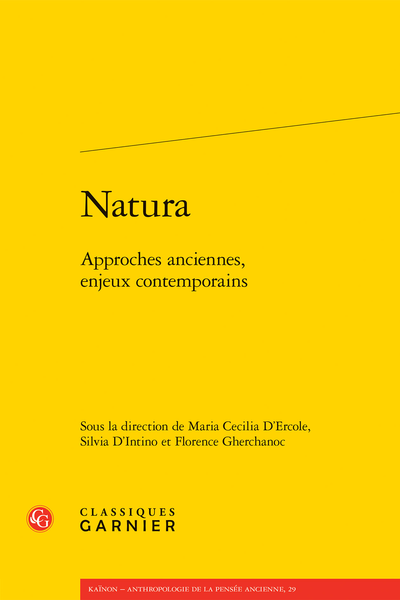
Our understanding of nature differs from that of the Greeks and Romans. From the “month of the ox” to “the forest goddess,” the ancients never thought to separate humans from the flora and fauna around them.
Primitive societies, Lévy-Bruhl explains, are on the lookout for signs of catastrophes, though they are unpredictable. Since we, too, are in a constant state of alert, this insight should inspire us.
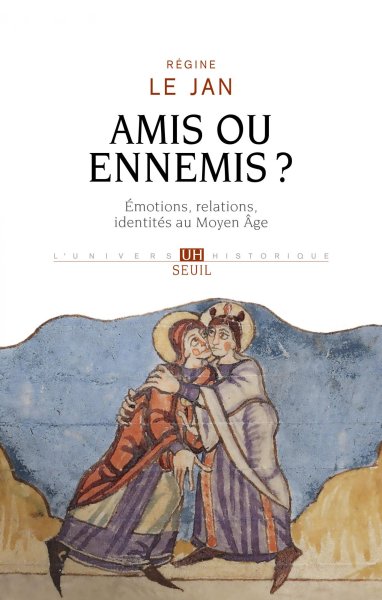
Basing her anthropological history on a rich body of source material, Régine Le Jan explores interpersonal relationships in the Early Middle Ages, arguing that they constitute one of the socio-political specificities of the Latin West.
The ritual massacre perpetrated by the Natchez against several hundred French settlers in Louisiana on 28 November 1729 was the starting point of a colonial violence against a tribe that lasted until its near disappearance.
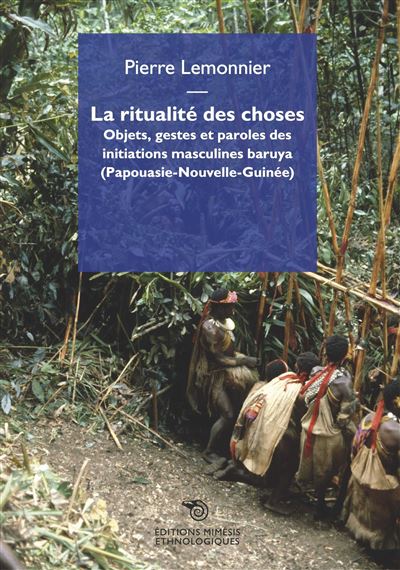
In the tradition of Marcel Mauss, Pierre Lemonnier examines the male initiation rites of the Baruya of New Guinea not in terms of the signifier that can be attached to them, but rather the action on matter that they make possible.
Images are nothing but figurations of our relationship to the world, that is, of our ways of worlding. P. Descola demonstrates this in a monumental study that does justice to the diversity of cultures, time periods, and artworks.
Hunters are more concerned about nature’s fragility than most people realize. They are the first to witness it, and their relationship with animals is not just one of blind predation.
How can social sciences think through the constitutive disorder of a society? When groups marked by “bad reputation” refuse to be an object of knowledge, how can we write about them? This is the challenge presented to researchers by the Tubu of Chad.
Once seen as omens, birds continue to point to the future: a few years ago, their change of behavior heralded the beginning of avian flu. Two anthropological studies focus on these avian sentinels. A closer observation of the relationships between species, they argue, would help us better prepare for the pandemics to come.
Modernity has been built on the idea of a fundamental divide between nature and culture, humans and non-humans, the world and the spirit. These distinctions are no longer viable, as shown by an interdisciplinary and collectively authored book.
Between naturalism and humanism, midway between Perec and Adorno, Didier Fassin suggests considering human lives in terms of the evaluation variable accorded to them by the social environment. Thus, compassionate morality is replaced by the demand for justice.
“Wood runners” is the name given to travelling fur traders in the age of pioneers. Focusing on two centuries of their risky adventures and on their relationship with Amerindian populations allows Gilles Havard to write a monumental multicultural history of the early North American West.
In his latest book, Emmanuel Désveaux proposes to combine the cultural (American) and structural (Levi-straussian) approaches to make sense of cultural differences between European and North American societies. Susan Carol Rogers responds by looking at the discipline’s future and arguing that these two approaches are fundamentally incompatible.
Trees think, explains E. Kohn, because they have the ability to represent the world and today’s anthropology can help us go beyond the distinction between the human and the non-human. The risk here, though, is giving a weak definition of thinking.
What is anthropology, and what type of knowledge does it produce? Gérard Lenclud applies his background in epistemology and questions the future of anthropology in relation to other disciplines as a means of highlighting both the similar challenges they face and the different methodologies they employ.
In recent years there has been an increase in the number of studies by jurists, anthropologists and sociologists on the resurgence of the biological concept of race in medical research, the medico-legal field and genealogy. They have shown how DNA data that is seemingly of the utmost neutrality and technicality is in fact bringing into play a whole set of sociopolitical and economic values, choices and relationships.
Winner of the 2013 David Pinkney Book Prize, Alice L. Conklin’s most recent book takes us on a journey leading to the establishment of ethnology in France and its colonies. Through a biographical approach, she shows how the “general science of man” evolved in the 19th century from the obsessive search for universal laws.
Almost two decades after the end of apartheid, South Africa still displays high levels of racial segregation. Studying the South African Indian minority, Thomas Blom helps us understand why maintaining boundaries with other groups has become crucial to individuals’ attempts at reimagining themselves in a new free and uncertain society.
What is it that drives the collector of primitive art? According to a new study carried out by two ethnologists it is neither a taste for speculation nor acquisitiveness but rather an intuitive infatuation with the artworks themselves and a sense of obligation to them.
A special issue of the journal Annals of the American Academy of Political and Social Science edited by the American sociologists David J. Harding, Michèle Lamont, and Mario L. Small examines the relations between culture and poverty. The authors return to “the culture of poverty,” a concept that became taboo in the 1970s because of its conservative and racist recuperation. Their pluralist and supple view of culture allows them to untie the knot between culture and race that feeds conservative rhetoric.
Lévy-Bruhl has a bad reputation. Beyond what is needed to dismiss it and indignantly condemn such concepts as that of primitive mentality, very little is in general known about his work. Frédéric Keck revisits this case of ostracism, revealing the paradoxical posterity of this philosopher turned anthropologist.
Essay against giving: using the Spinozist concept of conatus (striving) to analyse the self-serving structure of giving in all its guises, Lordon offers a worthy mix of philosophy and social sciences. Through conatus, giving appears as a construct of selflessness that is concerned in fact with averting the violence that stems from human relationships. But doesn’t conatus, as expounded in Spinozist philosophy, portray a purely warlike anthropology?