


Has the idea of value lost value? By considering the concept in its plurality, Éric Dacheux and Daniel Goujoun make a case for an economy that is social, ecological, and deliberative.
Pieter Claesz, Une nature morte de vanité, 1653
From value to values
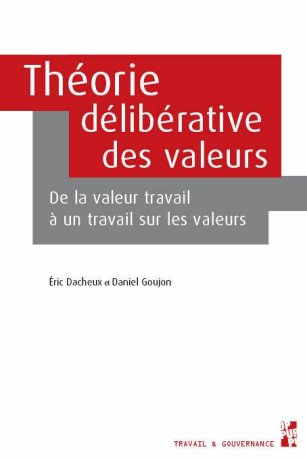
About: Éric Dacheux et Daniel Goujon, Théorie délibérative des valeurs, Presses universitaires de Provence
About: Éric Dacheux et Daniel Goujon, Théorie délibérative des valeurs, Presses universitaires de Provence

|
Following the 2020 publication of Défaire le capitalisme, refaire la démocratie. Les enjeux du délibéralisme (Unmaking capitalism, remaking democracy: The stakes of “deliberalism”), [1] this new book, which appeared in 2024, is the fruit of collaboration between the same two authors with complementary competencies: Éric Dacheux, a specialist in information and communication sciences, and Daniel Goujon, an economist. The book is a timely reconsideration of the debate over value, which goes well beyond the special attachment to the term economists have shown for the past two and a half centuries. [2] Dacheux and Goujon emphasize how the use of the term in the singular (“value”) obscures its plural character (“values”) when one considers, as they do, the contributions of other forms of knowledge (which they examine) and the multiple meanings values can assume within them (in addition to economic value). Drawing on the concept of deliberation, [3] to which far fewer pages (less than thirty out of 160) are devoted than to that of value, they make an appeal for the democratization of economic management. In this way, they contribute to a deconstruction (in the sense of a critical analysis of its implied assumptions and omissions) of economics and the development of social and ecological economics.
Reconsidering value and values
Apprentice economists initiate—and are initiated into—their training with the quasi-ritualistic study of “theories of value.” In lessons that resemble a form of ancestor worship, they learn to distinguish “labor value” from “utility value.” [4] The purpose of this reference to opposing theories of economic value is not just pedagogical, as its explicit or implicit goal is to stigmatize one’s opponents as ideological—Marxism, for some, and, for others, neoclassical economics, be they liberal or neoliberal (the term “postliberal” [5] is more appropriate, as it makes clear the break with the liberalism of Adam Smith or Jean-Baptiste Say). Yet the frequent conflation of neoclassicism and conservative policies—whether to embrace or reject them—is mistaken. After all, Léon Walras (who too often is remembered only for his “pure economics,” to the neglect of his “practical” and “social economics”) [6] was also a theorist (and, in his youth, a practitioner) of cooperativism.
Some readers may be baffled by the way the book uses the plural form to refer to values in their plurality and the singular form to refer to value. The latter is understood as an economic term. As for “values,” it is not until page 55 (as well as page 64) that the authors classify “three types of values: political values (liberty, equality, etc.), symbolic values (sacredness, secularity, etc.), and economic values (utility, work, etc.).” It would have been useful to distinguish values that measure (a cardinal approach) from values that rank (an ordinal approach).
Even within the economic field, “value” has often been studied. Even so, it is possible to critique, as Dacheux and Goujon do, as a form of economism any conception of “economic” value that leaves out “non-economic” values. The question is crucial because “value,” which determines the cost that one pays, does not incorporate the environmental footprint of human activities. In this context, the authors might have mentioned Arthur Cecil Pigou (1877-1959), and the distinction that, thanks to him, is made between social cost (which is assumed by society as a whole due to the negative externalities of particular activities) and the private cost assumed (i.e., paid) by an economic agent. Extending these considerations to the environmental realm and beyond, one could also mention the proposal put forth by Pierre Calame and the Alliance pour l’emploi sans carbone (the Alliance for carbonless employment) [7] to double purchasing power by creating, for each citizen, an account that limits their ability to spend their environmental footprint. It is worth pointing out that prices hide what the sociologist Osiris Cecconi called, half a century ago, “cultural underdevelopment,” which results from “economic development” (PUF, 1975). In other words, because economic value is fragmentary, one does not pay for the true value of goods and services.
Though controversies about “value” have largely disappeared from economic debates and, more generally, from disciplines that refer to economics, Dacheux and Goujon’s project of returning to values and value is not outdated. Save for rare exceptions, today’s economists reason primarily in terms of price—that is, money, not value. This can be seen in the interpretation proposed by André Orléan in L’Empire de la valeur (The Empire of Value, Paris, Seuil, 2011). Economic value has, for many, become implicit, making it unnecessary to (re)present it. The reasons for the noticeable disappearance of this source of disagreement among economists include:
First, the declining influence of Karl Marx’s work, which these days is more often cited than read [8];
Second, due to period during which standard economics was dominated by John Maynard Keynes, whose theory of value was, to put it mildly, implicit. [9]
Much of Dacheux and Goujon’s book consists in revisiting various theories of value lying outside the field of economics. Beyond their interest in historians of ideas, the presentation of these theories is useful as most are now largely forgotten (such as those of Gabriel Tarde, who is cited in the text but not mentioned in the bibliography). Postliberal [10] approaches are not lacking in considerations of morality and are sources of values that might be deemed immoral. They do tend to prioritize individual choice and the defense of private property, in contrast to various so-called “social” and “humanitarian” values, such as being free, sharing, solidarity, charity, care and concern for others, fraternity, and harmony with nature, among others, which are also found in the institutions and actors of solidarity-based finance and ethics and which give rise to the kind of deliberations that Dacheux and Goujou encourage.
Stakeholders in a participatory democracy
Dacheux and Goujon’s main contribution lies in the book’s final part (p. 125-153), in which they propose what they call a deliberative approach to values. As noted in our introduction, they put forth a democratic vision of society based on deliberative processes [11] resulting in public sphere collaboration between different stakeholders. It is notably opposed to the interest of internet giants and dominant financial organizations. At a theoretical level, it rejects conceptions of economic value that are essentially metaphysical and based on rational calculation oriented towards competition between individual interests.
This term is borrowed from management research on the social responsibility of companies, by way of work on stakeholders. [12]. It assumes the existence of participatory democracy. [13] This implies going beyond a conception of modernity based on an overhasty distinction between state and market and introducing a third element, consisting of civil society’s various components. This third element must be included though representative structures of collective and individual actors, individuals who are directly and indirectly concerned and positively or negatively impacted, whether actively or passively. This means that it is not enough to select civil society experts who are asked in specific circumstances to provide their opinions that may or may not be taken into consideration. These agents should not be charged not simply with discussing the modalities for applying decisions that have already been made by some hierarchically superior authority. They must have genuine decision-making authority and an ability to control processes for establishing arbitration and following up on their application. Today, the effective management of commons depends on economic and political pluralism. Affected actors must also include the voices of the absent—in other words, those of future generations and nature, which are just as difficult to integrate. At present, this question has been raised by debates over the legal recognition of forests, waterways, and mountains. This plurality of actors lies in the three realms that are the market, the state, and civil society organizations. Hence its contribution to the so-called “social and solidarity” economy. The former is central to the selection of actors in the latter.
In this way, a kind of reversal occurs, since economic value, which supposedly prevails over other values to the point of excluding them, must be embedded or reembedded (to borrow Karl Polanyi’s term) in the entire range of other values. Hence the play on words that is “deliberalism”: it refers to a way out of liberalism through deliberation.
Values and esteem
An aspect of the question that the authors only touch upon is that of esteem (p. 71). They borrow the idea from the Catholic philosopher Auguste Etcheverry (1892-1978). In La valeur et l’être (Value and being 1947), Etcheverry argued that the “problem of value” “underpinned the entire history of thought.” Exploring this reference, one notes that esteem follows notably from what Montesquieu says about inequality in the Spirit of the Laws (1748, particularly book 5, chapter 8). In a society founded on hierarchical inequalities tied to the relative status of various segments of a population, goods and services lack an objective value. Aristotle, of course, made this argument about the difference between “distributive justice” and “commutative justice” by showing the relative difference between a house and a shoe, whose prices are proportional to an architect or shoemaker’s position in the social order. What one pays in exchange for a good or service depends on the relative status of each partner in a transaction. Thus a good or service has no price (or value) since it varies according to the respective position of the transaction’s partners in the social order. To ignore it is central to the ideological and political project of economists since the eighteenth century, along with the implicit revolutionary principle of human equality (as the only recognized inequalities are reduced to those between incomes and wealth).
Many will think that this question belongs to the domain of historians and anthropologists and that this framework is of little relevance to modernity, including Dacheux and Goujon, who, with their proposal for a deliberative society, whose members are supposedly equal and whom society must ensure achieve personal equality.
Yet can one not say, pursuing the line of thought proposed by Dacheux and Goujon, that a community founded on various levels of solidarity and in the transition to such a society, price differentiation once again becomes relevant? To support society’s most excluded segments, must not the price of water, electricity, energy, the enjoyment of cultural goods, as well as certain forms of care, transportation, and so on be differentiated to allow the most underprivileged groups access to such goods? The hierarchical logic of esteem can (and must) be disrupted in their favor.
Even so, to this end, would be appropriate, beyond the definition of values and the theoretical sketch (p. 67) they offer of the deliberative approach, for Dacheux and Goujon to have considered the political capacities required for such a proposal to prevail and how—relying on examples—it is (and could be) possible in the face of the dominant practical and ideological interests in contemporary society. The examples of managing water as a shared good could, among others, serve as its basis. [14] One hopes that such an explanation of how deliberative approaches might be implemented will be considered in Dacheux and Goujon’s next book.
Éric Dacheux et Daniel Goujon, Théorie délibérative des valeurs (A deliberative theory of value), Aix-en-Provence, Presses universitaires de Provence, 2024, 174 p., €16, ISBN 9791032005255.
by , 6 October
Share this article
Find us here :


To quote this article :
Jean-Michel Servet, « From value to values », Books and Ideas , 6 October 2026. ISSN : 2105-3030. URL : https://booksandideas.net/From-value-to-values
Nota Bene:
If you want to discuss this essay further, you can send a proposal to the editorial team (redaction at laviedesidees.fr). We will get back to you as soon as possible.
You might also like


Footnotes
[1] Dominique Desbois, “Défaire le capitalisme, refaire la démocratie. Les enjeux du délibéralisme, de Éric Dacheux et Daniel Goujon.”
[2] It The detailed presentation of the book Dominique Desbois is worth reading: “Théorie délibérative des valeurs. De la valeur travail à un travail sur les valeurs,” Terminal [Online], 140 | 2025.
[3] See, notably: “Les promesses théoriques des recherches sur les initiatives solidaires: l’exemple du ‘délibéralisme’,” Revue française de socioéconomie, 2016, no. 16, p. 201-214.
[4] Consequently, it is surprising that while Adam Smith can be found in the bibliography, Jean-Baptiste Say, Karl Marx, and Léon Walras are absent, even though they are referred to in the text. Given the book’s richness and wide range of references, it is a shame that there is no index either of names or of themes and concepts.
[5] It is particularly relevant since the publication of Gaël Giraud, Composer un monde en commun, Paris, Seuil, 2022.
[6] On the lesser known aspects of Léon Walras’ work, see notably Pierre Dockès, La société n’est pas un pique-nique, Paris, Economica, 1999 and volume 6 of Œuvres économiques complètes d’Auguste et Léon Walras (Paris, Economica, 1999).
[7] See Pierre Calame Petit Traité d’œconomie (Paris, ECLM, 2018 p. 146-148) and the editorial published in Le Monde on October 27 2023 at the initiative of Armel Prieur [www.escape-jobs.fr for carbonless job]: “Transition écologique. Pour un Bretton Woods de la monnaie carbone.” [https://www.lemonde.fr/idees/article/2023/10/27/ transition-ecologique-pour-un-bretton-woods-de-la-monnaie-carbone_6196818_3232. html].
[8] There are few today who still speak of “the transformation of value into production cost,” as Vincent Laure Van Bambeke did with great conviction. See Les méandres de la transformation de la valeur en prix de production, Paris, L’Harmatan, 2013. One might also read Jean-Marie Harribey, a defender of the Marxist tradition of labor value. Dacheux and Goujon analyze the plurality of approaches to value in Marx (p. 15-21).
[9] André Segura, “Y a-t-il une théorie keynésienne implicite de la valeur-travail?,” Économie appliquée, volume 45, 1991, no. 3, p 131-166.
[10] See note 5.
[11] On “deliberalism,” see notably: “Les promesses théoriques des recherches sur les initiatives solidaires: l’exemple du ‘délibéralisme’,” Revue française de socioéconomie, 2016, no. 16, p. 201-214.
[12] Among the most commonly cited early writings, see Robert E. Freeman, Strategic Management: A Stakeholder Approach, Boston, Pitman, 1984.
[13] On participatory democracy insofar as it relies on goods with various statuses (public, private, cooperative), see notably: Alberto Lucarelli (2017), “Démocratie participative,” in Marie Cornu, Fabienne Orsi, Judith Rochfeld, eds., Dictionnaire des communs, Paris, PUF, 2017, p. 341-345.
[14] Rémi Barbier and Sara Fernandez, “L’eau en commun,” La Vie des idées, April 16, 2024
Our partners


Sections
Keep in touch
© laviedesidees.fr - Any replication forbidden without the explicit consent of the editors. - Mentions légales - webdesign : Abel Poucet