

By tracing the history of the French word pute (whore), since the twelfth century, Dominique Lagorgette reveals the mechanisms of linguistic oppression at work in our societies.
“Vivre sa vie”, Jean-Luc Godard (1962)
A Linguistic Archaeology of Stigma
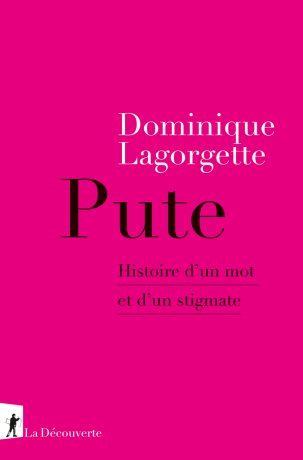
About: Dominique Lagorgette, Pute. Histoire d’un mot et d’un stigmate, La Découverte
About: Dominique Lagorgette, Pute. Histoire d’un mot et d’un stigmate, La Découverte

|
In Pute: Histoire d’un mot et d’un stigmate (Whore: History of a word and a stigma), Dominique Lagorgette offers a striking analysis that transcends the boundaries of linguistics to present a true archaeology of the power embedded in language. In her publications, this renowned expert on verbal abuse and linguistic transgressions has consistently sought to identify the mechanisms of linguistic oppression; here, she undertakes a historical and social deconstruction of a term that embodies centuries of stigmatization.
Going beyond a simple lexicographical study, Lagorgette provides researchers interested in sexualities with key analytical tools for understanding the political implications of the words they use. Her approach reveals how language actively contributes to establishing and perpetuating power relations, demonstrating that every use of the term “whore,” in particular, conveys and reinforces age-old structures of oppression. This research thus provides a key foundation for any critical examination of contemporary issues surrounding sex work and the mechanisms of stigmatization associated with it.
The book has a four-part structure: 1) The origins of the word pute; 2) Sex work terminology over time; 3) Responses to the word; and 4) The expansion of the word pute : putain! viarge! and so on. The author methodically traces the trajectory of a word that has become one of the most powerful stigmas in the French language. She uses this framework to adopt a rigorous diachronic approach, covering eleven centuries of linguistic history across the area where the langue d’oïl varieties of French were spoken.
The complexity of etymology
The first part of the book explores the etymological complexity of the term. Lagorgette offers a cautious overview of the various hypotheses surrounding the origin of the words pute (“whore”) and putain (“whore” or “fuck”) emphasizing the lack of a definitive scientific consensus (pp. 33–37). Her analysis reveals the term’s original dual function. Initially used as an adjective to refer pejoratively to concepts or objects, the word soon came to describe people’s moral qualities—conceived as an inherited trait—and thus became an axiological term par excellence. The author observes that the shift “from a concrete meaning to an abstract one thus seems to have emerged quite early, with objective physical dirtiness being associated with subjective moral dirtiness” (p. 45). This semantic shift reflects patriarchal dynamics in which women perceived as deviant were systematically marginalized by language itself. An analysis of medieval corpora shows that, as early as the twelfth century, the noun pute cemented this logic of stigmatization by applying it specifically to women, subjecting them to both moral and economic condemnation. Since it was never viewed as neutral or positive, the term simultaneously referred to “women of ill repute and loose morals” and to a profession, thereby establishing from the outset the deliberate conflation of morality and economic activity that still characterizes contemporary representations of sex work.
In the second part, “Sex work terminology over time,” the author brilliantly expands on the analysis by tracing the historical evolution of this lexical field. She does not limit herself to terms relating to women but is careful to include those used for men and transgender people (pp. 81–82), while pointing out that the stigma surrounding prostitution remains specifically attached to women. The borrowing of words from foreign languages (English, Turkish, Portuguese) reflects not only how these stigmas circulate internationally but also how they have adapted to specific cultural contexts (p. 91). The author provides a detailed glossary giving a striking overview of the scope of the phenomenon. Her analysis reveals how, through the process of metonymy, the lexical field of prostitution has massively permeated the French language: terms evoking movement or specific places, as well as terms referring to positions such as horizontales (literally “horizontal women,” a euphemism for prostitutes); first names with pejorative diminutives, such as Catherine, which becomes catin (“whore”); references to sacred figures used in a different context; and even subverted terms of address such as “lady of love.” The range of animal imagery used is particularly rich—names of birds, domestic animals, wild animals, woodland animals, exotic and aquatic animals, and game—with these animal comparisons systematically setting women apart from humanity (p. 145). This lexical analysis reveals the shocking extent of the phenomenon: virtually the entire female lexicon appears to be tainted by these connotations. As the author points out, it might be simpler to list the terms used to refer to women that do not also imply prostitution or “loose morals” (p. 145). Her observation highlights the symbolic violence perpetrated by language, which turns every woman into a potential prostitute in the collective imagination.
Lagorgette thus shows how this lexical proliferation is part of a strategy of social control, with each era developing its own variants based on its specific moral concerns.
Uses of the word
The third part, which focuses on “responses to the term,” is undoubtedly the book’s most innovative contribution. Drawing on an impressive body of literary, legal, and religious sources, Lagorgette demonstrates how the use of the word became established in moralizing discourse. Religious texts and legal codes from the Middle Ages systematically use terms lexically related to pute when referring to women accused of witchcraft or debauchery, highlighting the political dimension of this stigmatization.
In a chapter entitled “Words that carry risk” (p. 191), the author highlights the contemporary tension between the “ban on language used by the well-born and well-bred” and the “need to spontaneously express intense emotions” (p. 191). She shows how these forbidden terms are, paradoxically, “necessary to humiliate others by degrading them with words,” while at the same time being euphemized in the media with renderings such as “p***” (p. 194). Her analysis of censorship strategies reveals “the social appearance of the enemy,” which society symbolically seeks to change (pp. 192–193). These mechanisms of partial prohibition maintain the transgressive force of the word while preserving society’s moral appearances. She also discusses how these stereotypes persist and adapt through cultural and literary representations (pp. 198–199). This is one of the book’s most valuable contributions, in our view, as Dominique Lagorgette offers her readers a true cultural overview. By using books, films, and songs [1] as the basis for her analysis, she has created a de facto corpus that transforms the book into an intellectual guide for any researcher (pp. 194–199). By linking semantic evolution to artistic creation in this way, the author brilliantly demonstrates how language shapes our perceptions and beliefs—in short, how the meaning of these words becomes embedded in the collective imagination and is perpetuated within the cultural landscape. Finally, Dominique Lagorgette makes a particularly compelling case that the stigma extends far beyond sex workers to become a gendered insult directed at all women who violate patriarchal norms. This extension reveals the term’s true purpose: namely, as a tool for controlling women’s bodies and speech, regardless of their actual involvement in sex work.
Toward reappropriation
In keeping with the book’s aim to trace the entire history of the word, in the fourth part the author examines contemporary efforts to deconstruct the stigma, highlighting feminist movements and sex workers’ organizations that advocate for the use of the term as a form of agency. These efforts at reappropriation seek to recontextualize the word, denouncing moral hypocrisy and institutional violence as part of a strategy to turn the stigma on its head and transform the slur into a tool for political advocacy (pp. 245–252). She also analyzes the resistance to this reappropriation, particularly among conservatives and abolitionists, raising the key question of whether the stigma can be completely separated from the word or whether it remains irrevocably marked by its history of oppression. This question highlights all the complexity of contemporary issues involving the re-signification of oppressive terms—that is, the transformation of the meaning of words through their reappropriation. Finally, the author highlights how these debates reflect differing views on prostitution and gender relations, with each position advocating a specific vision of women’s emancipation.
The contemporary extension of the term through neologisms such as putaclic (literally “whore-click,” meaning “clickbait”) testifies to the enduring power of the stigma in the digital age. Lagorgette examines these new forms of use, which perpetuate mechanisms of moral disqualification while adapting to contemporary technological contexts. This shift reveals that speakers remain at the heart of linguistic change, capable of both reproducing and subverting inherited oppressive structures.
In short, Dominique Lagorgette’s book presents all the findings of linguistic research on this topic. Pute: Histoire d’un mot et d’un stigmate thus stands out as a reference work that goes far beyond its initial scope. Our only regret is that we did not have access to this masterful synthesis during our doctoral research [2], as the author so successfully fills a major gap in the scientific literature. Indeed, the strength of her analysis lies in her ability to reveal how a single word crystallizes centuries of beliefs. In doing so, she confirms that “all expressions referring to women can also refer to prostitutes” (p. 9) and highlights how widespread the system of stigmatization is throughout the French language. This diachronic approach helps us understand not only how symbolic violence becomes entrenched and perpetuated, but also how it can be challenged and subverted.
Dominique Lagorgette’s book undeniably lays the foundation for a theoretical and methodological framework that is set to evolve. By opening up this field of research on the linguistic archaeology of gendered stigmas, the author identifies areas that warrant further exploration.
Dominique Lagorgette, Pute. Histoire d’un mot et d’un stigmate, Paris, La Découverte, 2024, 301 p., 17 €.
by , 29 October
Share this article
Find us here :


To quote this article :
Samantha Pratali, « A Linguistic Archaeology of Stigma », Books and Ideas , 29 October 2026. ISSN : 2105-3030. URL : https://booksandideas.net/A-Linguistic-Archaeology-of-Stigma
Nota Bene:
If you want to discuss this essay further, you can send a proposal to the editorial team (redaction at laviedesidees.fr). We will get back to you as soon as possible.
You might also like



Footnotes
[1] Although the book contains numerous references, in this third part the author highlights how the term may have been gradually censored. With this in mind, she invites us to read or reread Abbé Prévost’s Les Lettres anglaises (Prévost’s French translation of Samuel Richardson’s Clarissa); The Letters of Madame de Sévigné to her Daughter and Friends; Rhapsodies by the poet Pétrus Borel; Jean-Paul Sartre’s play La Putain respectueuse (The Respectful Whore)—now published under the title La P… respectueuse due to the ban on using the word in titles; and Jean Eustache’s cult film, La maman et la putain (The Mother and the Whore), whose trailer for the restored version obscures the word putain in the title with a red rectangle bearing the word “CENSURE.”
[2] Samantha Pratali, Droit et prostitution du XVIIe siècle à nos jours : interactions entre pouvoir national et local. Étude à partir des archives départementales des Bouches du Rhône (The law and prostitution from the seventeenth century to the present: interactions between national and local power. A study based on the departmental archives of Bouches-du-Rhône), University of Aix-Marseille, 2020.
Our partners


Sections
Keep in touch
© laviedesidees.fr - Any replication forbidden without the explicit consent of the editors. - Mentions légales - webdesign : Abel Poucet