


From Salomé to Lolita, representations of “temptresses” haunt male fantasies. They entail a woman who has said “yes” before she has even been asked anything. And women who “fire up” men’s desire must pay the price.
“Les hommes préfèrent les blondes”, Howard Hawks (1954)
Marilyn Monroe does not exist
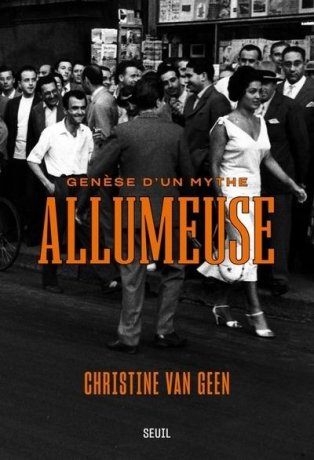
About : Christine van Geen, Allumeuse. Genèse d’un mythe, Seuil
About : Christine van Geen, Allumeuse. Genèse d’un mythe, Seuil

|
When one calls a woman a “tease”, one is also saying implicitly: “You must take seduction through to its full consequences.” In this way, the term “tease” – allumeuse in French – is “not just a pejorative and objectifying insult. It is a full-fledged thesis: it implies that women trigger male desire and should take responsibility for this fact” (p. 11).
This definition goes hand-in-hand with a fantasy: that of the woman who has said “yes” before she has even been asked anything – “the ideal complement to male desire, conceived as irrepressible and permanent” (p. 16). It is necessary to understand this word, to map it out, write its history, and ultimately deconstruct it. Christine van Geen has done so very convincingly.
Adam and Eve: even score
Van Geen informs us that the French word allumeuse – literally, someone who “fires up” – appeared in 1850 in police slang to refer to prostitutes who did not come out in the streets until the streetlamps were lit, and not before, lest they be fined. The term subsequently underwent semantic slippage, probably dueto the way “fire” and “spark” were already contained in the word. The metaphor of desire as a “fire” is very ancient.
From a female perspective, the idea of being an allumeuse is absurd: why would one want to “fire up” a man’s desire if one had no interest in going further? In a perfect world, no woman would have any reason to do so. But van Geen shows that things are far more complicated in the patriarchal system in which we live. She relies on a wide range of references – to mythology, rap culture, legends, and even school regulations (no short dresses or crop tops, so as not to distract the boys – though the converse problem is rarely mentioned).
Van Geen also discusses the legal system: the accusation that a woman is “frustrating” is known to appear in trials, the implicit assumption being that they should be punished accordingly (no need to mention how). The book’s illustrations are also wide-ranging: very strikingly, they highlight the history of collective representations of famous female “types”, through paintings, photographs, etchings, and other images that van Geen analyzes.
By bringing into conversation aspects of the question that relate to the longue durée with aspects that belong to the present moment, van Geen takes a broad perspective and shows that we often approach the question from an erroneous standpoint. For example, the idea of Eve as “the first woman and the first tease” comes to all of us when we recall paintings portraying her. This interpretation did not, however, appear until later. In the Bible, Eve is no more at fault than Adam. She listened to the serpent, and Adam listened to her: “As such, Adam is guilty of exactly the same weakness as Eve: like her, he took a bite of the forbidden fruit as soon as he was tempted. Neither of them resisted. One bite each; even score.” (p. 35).
The same can be said of Cassandra. We recall that no one listened to or believed her when she prophesied the horrors of the Trojan War. But all this happened only because she had been raped by Apollo. Aeschylus even presents as the reason for divine frustration: she triggered Apollo’s desire then refused his advances, after he had fallen for her. Consequently, gift and damnation go together: Cassandra can see the future, but no one will hear her, as if she were responsible for being raped and had to accept the consequences.
Van Geen draws a parallel with climate change: women suffer more from it (for instance, they are more likely to be victims of hurricanes, and many girls are forced to marry early due to drought), but no one listens to “prophetesses of doom”. Many other unexpected parallels between mythology and contemporary events that she identifies will strike the reader as true – for instance, between Galatea and Adèle Haenel, with Christophe Ruggia being seen by many as her Pygmalion, who in many ways shaped her.
From Salomé to Lolita
Teases would not exist in an egalitarian world (if Cassandra had been a goddess with the same powers as Apollo, none of what happened to her would have been conceivable, as she would have had no need to seduce him to obtain a gift). Similarly, poverty traps in contemporary society explain the physical submission of women. Van Geen writes:
The need to dominate women’s bodies and to claim them as “legitimate” counterparts to gifts explains why financial equality between men and women is an absolute point of resistance to social progress, which is obstructed by discourses that essentialize women by complimenting their generosity in caring for others (for next to nothing) while also denying them access to lucrative and gratifying careers – in the sciences, engineering, and business (p. 52).
But van Geen also wants to show how much our collective imagination is distorted by dominant and erroneous readings of foundational texts. Her conclusions are one reason her book is so fascinating. In the gospels, the story of Salomé is that of a mother’s furious revenge against Herod. In the original text, the daughter’s name is not given. She is simply a child who is the victim of incest and denied her own will, acting at her mother’s command. In the gospel, there is no allusion to precocious sexuality nor to a desire to manipulate male desire.
And yet in all the iconography, intertextuality, and later accounts relating to the story, she is presented with scarves that she waves lasciviously and as performing a sensual dance that makes her responsible for John the Baptist’s death. Yet it is forgotten that this is all apocryphal.
A similar misunderstanding, that is once again far from being accidental, relates to the character of Lolita in the famous novel by the Russian-born American writer Vladimir Nabokov. In fact, he wanted to explore the perspective of Humbert Humbert, but to deconstruct it and show how incest is ignored. In 1975, on the TV show Apostrophes, Bernard Pivot defined Lolita as a tease. Nabokov took the opportunity to set these mistaken interpretations straight: “Lolita is not a perverse young girl; she is a poor child who has been perverted.”
All of van Geen’s examples prove the same point: the metaphor of allumage, or “firing up”, cultivates the myth of a female seduction that, for men, is irresistible and is simultaneously deceptive and dangerous. This myth is the foundation of misogyny. In any case, the myth of the “tease” scrambles the distinction between desire and non-desire for women, and bolsters the idea that women have what might be called a magical power over men – an idea that has long ago become a commonplace.
In contrast, the male capacity for seduction is never seen as magical or mystical. When a married man decides to leave his wife for another woman, the one responsible for breaking up the couple is usually the other woman. She is desirable, not desiring; she is not seen as having been seduced, just like the man. Such assumptions run through our collective unconscious. The enchantress is always female: Viviane; the Sirens responsible for the death of Ulysses’ seamen; Ulysses himself, who must bind himself to the mast to resist them; and Lorelei of the Germanic legends, a nixie who does her hair on a rock in the middle of the Rhine, embodying the risk of drowning. In no legends do men play enchanters’ roles. They are inconceivable.
An exchange currency
“Representations of ‘temptresses’ as invariably female, in the ‘upright’ world in which we live (but is it?), are ways of hiding the truth of relationships between dominators and dominated” (p. 100). It is “impossible for women to engage in seduction the way men do, through their power in social dynamics”. Yet it is important to add that, of course, not all men can be seductive in this way. This is evident from studies of Trump’s electorate and masculinists, like the incels, who are precisely excluded from this ability to seduce. But this is another topic.
The fact remains that there exists, as van Geen demonstrates, two currencies on the love market and that the patriarchal model survives precisely because these two currencies continue to be different. Patriarchy “will never fall until one recognizes the fast one that is pulled on women when their seductive abilities are celebrated” (p. 102).
Marilyn Monroe’s famous “Pooh Pooh Bee Doo” is a good example. To pout is to pucker one’s lips. It evokes lips that don’t speak, but that exist only to babble and kiss. Monroe is the symbol of a woman forced to adopt the code of seduction to exist – of a woman who has had a fantasy vision of herself imposed on her. In her tragic fate, misery played an important role, notably in her experience of hunger (she later joked that in some of her nude photographs, she had not eaten for three days – hence her “pretty little flat tummy”).
Yet despite this darkness, Monroe was also, as van Geen explains, an incredible light – a woman whose beauty far surpasses the image of the dumb blonde she was forced to play. She was raped at the age of nine and humiliated by her transformation into a fantasy. She wanted to keep her natural chestnut-brown hair and curls, refusing to be a peroxide blonde and to have her hair straightened; but no one heard her refusal, just as no one listened when, as a child, she tried to tell people that she had been raped. She was a pure product of the patriarchal imagination. In a sense, van Geen argues, Marilyn Monroe does not exist.
Women’s desire is often described as less powerful and less imperious. This is the basis for an argument that implies that female desire has no other purpose than serving male desire, whose supremacy establishes male sexual dominance (p. 142). This notion has been instilled by myths since Antiquity (“gods spend their time getting women pregnant”) and informs our collective imagination. Van Geen writes:
If one accepts as a biological fact that men have more sexual desire, then, even unconsciously, women assume the burden of “relieving” them… The always fiery stallion and its little doe result in a sexual paradigm that is unequal, dominating, and phallocentric, even when the stallion has learned that the doe must consent before she is mounted (pp. 145-146).
If one does not deconstruct the idea that male desire is incoercible, discourses on the need for equality between the sexes may remain impotent before the power of such representations.
Irresistible reciprocity
For this reason and others, van Geen is careful not to endorse the contrary injunction (“never tease”): women must “reappropriate their bodies in all their wholeness, without dissociation, with the full right to initiate seduction and to desire – and men should not fear that they will be blown out. Let us light the fire!” (p. 147).
Hence the title of the book’s fourth part: “How to reappropriate our bodies, ourselves: Dare to Fire Up [i.e., dare to tease]”. Forsaking seduction is a dead-end, as seen in the feminist movements of the 1970s, which in many ways were big garbage bins, in which women rejected as alienating the paraphernalia of seduction – bras, fishnet stockings, and heels – and threw it into a great bonfire (we are back to fire…).
Yet can one still “tease” while rejecting alienation? What about forms of seduction that use the codes of domination? Should they be banned? Free and non-alienated desire, which allows one to aspire to be seen, heard, and touched, to hope to seduce and be seduced, without internalizing domination – is this conceivable? It is. And van Geen shows how (spoiler: it requires work!).
What is required is that society collectively acknowledge that female desire is not beholden to male desire. It must be endlessly repeated that when it comes to achieving intimacy, no one owes anyone anything, and that domination is far less appealing than reciprocity – “teasers-teased”.
In Shakespeare’s Much Ado About Nothing, Beatrice, “lady Tongue” and “lady Disdain”, as her detractor and future lover, signor Benedict, names her, finds the solution to domination in her unique way of opposing it. While Benedict, at the outset, showed little – even the littlest – esteem for women, he was ultimately seduced by this “biting language, which says ‘no’, refusing any complacency, and opening, in this way, the space for an irresistible reciprocity in which he falls, face forward, completely smitten, just as wildly enchanted as he used to be unsettled by the lively lady” (p. 180). Which is indeed no little ado, about quite something…
Christine van Geen, Allumeuse. Genèse d’un mythe (The “Tease”: Genesis of a Myth), Paris, Seuil, 2024, 192 pp., €20, ISBN 9782021544053
by , 12 February
Share this article
Find us here :


To quote this article :
Élisa Goudin, « Marilyn Monroe does not exist », Books and Ideas , 12 February 2026. ISSN : 2105-3030. URL : https://booksandideas.net/Marilyn-Monroe-does-not-exist
Nota Bene:
If you want to discuss this essay further, you can send a proposal to the editorial team (redaction at laviedesidees.fr). We will get back to you as soon as possible.
You might also like


Our partners


Sections
Keep in touch
© laviedesidees.fr - Any replication forbidden without the explicit consent of the editors. - Mentions légales - webdesign : Abel Poucet