


The intensive use of carbon energies has brought prosperity, particularly since 1945, along with relatively peaceful international relations. Decarbonation makes it necessary, according to Pierre Charbonnier, to invent a new form of geopolitics.
Peace, prosperity, petroleum
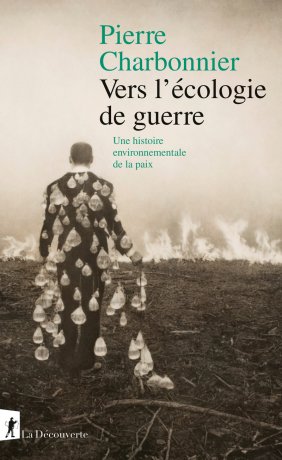
About: Pierre Charbonnier, Vers l’écologie de guerre, La Découverte
About: Pierre Charbonnier, Vers l’écologie de guerre, La Découverte

|
What if the current climate crisis began with the international order designed after the Second World War to ensure lasting peace? What if the contemporary pacification process created new risks and made bad choices while trying to do good, redirecting the war instinct towards an armed peace against nature? Affirmative answers to these questions are the stimulating theses that Pierre Charbonnier defends in his new book.
Charbonnier’s book has three goals. First, he reconsiders the history of the relationship between peace and abundance in philosophical thought. He emphasizes how political modernity connects prosperity and peace, but that doux commerce [1] and interdependence that purportedly ensures this peace rests on predation and intense resource usage. Second, Charbonnier traces this idea’s implementation and contradictions since the Second World War. Peaceful international relations based on economic prosperity are based on fossil energies, resulting in the current climate crisis. This original framework explains the impasse faced by contemporary climate governance. Finally, Charbonnier goes a step further in proposing the concept of “war ecology,” which seeks to reconcile ecology and geopolitics. In contrast to ecological currents that refuse to think in terms of power and to participate in competition between states, Charbonnier proposes that sobriety be considered as a weapon and a power tool. These three goals correspond to the book’s different parts.
This analysis builds on the ideas Charbonnier explored in Abondance et liberté (Abundance and freedom), published in 2020, as well as recent work on the history of energy that seeks to connect energy policy to underlying political ideas. After having shown how unlimited economic abundance confiscated the ideal of social emancipation by tying the idea of freedom to that of abundance, Charbonnier studies the connection between peace and energy abundance. In so doing, he draws on political philosophy, numerous books by historians, particularly English-speaking ones, as well as recent reports and articles that analyze the current international situation, especially Russia’s invasion of Ukraine.
“Carbon peace” and the contemporary crisis
The book revisits the roots of modern political philosophy to emphasize the environmental implications of the connection that, since Kant, has been posited between peace and prosperity. Pacification’s three pillars (law, doux commerce, and industry) are premised on unlimited access to resources. According to Charbonnier, these philosophical positions, which were elaborated over several centuries, were embodied in the policies followed since the Second World War. They also coincide with the “great acceleration,” characterized by strong growth and recourse to fossil energies, which, for Charbonnier, is synonymous with the Anthropocene. After 1945, the break was complete: oil and coal consumption grew exponentially not only for technological and economic reasons, but primarily for geopolitical ones. States made it the foundation of international security achieved through interdependent institutions, the most obvious example being the European Coal and Steel Community.
This energy and geopolitical configuration is the foundation of the current climate crisis. To question fossil energies would mean questioning the foundations of peace. Charbonnier notes that this form of international organization is beset with tensions and conflicts, and that fossil resources can be weaponized. Specifically, North/South tensions permeate conflicts over oil, which can become a negotiation tool for producer countries in the global south.
This matrix has shaped climate negotiations since the 1990s. Two reasons explain, according to Charbonnier, why it seems impossible to reach an agreement to fight the climate crisis. First, the international negotiations system was not, at its origins, conceived to limit or dispense with fossil energies. Second, ecological thought, in refusing to play the power game in international relations, has failed in making the environment a geopolitical issue. It is from this standpoint that Charbonnier proposes the concept of “war ecology.”
By coining this term, Charbonnier is calling on ecologists to embrace geopolitics and implement decarbonation by making environmental policy serve state power. Decarbonation must become a geopolitical weapon. In this way, he shifts from an ecology that serves power to the “war ecology” that is his book’s title. “War” is a metaphor that is the antonym to the idea of “carbon peace.” It also refers to contemporary events, notably Europe’s current policy of discontinuing Russian gas imports in response to the invasion of Ukraine. “War ecology” also refers to an agenda that lays out the conditions for abandoning fossil energies without unnecessarily destabilizing the international order by acknowledging rich countries’ ecological debt to poor countries, transitional industrial policies that would help manage the effects of a rapid elimination of fossil energies, and a reinvention of international institutions that would make a climate agreement possible.
Philosophy, not environmental history
Charbonnier’s philosophical and political proposals are stimulating, notably their explanation of the failure of current climate negotiations, which cannot function due to the material circumstances and issue framing inherent in the structure of international relations. Yet contrary to what its title suggests, the book is not strictly speaking a work of environmental history, but rather a programmatic statement in a broader public debate. This explains some of the book’s shortcuts and implicit assumptions.
The “methods of environmental history” that it references (p. 60) are missing from the book, which draws on a wide body of literature, but focuses on figures who are well-known (Kant, Carl Schmitt) or familiar to the public (like the economist Thomas Schelling), without always making it clear to readers how these authors are connected. The book, moreover, is far more a history of discourse than of ideas relating to peace and prosperity in the post-1945 era. It can be a bit disorienting to see how Charbonnier treats the discourse of many political actors—from Schumann to Xi Jinping—as reflections of reality, with no contextualization or critical perspective. Such discursive overinterpretation also explains why he considers the Second World War as a decisive rupture in energy history, thus erasing the material continuities with the interwar period and even the long nineteenth century. [2]
A historically debatable model of international relations
This discrepancy between discourse and reality results from the book’s hybrid character, the fact that it straddles political philosophy and history. Reading Charbonnier, one gets the impression that energy policy is determined exclusively by states, which he treats as personifications, with “power” as their sole motive.
This model results in a number of historical shortcuts, however, many of which are debatable. The energy policies pursued after the Second World War are presented as a precise, coherent, and—in particular—geopolitical project. States are described as guided solely by their will to power, with no mention of economic interests, profits, or the private sector, which does not appear until the book’s final pages. Yet the structure of energy complexes cannot be reduced to public decision-making alone. They are the outcome of a wide range of economic, technical, social, and cultural factors, which constitute a system. [3]
Charbonnier also denounces the “the strategic naïveté of the European Union’s energy dependence on Russia” (p. 308), which he sees as having been discovered in 2022. He interprets the announcement of the end of EU gas imports from Russia, associated with the desire to accelerate the transition to renewable energy, as a first instance of using decarbonation as a geopolitical weapon. The problem is, first, that the use of energy as a weapon is hardly new, and, second, that this decision was just a discourse, which presented an imposed restraint as an opportunity. [4]
Another debatable point is Charbonnier’s deliberately restrained definition of war, which he presents as a “violent relationship between two political powers mediated by territory, which erupts when the problem of cohabiting a shared space cannot be solved peacefully” (p. 21). It becomes apparent that Charbonnier wants to limit war to high-intensity conflicts between great powers (particularly western powers) which, before 1945, were limited to acquiring territory and resources. He disregards so-called asymmetrical wars between state and non-state actors. This allows Charbonnier to assert that, since 1945, “modern society” has displayed an “aversion to organized violence” (p.21). This limited definition of the very concept of the war leads Charbonnier to contend that, in the postwar period, the “necessity of differentiating oneself from the fascist ideological framework anchored in the collective consciousness the idea that it was impossible to fight for territory, politicize land, and use land as a tool for mobilization and polarization” (p. 30). To accept the notion of a post-1945 “carbon peace,” one must accept that the Cold War and its peripheral conflicts, as well as all the United States’ oil-related conflicts, were not really wars.
To conclude, this essay in political philosophy is primarily aimed at decision-makers and contemporary political theorists. It seeks to engage in public debate by proposing a shift in perspective. The theoretical claim that links the climate crisis to a joint conceptualization of international relations and energy policy is powerful and seductive, but readers should not expect a genuine historical analysis. Despite the historical framework upon which it is based, the book enriches the concept of energy “path dependency” by adding an international dimension. Path dependency explains how our society remains a prisoner to sociotechnical choices inherited from the past. Charbonnier asks us to consider how the climate crisis and our dependence on fossil energies is also a legacy of the way in which we have conceived of peace and international relations for the past three centuries.
Pierre Charbonnier, Vers l’écologie de guerre (Towards war ecology), Paris, La Découverte, 2024, 324 p., €23, ISBN 9782348072215.
by , 23 June
Share this article
Find us here :


To quote this article :
Louis Fagon, « Peace, prosperity, petroleum », Books and Ideas , 23 June 2026. ISSN : 2105-3030. URL : https://booksandideas.net/Peace-prosperity-petroleum
Nota Bene:
If you want to discuss this essay further, you can send a proposal to the editorial team (redaction at laviedesidees.fr). We will get back to you as soon as possible.
You might also like



Footnotes
[1] Translator’s note: Doux commerce (literally, “gentle commerce”) is a thesis associated with the French Enlightenment philosopher Montesquieu. It holds that the development of commercial relations tends to mitigate warrior instincts.
[2] Jean-Baptiste Fressoz, Sans transition : une nouvelle histoire de l’énergie, Paris, Éditions du Seuil, 2024.
[3] Geneviève Massard-Guilbaud et Charles-François Mathis, eds., Sous le soleil. Systèmes et transitions énergétiques du Moyen Âge à nos jours, Paris, Éditions de la Sorbonne, 2019.
[4] Consider, for example, the first oil crisis, which justified an entire discourse of decreased energy use in addition to nuclear energy, as well as the current crisis.
Our partners


Sections
Keep in touch
© laviedesidees.fr - Any replication forbidden without the explicit consent of the editors. - Mentions légales - webdesign : Abel Poucet