


Thirty years after La Nuit de la Saint-Barthélemy (Saint Bartholomew’s Night), Denis Crouzet revisits the massacres of August 1572—a collective purge, a royal enigma, and a popular initiative, which his new book illuminates with bold erudition by reintroducing confessional violence, with all its historical depth, into the story.
“La Reine Margot”, Patrice Chéreau (1994)
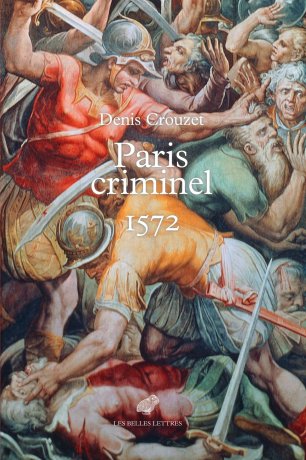
A total history of the Saint-Bartholomew’s Day Massacre
About: Denis Crouzet, Paris criminel. 1572, Les Belles Lettres
About: Denis Crouzet, Paris criminel. 1572, Les Belles Lettres

|
In this dense volume, Denis Crouzet, an emeritus professor at Sorbonne Université, revisits an event that he had already explored in La Nuit de la Saint-Barthélemy (Fayard, 1994) to reexamine his hypotheses and engage in a critical dialogue with several recent publications. Three main ideas shape his argument.
First, the new book proposes that the Saint Bartholomew’s Day Massacre be considered as a total phenomenon. Rejecting explanations based on a single scale, Crouzet alternates between microhistorical analysis of violent gestures and situating the events of August 1572 in a longer history. He shows that the killings were not the work of a zealous minority but involved all Parisians as well as royal power. Furthermore, the book insists on the decisive role played by confessionality: the massacre was born from the encounter between the population’s eschatological anxieties and Charles IX and Catherine de Médicis’ efforts to unite the French people in a single faith. Finally, Crouzet makes use of controlled anachronism, comparing the massacre to twentieth-century pogroms.
The book is based on a corpus of sources of various kinds, though print sources dominate, particularly memoirs, diplomatic documents, letters, and polemical tracts. Crouzet proposes an interpretation of the massacre that unfolds in three stages. First, the monarchy decided to eliminate the Protestant leaders. Next, the Parisians interpreted this action as a signal to engage in violence on a much larger scale. Finally, Charles IX and Catherine de Médicis cultivated a discourse that turned this uncontrolled purge into a royal initiative. Paris criminel focuses on the first two stages, saving historiographical analysis for a book that will appear in fall 2025. [1] In the present book, three actors act interdependently: God, the king, and the people. This trio must be conceived in a specific order: God is omnipresent, the king initiates and benefits from the massacre, and an entire city engages in killing. In this way, Crouzet’s book offers a totalizing yet structured interpretation of the Saint Bartholomew’s Day Massacre.
A possibilist history
Most of the book explores the monarchy’s political actions between 1560 and 1570. Crouzet starts with his earlier hypotheses: Charles IX and Catherine de Médicis were pursuing the goal of uniting opposites, and the peace that they pursued was a trap set for the Protestants. Harmony, in short, should unite the French people in a single faith and the point of concessions was to get the Huguenots to lower their guard so that they could be attacked at an opportune moment. Crouzet’s book elaborates on these conclusions in two ways.
First, Crouzet uses a wide lens to situate the monarchy’s actions in the broader political and philosophical culture of the Renaissance. Catherine de Médicis cultivated the “criminal culture” of her native Florence (p. 144), which meant resorting to judicial executions to protect the monarchy. In a century steeped in Neoplatonism, Charles IX aspired to embody the philosopher-king, viewing troubled times as the winter needed to bring about a political spring. Finally, the Saint-Bartholomew’s Day Massacre can be explained by the “secret necessities of state” (p. 174) invoked by Catherine to present her policies as a duty necessitated “by reason of the times and of men” (p. 167). This necessity justified harmony as well as more military actions, such as the massacre.
Next, Crouzet shows how the Valois dynasty made use of the concept of enigma in a political-theological sense: only God is in possession of ultimate knowledge and the king, his representative, must hide his intentions the better to surprise his enemy. Several clues suggest that Charles IX and Catherine de Médicis conceived the Saint-Bartholomew’s Day Massacre as an enigma: the assassination of the Protestant leaders was prepared with great secrecy and the monarchy refused to explain popular violence. This strategy, which removed the massacre’s perpetrators from history, is the basis of the thesis that the massacre was deliberately lacking in documentation. It also informs its corollary: because the massacre “eludes certainty of any kind” (p. 121), it can only be approached in possibilist terms, including in the way in which the royal strategy was exceeded.
An improvised yet calculated massacre
Paris criminel explains the turning point in the massacre as resulting from an expansion of the concept of the people. Rejecting the idea that some killers were responsible for most of the violence, Crouzet maintains that the entire city was responsible for the crime. By acting, watching, or keeping quiet, it was “Paris that murdered” (p. 10). This analysis leads to a reassessment of the massacre from two perspectives. First, because massacres were perpetrated by an anonymous crowd, any attempt to identify the killers is limited and unrepresentative. This claim is a direct response to the work of Jérémie Foa, who, using a microhistorical approach, sees August 1572 as “a mass murder by a small number of people” (p. 195) (see hereafter, A fruitful debate). Second, Crouzet figures out the statistics. Rejecting the idea of a mere vicinicide, he believes that more killers means more deaths. The numbers he puts forth are greater than his initial estimates—between four and seven thousand victims.
To understand how an entire city turned towards massacre, Crouzet engages in extensive contextualization, revealing that “forms of activation that are at direct odds with immediate history” (p. 24) and situating the Saint Bartholomew’s Day massacre in “a longer history” (p. 280). Drawing on the work of Jan Assmann, who explored the anthropological connections between monotheism and confessional violence, [2] Crouzet shows that a ubiquitous veterotestamentary culture requires of Catholics complete faithfulness. He emphasizes the role of preachers who, in the 1550s, claimed that action was needed to avoid God’s wrath, which had been perceived in numerous signs. The August 1572 massacre was thus seen as an instance of divine justice and an act of survival.
This argument allows Crouzet to reassert his place in sixteenth-century research. First, after having defended the thesis of non-premeditation in La Nuit de la Saint-Barthélemy (Saint Bartholomew’s Night), he finetunes it in Paris criminel. Due to a long process of cultural sedimentation, Parisians interpreted the royal initiative as the anticipated signal to purge the city of the Calvinist stain. Charles IX unleashed a hellish dynamic—hence the idea that the massacre was both “improvised” and “calculated” (p. 317). Next, Crouzet contends the confessional imaginaries played a key role, treating other factors, such as greed and social revenge as secondary. Consistent with his structural approach, he seeks, as in Les enfants bourreaux au temps des guerres de Religion (The children murderers of the Wars of Religion) [3] (2020), in which a seemingly insignificant historical fact made it possible to reconstruct a religious imaginary, to cut a path for sixteenth-century research that avoids reductive and teleological interpretations.
“Filling in the gaps of a submerged past”
Widening the gap that separates him from Foa, who compares the Saint Bartholomew’s Day Massacre to the Tutsi genocide in Rwanda, Crouzet finds parallels with other twentieth-century events: pogroms. In the second half of Paris criminel, this layering of different historical periods bolsters his argument in two respects.
First, it consolidates the study’s conclusions: the common denominators between the sixteenth and twentieth-century massacres prove that urban settings always imply multiple actors. Consequently, the Saint Bartholomew’s Day Massacre appears both as state crime and mob violence. The convergence of twentieth-century Judeophobia and the “anti-Protestant Terror” of the 1560s and 1570s (p. 221) shows that violence that was initially religious was subsequently given political significance, by elites as well as the masses.
Incorporated into his structuralist approach, this controlled anachronism allows Crouzet to “return to collective violence” (p. 212) and to understand its expressivity. A micro-historical examination of murderous actions lays bare its syntax: the rage of blows, the parts of the body that were targeted, the weapons used, and especially the stubborn desire to get rid of bodies—evidence of a quasi-genocidal and theophanic impulse. To “better understand the logic of violence” (p. 206), Crouzet draws on Françoise Héritier’s work on the anthropological foundations of violence to identify the constants in sixteenth-century memoirs and studies of twentieth-century pogroms: improvised bonfires, chopped up bodies, and the drowning of corpses shows that in 1572 the murderers sought to make their victims disappear just as, years later, Nazi Germany organized the industrial extermination of the Jews. Water, into which bodies are often thrown, is evocative of hell and purification. The murder of children and pregnant women testifies to a shared culture of violence, motivated by a fear of contamination.
Crouzet’s structuralism has become paradigmatic. By connecting recurring violent gestures to political discourses, he brings to light the massacre’s atemporal significance. Two constants have important methodological consequences. First, there exists a “murderers’ language” (p. 261): the killers’ bragging stymie historians who seek to quantify the victims. Second, such massacres are characterized by collective euphoria: the post-massacre joy, observed after the Saint Bartholomew’s Day Massacre as well as the pogroms, reveals how an entire community identifies with the killers—making them collectively responsible.
A fruitful debate
The never-ending historical interest in the Saint Bartholomew’s Day Massacre could make one wonder why new books on such a well-known event are needed. Paris criminel lifts these doubts, by showing that August 24, 1572 is not only a turning point in the Wars of Religion, but their essence. This bloody episode shows the complex intertwining of the conflict’s stakes and levels, in which confessional, military, civil, local, and international factors blended together.
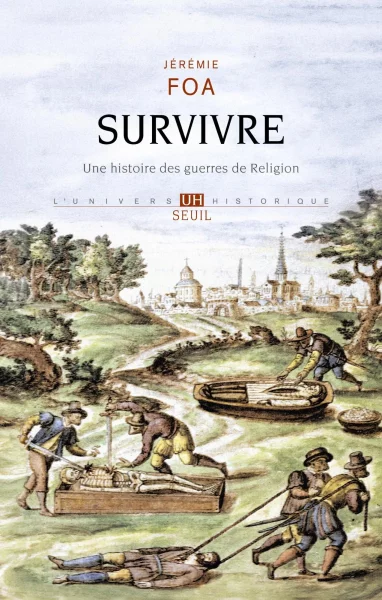
Through his totalizing but structured interpretation of the Saint Bartholomew’s Day Massacre, Crouzet initiates a critical dialogue with another expert on the Wars of Religion: Jérémie Foa. The two scholars differ both in their methods and in their conclusions. Whereas Foa’s Tous ceux qui tombent (All who fall) (La Découverte, 2022) proposes a "microhistory of the Saint Bartholomew’s Day Massacre“through a”grassroots“sociological analysis, Crouzet’s Paris criminel situates the people’s actions in a broader perspective, which is attentive to confessional imaginaries and monarchical discourse. Crouzet thus proposes a more comprehensive and interconnected history, exploring vertical interactions (between God, the king, and the people) as well as horizontal ones (between eschatological culture and violence as a language). Whereas Foa, in Survivre (Survive) (Seuil, 2024), sees a”war of signs“as the emergence of political modernity, detached from confessional violence, Crouzet contends that Charles IX and Catherine de Médicis participated in the massacre and governed according to Renaissance principles. Paris criminel thus calls into question the controversial thesis of the”autonomization of politics" following the Wars of Religion. [4]
Their differences notwithstanding, Crouzet and Foa agree on several essential points. Both emphasize the role of language—the former is interested in how it was used by the monarchy before it lost control, the latter in how it changed during a conflict; the battle for public space—through processions and massacres, for the former, and markers of identity, for the latter; and factional dynamics, whether analyzed from an anthropological-confessional or a sociopolitical perspective. Their main point of agreement lies in a stimulating conviction: the Wars of Religion are a key moment in French history, a complex phenomenon whose depths must still be explored. These points of convergence are an invitation for new studies, combining the contributions of both scholars in multilevel analyses considering the political, social, confession, and anthropological aspects of the conflict.
For many reasons, Paris criminel is indispensable reading for understanding the violence of August 1572 and, more broadly, the sixteenth century. This book considers the massacre in all its complexity, restoring the phenomena’s depth through constantly changing perspectives. By reconstructing two strategies of dissimulation—deliberate silence on the causes and the elimination of the victims—it gives us a history of the Saint Bartholomew’s Day Massacre that is driven by a demand for justice: Paris Criminel lets the dead exist. Crouzet, the master of anachronism, also encourages us to see the massacre echoes of the present: the continuities between the Saint Bartholomew’s Day Massacre and the pogroms show the extent to which present-day tensions can make new turns to violence possible. Understanding why an entire city chose to kill in 1572 may be a way of preempting these “terrifying repetitions, so terribly close to us” (p. 322) that punctuate the history of violence.
Denis Crouzet, Paris criminel. 1572, Paris, Les Belles Lettres, 2024, 378 p., €25, ISBN 9782251456119.
by , 9 June
Share this article
Find us here :


To quote this article :
Alexandre Goderniaux, « A total history of the Saint-Bartholomew’s Day Massacre », Books and Ideas , 9 June 2026. ISSN : 2105-3030. URL : https://booksandideas.net/A-total-history-of-the-Saint-Bartholomew-s-Day-Massacre
Nota Bene:
If you want to discuss this essay further, you can send a proposal to the editorial team (redaction at laviedesidees.fr). We will get back to you as soon as possible.
You might also like


Footnotes
[1] Denis Crouzet, L’histoire introuvable. Une Saint-Barthélemy sans fin, Ceyzérieu, Champ Vallon, 2025.
[2] Moïse l’égyptien, Paris, Aubier, 2001 [1997] ; Le prix du monothéisme, Paris, Aubier, 2007 [2003].
[3] See the book review published in the Revue d’histoire des religions, vol., 239, 2022, p. 159-162.
[4] For a challenge to the thesis that the Wars of Religion gave way to deconfessionalization, see
Fabrice Micallef, “L’autonomisation de la raison politique. Bilans, enjeux et perspectives historiographiques,” in David Do Paço, Mathilde Monge, and Laurent Tatarenko, eds., Des religions dans la ville. Ressorts et stratégies de coexistence dans l’Europe des XVIe-XVIIIe siècles, Rennes, Presses universitaires de Rennes, 2010, p. 213-218; Adrien Aracil, “Quelle fut la part du religieux dans les conversions politiques du XVIIe siècle?,” in Ladislas Latoch, Jean-Benoît Poulle, and Pierre Salvadori eds., Saisir le religieux à l’époque moderne. Croisements, déplacements et perspectives, Lyon, LARHA, 2023, p. 189-206.
Our partners


Sections
Keep in touch
© laviedesidees.fr - Any replication forbidden without the explicit consent of the editors. - Mentions légales - webdesign : Abel Poucet