


Sandra Ristovska examines how images shape judicial reasoning and the new uncertainties introduced by AI and deepfakes. These technologies amplify longstanding problems of evidence, interpretation, and inequality before the law.
Fritz Lang, Fury (1936)
|
This publication is part of our partnership with the Center for Advanced Study in the Behavioral Sciences. The full list of our joint publications is available here.

Sandra Ristovska is Associate Professor of Media Studies at the University of Colorado Boulder, where she is the founding director of the Visual Evidence Lab. Working at the intersection of media studies, law, and human rights, her research explores how images and videos shape the production of evidence, the pursuit of justice, and the exercise of institutional power. She is particularly interested in the ways visual technologies transform legal practices and the relationship between seeing, knowing, and believing.
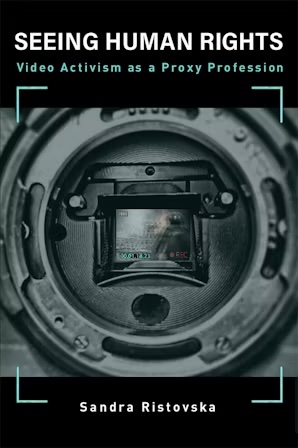
Her book Seeing Human Rights: Video Activism as a Proxy Profession (MIT Press, 2021) examines how activist videos have become increasingly integrated into legal and human rights institutions, and the tensions this creates between grassroots activism and professional standards of evidence. Her more recent research investigates the challenges that digital technologies, including artificial intelligence and deepfakes, pose for the interpretation and credibility of visual evidence in judicial proceedings.
Books and Ideas: Your work emphasizes the role of images as legal evidence. How do visual media shape judicial reasoning today? And are existing standards sufficient for evaluating their evidentiary weight?
Sandra Ristovska: One way to think about the role of images in judicial reasoning today is to go back a little bit in time, because the law tends to think in analogies. So older media forms are relevant for how newer media forms are understood, so if we think about photography at the late 19th century, back then the legal system developed this category of demonstrative evidence to govern the admissibility of photographs as evidence.
Now, what does demonstrative evidence mean? It means that a photograph legally cannot prove facts on its own, it can only speak through the words of witnesses who talk about the meaning of the photograph. In other words, photograph illustrate what witnesses say about them, but legal scholars have talked about how this category have always been unstable. It has always oscillated between illustration on one hand and proof on the other, and this kind of tension between what is really demonstrative evidence continues to be part of the legal system today. So, video, for example, in terms of analogy, becomes very similar to photograph with sound.
Now, video can be used as illustrative aid to demonstrate what witnesses say, but also we have widespread usage of video as direct evidence, and if it’s direct evidence, it means it means that it can prove fact on its own, and moreover, in an age of surveillance cameras, when you just have street cameras or surveillance cameras at a department store, there’s nobody there, it’s just the camera, so that’s why court have allowed for what is called the silence witness exception, where video can speak on its own when no one else was around to see the events captured on video.
Now at the heart of this shifting and ambivalent categories about the use of images as evidence, is really an ambivalence, uncertainty, how to evaluate their probative value, or the degree to which, let’s say, video can prove the facts it is offered to prove in court. And why is this complicated? It’s not complicated because courts want to make it complicated. It is complicated because actually the way we communicate with images is very different from how we communicate with words and numbers.
Well, one of my collaborators, Yael Granot, and I, have identified really three areas to pay attention to about how video is evaluated in legal system, and why we need to be thinking about guidelines for the use of video as evidence in courts. So, one of the things that we talk about that we’ve identified, and other researchers have identified across disciplines, is that as viewers, as people, sometimes we tend to kind of struggle to distinguish between what is legally relevant and irrelevant information in the video, and in the process we tend to kind of overestimate what we’ll believe is the relevant information, so to give you one example, multiple studies. In social psychology that go back decades ago have demonstrated the influence of what is now understood as the camera perspective bias.
So, here we have videotaped confession: a suspect is in police custody, and the police is questioning them. And so, in these experiments, and there are many experiments across years, controlling for different factors and influences, but the kind of basic way to understand this is you have cameras in the room, you have actors, one being the police officer, the other being suspect, and in one camera framing, the camera focuses only on the suspect, we don’t see the officer, so when people see that framing, they believe that what’s really relevant is how the suspect looks like, and you know, we can imagine the suspect potentially.. I don’t know, people are uncomfortable in front of cameras, etc. They might be sweating, they might be looking down, they might be uncomfortable, and people tend to believe that that’s a sign of guilt, and that there’s no police coercion.
The testimony is sincere, and so they overestimate in this case what would be legally relevant. Now, by contrast, people who watch the wider frame, different framing in the one where we see both the suspect and the police officer are like, oh goodness, he’s looking down because he’s being intimidated by the police officer. The police officer is trying to coerce this person. Oh, this must be coerced testimony. The person might not be guilty. What has changed? Absolutely nothing, right? It’s the same setup. What has changed is the camera perspective for how the video is recorded, and that kind of impacts how people see it, so they kind of assign certain things to what they believe is the relevant information here.
We can have different interpretations, but in a court of law, somebody’s life is at stake, whether somebody is innocent or guilty, whether somebody goes to jail, for how long they go to jail, and so that’s where we need more shared understanding, and that’s where it’s not about necessarily the standards that courts have, but it’s the challenges with how we interpret images, the multiple factors that influence anywhere from cognitive factors to the factors of technology to social factors. Who we are as viewers, what are the experiences and ideas that we as viewers bring to images? All of that shapes seeing, and the legal system thus far has not really been able to find a way how to address, how to work with those challenges when it comes to visual evidence.
Books and Ideas: How do emerging technologies like deep fakes and AI alter the epistemic status of visual evidence? Do they introduce fundamentally new challenges or intensify existing ones ?
Sandra Ristovska: I love this question, because this is the question that I’ve been grappling with this year at the Center for Advanced Study in the Behavioral Sciences at Stanford University, where I’m working on my new book called Deep Faking Evidence. So that book actually tracks the history of visual manipulation and deception in legal context, though obviously what happens in a legal context is informed by what’s happening at society and culture writ large.
I’m actually staying with the technologies that we typically associate with visual media today, and so what is very interesting is that as early as 1897 there is a wide discourse in newspapers around the United States that are saying that this old notion that photographs don’t lie is an exploded notion : it’s no longer true, and articles are saying photographs can lie with great frequency, and retouching is one of the techniques through which photographs can lie. Now, at the early 20th century, we have multiple cases and situations that would be quite familiar to us today. It’s just that the technology that we would be using today would be very different. President Tufts of the United States was actually very concerned about retouch photographs.
He had it enough with seeing photographs of him shaking hands with tourists in Washington, DC, being sold and circulated, that he wanted his Justice Department in 1912 to draft a bill that would ban the production, circulation, and distribution of fake photographs. If that bill passed, you could find a post office liable for actually sending this retouched photographs, or like helping with the distribution of these photographs. The bill didn’t go anywhere, but what he tells us that actually at the beginning of 20th century, when it comes with old-fashioned black and white photography that is developed on film, that is developed in a photo studio, there were those potential, and people were concerned, and this gets to play out in courts too, because in 1916 what we have is a trial in San Francisco of label active labor activist Tom Mooney.
Now, historians, and labor historians in particular, have written a lot about this case, and they say actually it was a political trial from the get-go, that Mooney was being framed. The outcome was very clear from the beginning, because this was an effort to crash the labor movement at the time. Mooney was charged with planting a bomb at the San Francisco Preparedness Day Parade that killed 10 people. Now, why bring this case? Because then we had photographs of Mooney and his wife observing the parade from the roof of a building. In the background of those photographs, we have a clock on one building that you could see the time, but not quite clearly.
So, what Mooney and his attorneys wanted was to enlarge the photograph in the presence of everybody, etc. so that you could potentially see the time, and that would give Mooney and Alibi. Now the prosecutor in this case successfully managed to keep the photographs out. He argued that it could have been retouched, it could have been doctored, so we can’t trust the photograph, we should keep it out. I think this case is perfect illustration for what we have going on with AI today, so this is why the challenges, the evidentiary challenges in a legal setting that AI poses are not unprecedented. AI amplifies the challenges : if you think about it, in the 19th century you needed to have skills, you needed to know, and you needed resources, you needed to own photography equipment, you needed to have access to photo studios, you needed to know how to retouch photographs, that was skill, that was labor, so not everybody could do it. Today, there is a judge, Paul Green, US judge, who says AI has democratized fraud.
Now, why does he say that? Because now all you need is like a laptop or like a smartphone, you download an app, you put in a prompt, you know, create a video showing xyz within minutes, you get that video, so it’s like low barrier to access, no skills are required, et cetera. We also have social media today. Where you know a piece of video can be instantaneously seen around the world, becomes viral before you even know it. People start talking about it without even knowing, or without, in some cases, caring. Is it true? Is it not? So that complicates the matter. So, there was very recently the Federal Evidence Committee, the Advisory Committee surveyed over 900 federal judges in the United States, and most of them said that the way they think about those kind of charges of fakery or accusations that something is AI generated is by actually shifting the burden of proof. If somebody says something is faked, they need to provide some kind of evidence that you know grounds their accusations before that claim can be taken seriously, but the other piece of this is just as important, because we can have authentic video, let’s say perfectly authentic video taken on a cell phone that before AI could have been easily accepted into evidence, and jurors in a jury-based system would weigh that evidence.
Now, the worry is that we might be entering an era where the kind of the public discussions about seeing is no longer believing, everything needs to be technically authenticated and verifying that that might get us to an environment where perfectly authentic videos could be given less evidentiary weight, because jurors are like, well, how do we know this is faked or not? Again, Mooney case here is just one out of many that gives us a good historical parallel or maybe signed posts for thinking about the current moment, so I don’t want to underestimate AI as a technology again. I do think AI is taking the problem of fakery, the problem of manipulation and deception at the unprecedented level. Also, with deep fakes, we could create video out of nothing. In old school deception or manipulation, you still needed to have some kind of original, which you’re then faking. So, there are challenges that come with AI, but in the book that I’m writing at Casbs, I’m really looking at how AI is compounding on existing challenges and what kind of signposts, what kind of lessons we can get from the histories of manipulation and deception in court.
Books and Ideas: Do the risks and uncertainties surrounding visual evidence affect all individuals equally, or do they reproduce existing social inequalities ?
Sandra Ristovska: There are certain racial, ethnic, and gendered disparities that are part of the US legal system. So, if we already have disparities, then when we’re using video as evidence, you know, we would expect to see those being replicated, and you know, video as evidence is a tool, it can be used and it can be misusedit is open to multiple interpretations, that’s the beauty of it, but oftentimes what we are finding is that it’s hard to weigh net net, does it help, does it not, I mean, we can think about multiple cases in the United States, and really abroad, where cell phone video recorded by activists, by bystanders, has really helped shed light on important human rights claims, and has been successfully used in court. In a study that the Visual Evidence Lab, that there, that I directed, the University of Colorado Boulder, we found that cell phone video can be quite affected at arguing for constitutional rights in US courts.
So, video can be important, and it can help people from marginalized communities, immigrant communities, communities of color to really have fair hearing in court at the same time it can also exacerbate the existing inequalities that we have, so right now we have 14 cases of the use of AI-based facial recognition systems, where people have been arrested for crimes they’ve never committed, and they’ve spent anywhere between one night in jail to 17 months in jail for a crime they’ve never committed. And if you look at who those people are, they tend to skew black, and when they’re white, they tend to skew older, and then tend to skew female when we think about deep fakes, which is a different version of an AI-based image. The cases that are emerging right now, it’s too early to tell, but the cases that are emerging right now tend to be deep fakes involving domestic abuse cases, where a woman is being accused of violating a no contact order based on a deep fake image, spending two days in jail, and then afterwards we have things sorted out. So, in the book that I’ve been writing at Casbs, Deep Faking Evidence, I’ve. Actually tracked how AI might be exacerbating existing inequalities in the legal system, and those inequalities are based on racial, ethnic, and gender lines.
Books and Ideas: What kinds of legal or institutional reforms are needed to preserve fairness and trust in an era of increasingly accessible synthetic media?
Sandra Ristovska: There is no one bulletproof solution for how we’ll be addressing the challenges of AI-based images, the area I work in, and the area that I’ve been spending most of the time with my visual evidence lab is the legal system, and in the legal system we need to be looking at several different areas, one would be judicial training, so judges oftentimes, at least in the United States, are being trained on certain issues.
So, I do think we can use that as a model for thinking about what kind of judicial training we can develop around visual interpretation and perception, where judges are introduced to the various factors that shape how we see and experience images, how we interpret, let’s say, a piece of video as evidence in a legal sense that could help them understand or help them kind of be better equipped to probe and ask questions about the underlying visual content that is being introduced in court.
Another area is to be thinking about what kind of instructions would help jurors better deliberate in cases involving video evidence. Again, in the United States, some courts have those kinds of guidelines for eyewitness testimony. Now, when those guidelines have been kind of the efficacy of those guidelines has been tested, there have been mixed results, but that is a start. Can we think about similar instructions for video evidence? What those would entail, whether they would help mitigate some of the biases and challenges that we’re experiencing.
Another thing would be state bars associations ; since they have ethics rules for attorneys, they can take the charge now in issuing opinions that clarify how the ethics rules apply when an attorney introduces or challenges evidence to be generated by AI or to be enhanced by AI, knowingly or unknowingly. Obviously, if they knowingly introduce deep fake, there should be clear sanctions, but state bars associations have a role to play here, then we do have to be thinking about on the level of the courts, whether there are some reforms that are needed there. Other legal scholars are talking about the necessity of disclosure each time AI is being used, whether in facial recognition systems, whether to enhance video, to analyze video, that that should be very clearly disclosed and disclosed on time, so that the other party has the time to review the evidence, so these are some of the areas that are important to pay attention to. There’s no one easy bulletproof solution, but I think we have to be very careful not to frame the problem or the challenge as technological challenge ; this is just a problem of AI and deep fakes, and we just need better authentication tools to verify whether an image is authentic or not, and we’ve solved the problem. There is definitely room, and there is definitely need for better technologies of authentication, but the problem is not purely technological. The problem is not simply about whether an image is true or false, that’s where we start, but that’s not the end story, because we talked about how there are different factors that shape seeing. So, I do think it’s important that we don’t frame this as technological. We look at institutional questions and we figured out broader guidelines for how we ensure that video is used consistently responsibly in a court of law in the age of AI.
by , 30 October
Share this article
Find us here :


To quote this article :
Jules Naudet, « Can We Still Trust Images?. Interview with Sandra Ristovska », Books and Ideas , 30 October 2026. ISSN : 2105-3030. URL : https://booksandideas.net/Can-We-Still-Trust-Images
Nota Bene:
If you want to discuss this essay further, you can send a proposal to the editorial team (redaction at laviedesidees.fr). We will get back to you as soon as possible.
You might also like


Our partners


Sections
Keep in touch
© laviedesidees.fr - Any replication forbidden without the explicit consent of the editors. - Mentions légales - webdesign : Abel Poucet