

Criticized for its repeated failures, the French police seem to desperately lack an explicit approach for dealing with demonstrations. They could take inspiration from the principle of de-escalation promoted throughout Europe.
|
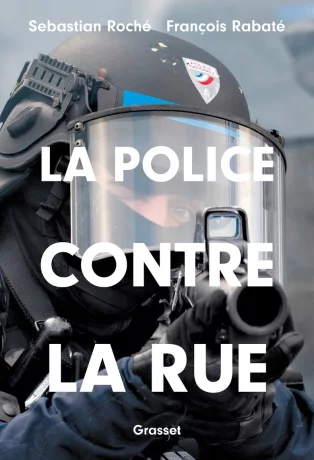
Though books are often made into movies, the reverse is much less common. Yet this is precisely what the political scientist Sebastian Roché and the documentary filmmaker François Rabaté have done with La police contre la rue (The police vs. the street). While this is part of the book’s interest, even more reasons are to be found in its content. Several years after the documentary Police attitude: 60 ans de maintien de l’ordre [1] (Police attitude: 60 years of public order policing), vigorous debates surrounding the police’s handling of demonstrations are far from over. To the long list of incidents that have occurred in recent years must now be added the fiasco of the final game of the UEFA Champions League in May 2022, the repression of demonstrations against the mega-basins in Sainte-Soline in March 2023, and the riots caused by the police killing of Nahel Merzouk. Rather than falling into the trap of off-the-cuff commentary, the authors have set themselves a seemingly ambitious task: reconstructing “the history of public order policing and its doctrine” (p. 9).
Unplanned obsolescence
To do so, they draw notably on twelve interviews with “qualified” public figures, whose perspectives are interspersed throughout the book. [2] This allows them to present a rich panorama of the history of public order policing in France, from the doctrine’s emergence during the Third Republic to its obsolescence in the mid-2010s. This national trajectory is, moreover, enriched by comparison with the British and German experiences, which diverge from the French doctrine in multiple respects.
Implicit in this history painted in broad strokes, crisscrossed with considerations of specific events, is an examination of the very existence of a “French doctrine” of public order policing. By examining the institutionalization of demonstrations and the ways the police handle them, the first two chapters illustrate the (admittedly limited) concept of “pacifying” demonstrations. The latter was based on the codification of the right to demonstrate during the Third Republic, the emergence of a workers’ movement experienced with the practice, and the professionalization and “demilitarization” of the security forces charged with handling demonstrations. Yet this assemblage of disparate elements does not, for Roché and Rabaté, add up to an explicit doctrine.
Even so, while rejecting the conventional wisdom that recent demonstrations have displayed record-levels of violence, Roché and Rabaté maintain that a handful of principles does not prohibit the police from killing during demonstrations, as evidenced by the examples of October 1961 and February 1962, among many others. Citing the experience of May ’68 and its aftereffects, Roché and Rabaté show that the “philosophy of distancing” (p. 81) was never really applied. Lacking a genuine doctrine, they call attention to personal styles, insisting on the decisive role of political authority in managing such events. For instance, Maurice Grimaud, the police prefect in 1968, and the interior minister, Raymond Marcellin (1968–1974), leant their names respectively to the “Grimaud way” (la manière Grimaud) and the “Marcellin method” (la méthode Marcellin).
A central(izing) state
It is precisely the state’s centrality that, according to the authors, makes the French model so unique. Unlike French police organizations, which are led by prefects, the neighboring models are decentralized. In Germany, it is the police chiefs of the Land, and, in the UK, the chief constables of the territorial police forces who not only make decisions but take responsibility for operations. The difference, which Roché and Rabaté consider important, between the respective roles of the state and local government is twofold: leadership of operations is confined to technocrats rather than politicians, and local accountability is far more important than in France, where the prefect is responsible to the interior minister, not local officials.
None of this means, of course, that German and British police do not face significant challenges in the realm of public order policing. Roché and Rabaté provide a detailed account of the “Brokdorf turning point,” which refers to the name of the German village where, in 1981, a major demonstration against a nuclear power plant took place. After the outrage resulting from the demonstration’s repression, the Constitutional Court’s “Brokdorf decision” inserted the right to demonstrate and the principle of de-escalation into article 8 of the German Basic Law. Consequently, in Germany, the courts determine the basic principles of preserving public order: cooperation with organizers, communication with demonstrators, and the maintenance of a defensive posture.
To counter the argument that de-escalation cannot be applied in France due to the exceptionally violent nature of its demonstrations, Roché and Rabaté remind us that “black blocs” and riots do not fall under the jurisdiction of the French police. They show how the rise of “black blocks” in Germany and difficulties caused by urban riots in the United Kingdom led to a reexamination of their systems. Once again, what differentiates them from the French police is their adoption of the doctrine of de-escalation, prioritizing communication and information over coercion.
Deescalating violence
Whereas de-escalation spread throughout Europe, notably due to the GODIAC project, [3] France remained on the sidelines, convinced of its doctrine’s excellence (Fillieule, Jobard, 2016). Chapter five examines the “missed opportunities” to reform the doctrine. Neither May ’68 nor Malik Oussekine’s death in 1986 were sufficient to bring about significant change in the French conception of public order policing. Of course, equipment and weapons evolved, training and intelligence developed, and motorized police units were abolished. Yet there were no serious conversations about the need for de-escalation. Without idealizing foreign models, the authors note how much the French model stands out compared to what is going on elsewhere in Europe. Not only do the French seem indifferent to reducing tension during demonstrations, but more importantly, according to Roché and Rabaté, they embrace an “implicit doctrine”: “the principle of escalation.”
This principle is evident in the way the French police react to three key trends that are evident in demonstrations in recent decades, and which are discussed in the book’s last three chapters: suburban (i.e., banlieue) riots, “zones to defend” (Zones à Défendre), and “black blocs” and the yellow vest movement.
Roché and Rabaté show how, confronted with new populations and new demonstration tactics, public order policing concepts and techniques changed in the early 2000s. Suburban riots, which had nothing in common with labor demonstrations, would have a lasting impact on public order procedures. Increasing recourse to non-specialized units (Anti-Criminal Brigades, Intervention Companies, etc.), new weapons (flash-balls and blast balls) would gradually become “the basic cocktail for public order policing.” In short, Roché and Rabaté argue, the “culture of public order policing has changed” (p. 202).
Beyond city limits, “zones to defend” (that is, sites occupied by activists, often to block development projects) can also thwart police tactics. In such cases, police depend heavily on intermediate weapons, particularly grenades. Yet again, France suffers in comparison to neighboring countries, which reject such weapons. The analysis of the death of Rémi Fraisse, killed by a police grenade at Sivens, and its consequences, briefly raised the question of whether the police should be subject to independent supervision. Yet a subsequent parliamentary report did not call into question the principle of public order policing. To the contrary, according to its rapporteur, Noël Mamère, it is precisely at this level that the doctrine of de-escalation has been abandoned (p. 227).
The eighth and final chapter dwells on “the model’s crisis,” which was confirmed and made dramatically apparent by the yellow vest movement. The obsolescence of the French model was foreordained in 2016 by the emergence of “black blocs” and mobilization against a labor reform law. The use of non-specialized units, which were deployed extensively against the yellow vests, was ratified by the creation of the Détachements d’Actions Rapides (rapid action detachments, or DAR) and Brigades de Répression de l’Action Violente (repression of violent action brigades, or BRAV). Roché and Rabaté characterize these developments as “a series of minor changes that ultimately had a deep impact on public order policing” (p. 267).
The identification of the mechanisms that lead to changes in doctrine is ultimately one of the book’s major themes. The examination of the reality and material character of the French doctrine of public order policing is highly stimulating and constitutes a fascinating research program, in the way that it applies analytical tools for understanding public action to “policies of disorder” (Jobard, Fillieule, 2020). The topic’s interest lies in the elusiveness of the “so-called doctrine of de-escalation” (p. 267). Though the doctrine is never truly articulated, Roché and Rabaté trace its many permutations.
A plastic doctrine
The conclusion, which takes the form of a dialogue between the two authors, summarizes one of the book’s central arguments: that the French doctrine is implicit. This conversational format testifies to the richness of the collaboration between the filmmaker and the political scientist, which has resulted in a book aimed at a wide audience. The book functions more like a movie than a college textbook, as it is organized around different plotlines and punctuated by close-ups (i.e., boxed text dealing with case studies). These techniques faithfully translate the movie into book form, which manages to preserve the spoken character of the interviews, allowing the authors to take advantage of the wealth of material they have gathered.
The twelve interviewees offer their respective expertise and experience, complementing one another as they shed light, despite their contradictions and disagreements, on a wide range of perspectives on public order policing. The categories mentioned in the introduction (“police,” “witnesses,” “observers”) could make one forget that all of them—labor leaders, activists, rights defenders, police officials, and even academics—are participants in the debate over the French doctrine of public order policing. In this way, their interventions bring to light different conceptions of the French “doctrine.”
Even so, the trajectory of the French doctrine as presented by Roché and Rabaté does not sufficiently emphasize one essential point: without being completely contingent, public order policing practices depend on how police and political decision-makers perceive demonstrators, their goals, their methods, and ultimately their legitimacy. Rather than the evolution of a doctrine that could be applied to all demonstrations, Roché and Rabaté make an implicit case for the doctrinal plasticity with which the authorities repress demonstrations. They emphasize this point when they refer to how the authorities “aggravated” matters with the violent repression of the yellow vests’ movement (p. 261).
While security forces have inherited the weapons, tactics, and methods associated with violent events, they are, at the end of the day, capable of returning to the more moderate and respectful principles of “de-escalation” and negotiation with demonstrators. The French interior minister unintentionally made this very point during the farmers’ protest movement in the winter of 2023 with an unambiguous comment: “you don’t respond to suffering by sending in the riot police.” [4]
Sebastian Roché and François Rabaté, La police contre la rue (The police vs. the street), Grasset, 2023, 320 p., 22 €.
by , 14 October 2025
Share this article
Find us here :


Further reading
Bibliography
– BRUNETEAUX P., 1996. Maintenir l’ordre : les transformations de la violence d’État en régime démocratique, Paris, Presses de la Fondations nationale des sciences politiques, 345 p.
– FILLIEULE O., JOBARD F., 2016. « Un splendide isolement », La Vie des idées.
– FILLIEULE O., JOBARD F., 2020. Politiques du désordre : la police des manifestations en France, Paris, Éditions du Seuil, 297 p.
To quote this article :
Dimitri Coste, « The elusive doctrine », Books and Ideas , 14 October 2025. ISSN : 2105-3030. URL : https://booksandideas.net/The-elusive-doctrine
Nota Bene:
If you want to discuss this essay further, you can send a proposal to the editorial team (redaction at laviedesidees.fr). We will get back to you as soon as possible.
You might also like


Footnotes
[1] Written by Sebastian Roché and François Rabaté, directed by François Rabaté, and produced by Brotherfilms for Public Sénat and Toute l’Histoire; broadcast late 2020 and 2021.
[2] Bertrand Cavallier, division general of the gendarmerie; Michel Delpuech, former Paris police prefect; Romain Goupil, high-school leader in May 68 and member of the Revolutionary Communist League; Fabien Jobard, research director at the CNRS; Grégory Joron, general secretary of Unité SGP Police-FO; Noël Mamère, former member of parliament and journalist; Peter Neyroud, former British police officer and criminology instructor; Vanessa Salzmann, former German police officer and sociology professor; Isabelle Sommier, sociology professor at Université Paris I; Bernard Thibaut, former general secretary of the CGT; Jacques Toubon, former minister and Defender of Rights. The authors are François Rabaté, a journalist and documentary filmmaker, and Sebastian Roché, research director at the CNRS.
[3] Good Practice for Dialogue and Communication as Strategic Principles for Policing Political Manifestations in Europe, which includes contributions from 2010 to 2013 from police forces of different European countries: Sweden, Denmark, the United Kingdom, Germany, Spain, Portugal, Cyprus, Austria, Slovakia, Hungary, Romania, and the Netherlands.
[4] Interview with Interior Minister Gérald Darmanin on the TF1 evening news, January 26, 2024.
Our partners


Sections
Keep in touch
© laviedesidees.fr - Any replication forbidden without the explicit consent of the editors. - Mentions légales - webdesign : Abel Poucet