


To mark the 80th anniversary of the end of the war in East Asia, a nuanced assessment of the American occupation of Japan (1945–1952) and its lasting impact on contemporary Japanese society is now available in French for the first time.
Marlon Brando & Glenn Ford dans La petite maison de thé (1956)
|
An ‘exemplary’ occupation, but little known to the French public
In March 2003, President George W. Bush launched the Iraq War against Saddam Hussein’s regime. The war ended in December 2011 with the withdrawal of the last US occupation forces. Eight years of war, resulting in a bloody and scathing admission of failure. And yet, had we not extolled the virtues of this intervention, modeled on… the American occupation of Japan? Since the latter had been a “success,” it seemed possible to do the same in the Middle East: the fall and disappearance of the Iraqi tyrant could—or should— have had the same outcome. Nothing could be further from the truth. The Japanese “model” could not be replicated and remained unique. Admittedly, the American occupation was not without its excesses, particularly in the early months. But it was nothing compared to the systematic—not to say systemic—violence that had accompanied the Japanese Empire’s conquest of its “living space” in East Asia [1].
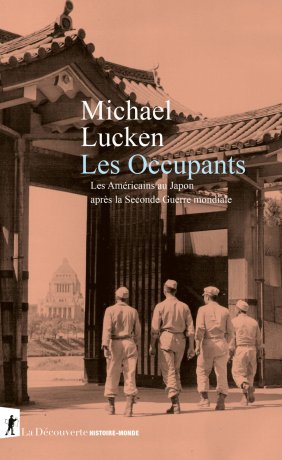
However, the new book by historian Michael Lucken [2], a professor at France’s National Institute of Oriental Languages and Civilizations (Inalco), goes beyond this idealized view of a successful foreign occupation to offer a fresh perspective in three key ways. First, while there is already a considerable body of English-language and Japanese research on the 1945-1952 period of the archipelago’s history, this book fills a significant gap in the French-language literature on contemporary Japan. While the American occupation has certainly been addressed in general works on Japanese history—or in works dealing with specific aspects of occupation policy, such as institutional and educational reforms [3]—a comprehensive analysis has been lacking. This gap can undoubtedly be explained by the fact that, although France was present at the signing of Japan’s surrender on September 2, 1945, it did not play a role in the country’s occupation.
Second, Michael Lucken’s book draws on a combination of English-language and Japanese sources. This approach is essential for better understanding the subtle dynamics of the relationship between the occupiers and the occupied in a context that was historically unprecedented for both parties. For the first time in their history, the Americans—confronted with the defeat of the former Axis powers—were faced with the complex challenges of a military occupation on foreign soil following a total war. Japan had never been under military occupation, and it had every reason to fear the vengeance of the “English-speaking devils,” to use the terminology of military propaganda. This was especially true given that Japan had also never before encountered such a large foreign presence on its soil—several hundred thousand American soldiers, with whom it was forced to navigate relationships of subordination, coexistence, and collaboration.
Finally, the title of Michael Lucken’s book itself sheds light on his argument from two perspectives. First, by focusing on the “Americans” and the “occupiers,” the author emphasizes the role of the actors involved. The occupation cannot be analyzed simply in retrospect through general and impersonal “guidelines”; it was conceived and carefully planned in advance by specialists who, step by step and with their own subjective views, constructed their own vision of Japan and its inevitable realignment. It was a truly Promethean undertaking, for while Nazism had been viewed as a repugnant aberration in the history of a Germany that was, all things considered, firmly anchored in Western civilization, in many respects Japan remained an enigma—the caricatured symbol of a superficial modernity at odds with an underlying feudal social structure: a “childhood illness” that was said to have fueled the rise of ultranationalism and militarism.
Michael Lucken clearly shows that these policies were not improvised after Japan’s defeat, but had been carefully thought out since at least 1942, particularly within the US State Department and the Office of Strategic Services (OSS), and that it was often the same men who had been engaged in intelligence and information operations during the war who went on to play a role in the occupation policy, either as its architects or as key decision-makers. These anticipated outcomes did not, however, preclude lively discussions about how Japan should be “rebuilt”—quite the contrary. In other words, the military objective of unconditional surrender did not hinder, but rather spurred, political planning for postwar Japan.

Furthermore, the author emphasizes the decisive role of the United States in developing and implementing the occupation policy: the British, Australian, and New Zealand Allies, who kept troops stationed in Japan, were limited to police, communications, and logistical duties, while inter-Allied consultative bodies, such as the Far Eastern Commission, had relatively little influence on the overall direction of the occupation. Ultimately, the single most important issue was the degree of autonomy enjoyed by the American proconsul in Japan, General Douglas MacArthur, relative to Washington. Michael Lucken shows that, contrary to the common belief that MacArthur enjoyed a great deal of autonomy, his actions were in fact tightly controlled by Washington.
Shaping opinions
The book rightly emphasizes that the American occupation had a messianic dimension. The US government’s mission, beyond structural reforms, was to influence collective thinking in Japan: to ensure, by reshaping mindsets, that the new homo japonicus would no longer succumb to the siren call of militarism and ultranationalism. This strategy was both authoritarian and pragmatic. Authoritarian, because of the heavy censorship imposed—paradoxically carried out in the name of freedom—that was intolerant of any public criticism of the occupation policy; and because of a “purge” that primarily targeted political figures. And pragmatic, in that it established a system of indirect administration with the aim of “bringing the Japanese political elite into the fold,” yet capable from 1948–1949 onward of adapting to new geopolitical realities so that Japan would not fall victim to the “domino theory.”
It was driven not only by US policymakers and military officials, but also—in its cultural component—by private foundations, such as the Rockefeller Foundation, which has enjoyed close ties with US intelligence agencies since the war. As a result, the occupation had a threefold impact. It led to surprising instances of ideological “conversion”—some of them more or less opportunist—among certain intellectuals [4], while Japan’s growing openness to Western thought and culture opened up new avenues for philosophical reflection and artistic creation. However, it also caused double frustration stemming from two different time frames: in the short term, among Japanese intellectuals specializing in American studies, such as Tsurumi Shunsuke, who were disappointed by the decidedly conservative turn taken by the collusion between the Japanese political establishment and Washington at the turn of the 1950s. In the longer term, the strategy’s messianic dimension was likened to a brainwashing campaign contested by a neo-nationalist movement that is increasingly prominent in the corridors of power.
The ambiguous legacy of the occupation in postwar Japan

Unlike Iraq, the American occupation of Japan met with little resistance—for reasons analyzed by the author, who attributes this primarily to the resilience of the Japanese political elites (who had no other choice) and of the Japanese people, who were “stunned” by the country’s defeat. Nevertheless, it left an ambivalent mark on the political trajectory of contemporary Japan. The occupation was the necessary transition through which the United States—an implacable enemy during the war—became an indispensable, albeit burdensome, ally, with tens of thousands of troops stationed throughout Japan.
The security agreements—at least in their first draft—that were negotiated at the end of the occupation did not merely mark the beginning of a major—albeit unequal—partnership between Tokyo and Washington. Indeed, along with Japan’s new Constitution of 1946, these measures curtailed the rebuilding of Japan’s military apparatus for decades, as well as its autonomous political capabilities. The country was thus reduced to a pacific power, having failed to become a Pacific power. Ultimately, they ensured that Tokyo remained subordinate to Washington’s overarching strategic interests. The pages the author devotes to grassroots movements opposing the Vietnam War and, more broadly, American military bases in Japan, illustrate this growing awareness and the emergence of an autonomous civil society in the country. Although facilitated by reforms implemented during the occupation, Washington proved incapable of fully grasping the significance of this development.
Bilateral relations thus remain marked by ambiguity. Japan has not escaped the onslaught of American soft power, with its urban landscapes dotted with fast food chains, the near-monopoly of English in schools and public spaces, and sociocultural behaviors that are, to say the least, surprising from a French perspective: for example, the long-standing tendency to automatically equate “white” people visiting Japan with Americans, and the propensity of rock and pop bands to use an anglicized form of Japanese peppered with diphthongs. The specter of Hiroshima and Nagasaki continues to loom over bilateral relations, but this has not prevented the Japanese government from insisting since 1957 that the Japanese Constitution does not, in principle, prohibit the possession of nuclear weapons…
Contrary to the simplistic view that democracy was imported by the occupying forces, the 1946 regime endured because democratic and liberal movements—albeit severely restricted—had already existed under Imperial Japan. And let us not forget that, until the mid-1980s, the archipelago was an island of freedom in an ocean of dictatorial or totalitarian regimes, with a standard of living incomparably higher than that of its neighbors, and that it has not experienced war since 1945 [5]. This remarkable outcome cannot be attributed entirely to the occupation, but it certainly played a role.

And yet, in many respects, the occupation remains a taboo subject: it is rarely discussed in the Japanese education system, and it continues to be a thorn in the side of the conservatives in power and, more recently, populists, who have been quick to denounce the “excesses” of democratization, to blame certain dysfunctions in Japanese society on “disconnected” reforms, and to cultivate, through a sort of repression of memory, nostalgia for a bygone era [6]. It would be wrong to dismiss these trends as mere epiphenomena: their emergence from segments of the educated public in the “new Japan,” and their amplification by social media—the primary source of information for Japanese youth—is striking. In Japan, the end of the occupation did not mark the end of the postwar era…
Michael Lucken, Les Occupants. Les Américains au Japon après la Seconde Guerre mondiale, Paris, La Découverte, 2025, 334 p.,
22 € (ISBN 978-2-348-08846-9).
by , 3 November
Share this article
Find us here :


To quote this article :
Éric Seizelet, « Japan’s Postwar Transformation », Books and Ideas , 3 November 2026. ISSN : 2105-3030. URL : https://booksandideas.net/Japan-s-Postwar-Transformation
Nota Bene:
If you want to discuss this essay further, you can send a proposal to the editorial team (redaction at laviedesidees.fr). We will get back to you as soon as possible.
You might also like


Footnotes
[1] On this point, see Jean-Louis Margolin, L’autre seconde guerre mondiale, 1937-1945, Asie-Pacifique, de Nankin à Hiroshima, Paris, Tallandier, 2025.
[2] Also by Michael Lucken, see Les Japonais et la guerre 1937-1952, Paris, Fayard, 2013.
[3] See, particularly with regard to the imperial institution, our book Monarchie et démocratie dans le Japon d’après-guerre, Paris, Maisonneuve et Larose, 1990.
[4] On this phenomenon, see Brice Fauconnier, Tenkō : va-et-vient, convergences et changements idéologiques dans le Japon des années 1920-1950, Thèse, Inalco, 2012.
[5] Guibourg Delamotte, La démocratie au Japon, singulière et universelle, Lyon, ENS Éditions, 2022.
[6] Christian Galan & alii, Loyauté et patriotisme (le retour). Éducation et néo-conservatisme dans le Japon du XXIe siècle, Rennes, Presses Universitaires de Rennes, 2023.
Our partners


Sections
Keep in touch
© laviedesidees.fr - Any replication forbidden without the explicit consent of the editors. - Mentions légales - webdesign : Abel Poucet