Books & Ideas is the English-language mirror website of La Vie des Idées, a free online journal which has gained a large readership and established itself in France as a major place for intellectual debate since 2007.
Long the subject of myth, Pius XII’s attitude towards the Holocaust and Jewish persecution can now be evaluated with the help of the archives. Nina Valbousquet makes a convincing case: the issue was not impartiality, but tepidness.
As multilateral cooperation is increasingly under attack, Katerina Linos challenges certain misperceptions about the role of international institutions, particularly the European Union, and emphasizes their capacity for action in times of multiple crises.
Since the two World Wars, the victim has been raised to the status of a sacred and predominant figure in historical memory. The victim has become the new figure of the hero, thus setting a new and controversial example.
Why do we believe that our societies are freer, more prosperous or more democratic thanks to the institution of private property rather than in spite of it?
About: Constance Rimlinger, Féministes des champs. Du retour à la terre à l’écologie queer, Presses universitaires de France
About: Christine Détrez, Crush. Fragments du nouveau discours amoureux, Flammarion
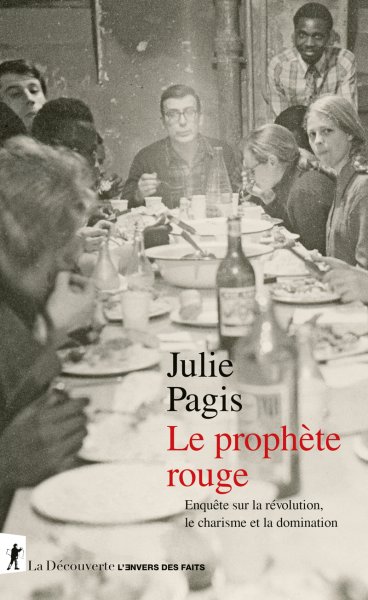
About : Julie Pagis, Le prophète rouge, La Découverte
A rumour is circulating in some African countries: the French state is organising penis thefts to offset declining fertility. The rumour, spread by Russian propaganda, has become fake news.
The American sociologist Harrison White made a vital contribution to the development of social network analysis. Besides his work in this field, his theoretical synthesis and his understanding of social formations have influenced a variety of fields such as the sociology of art and economic sociology.
Ukraine’s water networks have been mobilized since the start of the war in 2014. Infrastructure workers are some of the last to leave settlements attacked by the Russian army. Water systems and people are resisting but are reaching the limits of their capacity to adapt to violence and disruptions.
In our second winter selection of reviews and essays, Books & Ideas takes a look back at a few important articles published over the last year on the current developments and trends affecting public spaces for expression and debate : from the traditional media to the world wide web, these different spaces are all under pressure from ongoing changes. Rules and practices are evolving, as the traditional public space is being radically enlarged.
Books & Ideas is slowing down for the summer and will be offering weekly selections of reviews and essays published over the last year. This week’s selection focuses on digital tools, their relationship to political power and capitalism.
The Paris Agreement on Climate Change is three years old this week but is already under attack. In support of further necessary action to address the changing climate, Public Books & La Vie des Idées offer a collaborative series of articles examining the intersection of climate change and capitalism.
Kenzaburō Ōe, winner of the Nobel Prize in Literature, is a controversial figure in Japan. And rightly so, for there are a great many contradictions in both his fictional and theoretical work. He is a fierce opponent of nuclear weapons and nuclear energy, and yet continues to celebrate the heroism of the soldier who finds glory through sacrifice.
“Do we have the right to make bets on the future of mankind?” Forty-one years after being the first ecologist candidate in a presidential campaign and publishing his manifesto book, René Dumont’s intuitions and warnings have lost little of their relevance.
Michel Crozier’s work was shaped by the conviction that organizational phenomena create society. He helped pioneer the tools for analyzing groups established to carry out a common project according to a specific system of action and rules of the game.
L’adoption du mode de scrutin proportionnel apparaît aujourd’hui, selon deux politistes, comme une condition nécessaire pour redonner à la démocratie française la capacité de renouer avec des gouvernements représentatifs, stables et opérationnels.
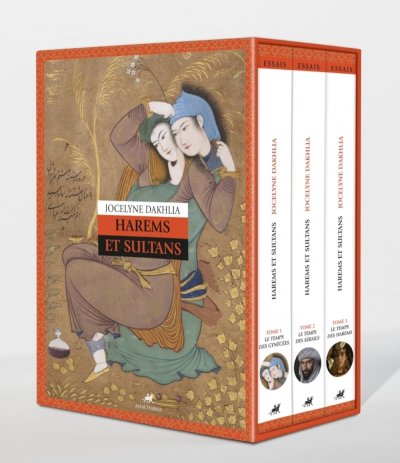
Le harem a nourri l’imaginaire occidental jusqu’à aujourd’hui, véhiculant le cliché d’un monde despotique et misogyne. L’imposante documentation réunie par J. Dakhlia offre une vision plus nuancée.
Les minorités peinent souvent à faire reconnaître les savoirs qui leur sont propres, ou même les transmettre. Aux injustices sociales et raciales s’ajoutent ainsi des injustices épistémiques, contre lesquelles il faut également lutter.
À propos de : Fabien Clouette, Des vies océaniques. Quand des animaux et des humains se rencontrent, Seuil
À propos de : Par inadvertance. La « cuillère humaine » de Fernand Deligny, L’Arachnéen